Trending

I4S 2/2026: Learning Factories

I4S 2/2026: Learning Factories

Drivers of research and learning environments for Industry 4.0
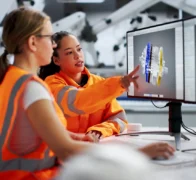
In recent years, learning factories have evolved into key experimental environments in the context of the Fourth Industrial Revolution. In addition to their role as training centers for skilled workers, they also serve as real-world research laboratories. This issue of Industry 4.0 Science examines learning factories as venues for exploring new approaches and technologies—whether digital assistants, cobots, serious games, or digital twins.
Pre-Stages of GenAI Governance via Managerial Communication

Pre-Stages of GenAI Governance via Managerial Communication

Exploratory findings from SMEs in the Ruhr area
Niklas Obermann ORCID Icon, Uta Wilkens ORCID Icon, Antonia Weirich ORCID Icon, Matthias E. Cichon ORCID Icon, Jürgen Mazarov, Bernd Kuhlenkötter ORCID Icon
The governance of generative artificial intelligence (GenAI) usage is often described as a formalized reporting system. This neglects the early-stage mechanisms of coping with ethical challenges during the GenAI implementation period. Exploratory empirical findings from the Ruhr area reveal that managerial communicative practices serve as a substitute for missing institutional structures, particularly at an early stage of GenAI implementation in SMEs.
Industry 4.0 Science | Volume 42 | Edition 1 | Pages 6-13 | DOI 10.30844/I4SE.26.1.6
Ethical AI in the Workplace Through Value-Based Labels?

Ethical AI in the Workplace Through Value-Based Labels?

Lessons learned from applying the VCIO framework to an AI-based assistant
Natalie Martin ORCID Icon, Tobias Kopp ORCID Icon, Natalie Beyer, Jochen Wendel ORCID Icon, Steffen Kinkel ORCID Icon
The AI Ethics Label represents a promising approach to promoting ethical AI and appropriate trust in AI systems. However, its practical application reveals some challenges due to its conservative assessment approach, limited context sensitivity, lack of benchmarks, and interpretation aids. Improvements are needed to unlock its full potential.
Industry 4.0 Science | Volume 42 | Edition 1 | Pages 30-38 | DOI 10.30844/I4SE.26.1.30
I4S 6/2025: Manufacturing in Space

I4S 6/2025: Manufacturing in Space

Infinite possibilities for industrial production?
Manufacturing is leaving Earth: what was once science fiction is becoming a strategic field for the future. Falling launch costs and new space industry players are enabling production and services under conditions that are impossible on Earth—from in-orbit maintenance to novel manufacturing processes in microgravity. This issue highlights opportunities, business models, and technological hurdles on the path to value chains in space.
“Entrepreneurial courage is the key ingredient”

“Entrepreneurial courage is the key ingredient”

Interview with Prof. Jan Wörner, Director of the Frankfurt Institute for Advanced Studies (FIAS)
Production is leaving Earth. As access to space becomes increasingly affordable and reliable, the idea of manufacturing in space is evolving from science fiction to a real industrial strategy. In this interview, Jan Wörner, who has headed not only the German Aerospace Center (DLR) but also the European Space Agency (ESA) for many years, talks about strategic opportunities and regulatory challenges.
Potentials, Premises, Perspectives

Potentials, Premises, Perspectives

Using LLMs to reinterpret corporate knowledge management
Vanessa Kuks ORCID Icon, Pius Finkel ORCID Icon, Peter Wurster ORCID Icon
Demographic change is exacerbating the shortage of labor and skilled workers in the manufacturing industry, making knowledge management an increasingly important issue in many companies. Collecting and preserving tacit knowledge poses a particular challenge. This study examines the extent to which large language models (LLMs) can provide meaningful support in knowledge gathering through expert interviews. Three experts test and evaluate a personalized chatbot that has been developed using ChatGPT-5. The results of the interview are promising, but the summary shows room for improvement.
Industry 4.0 Science | Volume 41 | Edition 6 | Pages 48-56 | DOI 10.30844/I4SE.25.6.48
Design Thinking

Design Thinking

A practical approach
Benjamin März, Nick Ackerhans
Originally developed in the software industry, a method inspired by the mindset of designers has proven to be a broadly applicable approach to solving complex problems. Design thinking holds the potential to contribute positively to social and economic change. A look at its development offers valuable insights for a deeper understanding.
Industry 4.0 Science | Volume 41 | 2025 | Edition 4 | Pages 68-75

Continue reading with subscription
Serious Games as a Training Tool

Serious Games as a Training Tool

Game mechanics design to promote resilience
Annika Lange ORCID Icon, Thomas Knothe ORCID Icon
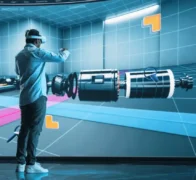
Unforeseen events are increasingly challenging manufacturing companies. Being resilient during crises is becoming a key competence. Serious games (SG) can help make resilience-building processes more transparent. This article derives specific requirements for SG from different phases of resilience and shows how these can be implemented in game mechanics in order to effectively support the training of resilience.
Industry 4.0 Science | Volume 42 | 2026 | Edition 2 | Pages 98-104
MAKI—A Digital Assistant for Practice-Based Learning

MAKI—A Digital Assistant for Practice-Based Learning

Why every factory is a learning factory
Olaf Resch ORCID Icon
With the help of digital assistants, academic teaching is possible in any factory. In order to achieve the best learning effects, however, the interests of all stakeholders must be taken into account. The factory wishes to deploy its employees quickly and productively, the learners desire a positive learning experience, and the educators want to illustrate abstract concepts in a meaningful and practical way. The only way to combine all of these perspectives is via a well-thought-out educational concept and highly functioning technology.
Industry 4.0 Science | Volume 42 | 2026 | Edition 2 | Pages 70-77
Conducting Experiments in Hybrid Learning Factories

Conducting Experiments in Hybrid Learning Factories

The example of the InTraLab Potsdam
Industrial production is undergoing rapid transformation through digitalization, automation and cyber-physical systems, creating new competence requirements for employees. Learning factories provide experiential environments for developing these competences. This article presents the Industrial Transformation Lab (InTraLab) as a hybrid learning factory combining physical demonstrators and digital simulations.
Learning Factories for the Future of Manufacturing in Brazil

Learning Factories for the Future of Manufacturing in Brazil

Advancing manufacturing through technology and skills development
Manufacturing firms in developing countries face challenges in closing productivity gaps while adopting Industry 4.0 technologies. Learning factories are one helpful approach to countering these challenges. One such example is the learning factory Fábrica do Futuroin São Paulo, Brazil, which has engaged students, supported competence development, and collaborated with industry in applied research, functioning as a hub for advanced manufacturing initiatives.
From Brownfield to Industry 4.0

From Brownfield to Industry 4.0

Learning factories as training and testing environment for digital transformation
Jakob Weber, Sven Völker ORCID Icon
To succeed in their digital transformation, manufacturing companies need engineers with in-depth knowledge of key technologies and concepts, and a profound understanding of the transition from Industry 3.0 to Industry 4.0. This article describes the concept of a learning factory that is continuously subjected to a digital transformation, thereby creating an environment for the development of transformation competencies. The concept of digital transformation is based on digital worker assistance systems and multi-agent systems for production control. These enable the incremental integration of existing resources into the digitalized factory. The learning factory is not presented to students as a completed solution. Instead, it is continuously developed further as part of student projects. This way, it contributes directly to the qualification of personnel for the implementation of Industry 4.0.

Industry 4.0 Science | Volume 42 | 2026 | Edition 2 | Pages 88-96
AI Colleagues?

AI Colleagues?

Competence requirements and training for AI use in industry
Swetlana Franken ORCID Icon
Artificial intelligence is fundamentally changing tasks, roles, and skills in (industrial) companies. Increasingly, it acts as a colleague, preparing decisions, supporting processes, and interacting with people. This article highlights key competence requirements for AI use in industry, presents an integrated competence model, and outlines practical strategies for the transfer of skills. The aim is to prepare companies and employees for humane, competence-oriented AI implementation that combines technological efficiency with human creativity and judgment.
Industry 4.0 Science | Volume 42 | 2026 | Edition 2 | Pages 78-86

Current issue

Open Access

Industrial Transformation via a Machining Learning Factory

Industrial Transformation via a Machining Learning Factory

A learning module to foster competencies for a sustainability-driven transformation
Oskay Ozen ORCID Icon, Victoria Breidling ORCID Icon, Stefan Seyfried ORCID Icon, Matthias Weigold
Sustainability-enhancing transformation processes are necessary in all sectors if we are to remain within planetary boundaries. This also applies to the industrial sector as a significant emitter of greenhouse gases. Employees need new competencies to master this complex task of industrial transformation. These range from CO2 equivalents accounting to the development and evaluation of transformation scenarios, including technical measures. The learning module developed here addresses these competency requirements and uses the example of the ETA factory to show how a competency-oriented learning module for industrial transformation can be structured. It essentially comprises four phases: data collection and CO2 equivalents accounting, cause analysis, development of measures and evaluation of measures.


Industry 4.0 Science | Volume 42 | Edition 2 | Pages 38-47 | DOI 10.30844/I4SE.26.2.38
Experiencing Digital Twins in Production and Logistics

Experiencing Digital Twins in Production and Logistics

The fischertechnik® Learning Factory 4.0 as a development platform for possible expansion stages
Deike Gliem ORCID Icon, Sigrid Wenzel ORCID Icon, Jan Schickram, Tareq Albeesh
The fischertechnik® Learning Factory 4.0 has proven to be a suitable experimental environment for testing digital twins. Depending on the targeted maturity stage, the functions of a digital twin range from status monitoring and forecasting to the operational control of production and logistics systems. To systematically classify these functions, this article presents a maturity model that serves as a framework for the development of a digital twin. Building on this, selected use cases are implemented in a test and development environment based on a system architecture with multi-layered logic structure. These initial implementations serve to highlight application purposes, relevant methods, and typical challenges and potentials in the transfer to real factory environments.
Industry 4.0 Science | Volume 42 | Edition 2 | Pages 30-37 | DOI 10.30844/I4SE.26.2.30
Collaborative Robots in Production Environments

Collaborative Robots in Production Environments

Employee qualification and acceptance for human-machine interaction
Tobias Wienzek, Mathias Cuypers ORCID Icon
The introduction of new technologies poses a major challenge, especially for small and medium-sized enterprises (SMEs). At the same time, SMEs must rise to this challenge in order to keep pace technologically and economically. Employee acceptance is an important factor in ensuring that both the introduction and the long-term use of a technology are successful. At the same time, the introduction process also has a central influence on acceptance in the long term. This article uses the implementation of collaborative robotics as an example for examining such an introduction process, identifying the key factors that influence employee acceptance and the important role played by advanced employee training. It serves to highlight how the introduction process and employee training are seamlessly interlinked.
Industry 4.0 Science | Volume 42 | 2026 | Edition 2 | Pages 14-21 | DOI 10.30844/I4SE.26.2.14
Building the Future Workforce Today

Building the Future Workforce Today

Trendiation as a strategic framework for employee qualification and training
Jürgen Fritz, Sebastian Busse, Ingo Dieckmann, Torsten Laub
As Industry 4.0 and artificial intelligence reshape organizational capabilities, traditional training systems struggle to keep pace with evolving skill requirements. This paper introduces Trendiation—a structured methodology for translating emerging trends into actionable strategies—as a systematic approach to this challenge. Through a workshop-based application examining Edutainment, Human-Centered Design, and Workforce Transformation, we demonstrate how organizations can move from abstract trend identification to concrete qualification requirements and prioritized training initiatives. The method produces a traceable artifact chain spanning trend framing, capability-gap assessment, and implementation roadmaps. Participant evaluations indicate high perceived clarity and practical utility. By bridging foresight analysis with participatory design, Trendiation enables organizations to proactively cultivate adaptive capabilities and build learning cultures aligned with future work ...
Industry 4.0 Science | Volume 42 | 2026 | Edition 2 | Pages 22-29 | DOI 10.30844/I4SE.26.2.22
Data Quality and Domain Expertise for Resilient AI Deployment

Data Quality and Domain Expertise for Resilient AI Deployment

Integrating anomaly and label error detection in industry
Pavlos Rath-Manakidis, Henry Huick, Erdi Ünal, Björn Krämer ORCID Icon, Laurenz Wiskott ORCID Icon
AI implementation transforms work and worker-technology relationships in industrial quality control. This paper explores how approaches to data quality and model transparency support ethical AI deployment, fostering worker agency, trust, and sustainable work design in automatic surface inspection systems (ASIS). Recurring problems like data inefficiency, variable model confidence, and limited AI expertise point to key challenges of human-centered AI: user trust, agency and responsible data management. A solution co-developed with an ASIS supplier demonstrates that the challenges extend beyond the purely technical, underscoring the value of AI design that augments human capabilities. Technical solutions such as anomaly, label error, and domain drift detection are proposed to enhance data quality and model reliability. The insights emphasize the following generalizable strategies for resilient AI integration: understanding user-reported problems through a human-AI interaction lens, ...
Industry 4.0 Science | Volume 42 | Edition 1 | Pages 128-135 | DOI 10.30844/I4SE.26.1.120
Operationalizing Ethical AI with tachAId

Operationalizing Ethical AI with tachAId

Validating an interactive advisory tool in two manufacturing use cases
Pavlos Rath-Manakidis, Henry Huick, Björn Krämer ORCID Icon, Laurenz Wiskott ORCID Icon
Integrating artificial intelligence (AI) into workplace processes promises significant efficiency gains, yet organizations face numerous ethical challenges that stakeholders are often initially unaware of—from opacity in decision-making to algorithmic bias and premature automation risks. This paper presents the design and validation of tachAId, an interactive advisory tool aimed at embedding human-centered ethical considerations into the development of AI solutions. It reports on a validation study conducted across two distinct industrial AI applications with varying AI maturity. tachAId successfully directs attention to critical ethical considerations across the AI solution lifecycle that might be overlooked in technically-focused development. However, the findings also reveal a central tension: while effective in raising awareness, the tool’s non-linear design creates significant usability challenges, indicating a user preference for more structured, linear guidance, especially ...
Industry 4.0 Science | Volume 42 | 2026 | Edition 1 | Pages 50-59 | DOI 10.30844/I4SE.26.1.48
All Open Access Articles

our cooperation partners