Autor: Uta Wilkens

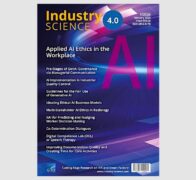
I4S 1/2026: Applied AI Ethics in the Workplace

I4S 1/2026: Applied AI Ethics in the Workplace

A shared responsibility — from radiology and speech therapy to assembly
AI ethics in the workplace is everyone’s responsibility. It requires accountability from companies as a whole and conscious action from individuals—whether developers or users, managers or employees. Key issues revolve around ethical AI skills and questions of governance and employee representation. How will the world of work change, from radiology and speech therapy to assembly and quality control?
Pre-Stages of GenAI Governance via Managerial Communication

Pre-Stages of GenAI Governance via Managerial Communication

Exploratory findings from SMEs in the Ruhr area
Niklas Obermann ORCID Icon, Uta Wilkens ORCID Icon, Antonia Weirich ORCID Icon, Matthias E. Cichon ORCID Icon, Jürgen Mazarov, Bernd Kuhlenkötter ORCID Icon
The governance of generative artificial intelligence (GenAI) usage is often described as a formalized reporting system. This neglects the early-stage mechanisms of coping with ethical challenges during the GenAI implementation period. Exploratory empirical findings from the Ruhr area reveal that managerial communicative practices serve as a substitute for missing institutional structures, particularly at an early stage of GenAI implementation in SMEs.
Industry 4.0 Science | Volume 42 | Edition 1 | Pages 6-13 | DOI 10.30844/I4SE.26.1.6
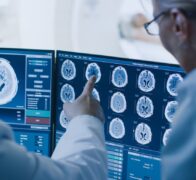
Multi-Stakeholder AI Ethics in Radiology

Multi-Stakeholder AI Ethics in Radiology

Implications for integrated technology and workplace design
Valentin Langholf ORCID Icon, Alexander Ranft, Lena Will, Robin Denz ORCID Icon, Johannes Schwarz ORCID Icon, Majd Syoufi, Pavlos Rath-Manakidis, Marc Kämmerer, Marcus Kremers, Axel Mosig ORCID Icon, Uta Wilkens ORCID Icon, Jörg Wellmer ORCID Icon
AI assistance can be seen as a welcome aid in radiology, a highly complex environment characterized by round-the-clock time pressure and quality expectations. However, it must meet high ethical standards from the perspective of both users and patients. It is a challenge to incorporate this human-centered approach into the development and introduction of AI applications.
Industry 4.0 Science | Volume 42 | Edition 1 | Pages 136-143 | DOI 10.30844/I4SE.26.1.128
AI Skills for Responsible Use

AI Skills for Responsible Use

Realistic learning environments, critical thinking, and role design in teams
Valentin Langholf ORCID Icon, Niklas Obermann ORCID Icon, Uta Wilkens ORCID Icon, Marco Kuhnke, Michael Prüfer
Artificial intelligence (AI) is changing the world of work. But how can work teams learn to use AI support in a way that delivers speed advantages and ensures consistently high quality? One possible approach is to test it in a workplace-like simulation. Trying it out under realistic conditions shows the role that critical thinking plays.
Industry 4.0 Science | Volume 42 | Edition 1 | Pages 100-107 | DOI 10.30844/I4SE.26.1.92
Bridging Knowledge Gaps with GenAI in Industrial Maintenance

Bridging Knowledge Gaps with GenAI in Industrial Maintenance

Specific needs and contextualized solutions
Uta Wilkens ORCID Icon, Julian Polte ORCID Icon, Philipp Lelidis, Eckart Uhlmann ORCID Icon
The paper specifies the genAI support needs for industrial maintenance against the background of a sociotechnical systems perspective. Emphasizing two needs, accessing implicit operator knowledge and prioritizing complex regulatory knowledge, a multi-layer architecture is outlined for an AI-based context-sensitive maintenance assistance system (MAS). The main purpose is to bridge knowledge gaps with genAI if human expertise and human implicit knowledge are not available and to cope with sub-process-specific challenges of multiple regulations. The MAS facilitates access to technical knowledge, distributes expertise, and shares implicit knowledge of experienced operators across different layers of information processing. The approach goes beyond standardization and has a high potential to enhance organizational as well as individual resilience.
Industry 4.0 Science | Volume 41 | 2025 | Edition 5 | Pages 50-57 | DOI 10.30844/I4SE.25.5.50
Mechanisms of GenAI Governance

Mechanisms of GenAI Governance

A case study on the responsible use of GenAI in organizations
Niklas Obermann ORCID Icon, Daniel Lupp ORCID Icon, Uta Wilkens ORCID Icon
Compared to traditional AI systems, generative artificial intelligence (GenAI) introduces user-dependent characteristics that create unique challenges for AI governance in organizations. These challenges are particularly tied to human factors, such as employee attitude, awareness, and skills, which are often neglected by existing governance frameworks. This qualitative case study examines how a manufacturing organization implemented GenAI governance mechanisms to foster the responsible use of this technology. The findings reveal that organizations should adopt a holistic approach, combining structural, procedural, and relational mechanisms to address employee-related aspects of GenAI governance. As a result, this study contributes to the growing field of GenAI governance and provides practical insights for its responsible use in organizations.
Industry 4.0 Science | Volume 41 | 2025 | Edition 5 | Pages 58-64 | DOI 10.30844/I4SE.25.5.58
Transforming Under Pressure

Transforming Under Pressure

An analysis of coping strategies along the value chain in agriculture
Niklas Obermann ORCID Icon, Saskia Hohagen ORCID Icon, Uta Wilkens ORCID Icon
The transformation in production offers the chance to redesign existing value chains. Cooperation between various ecological, social and governmental stakeholders is seen as particularly key to sustainable development. However, little research has been conducted into how companies can best manage the resulting interdependencies. Agriculture is used as an example to examine how businesses can activate resources along the value chain.
Industry 4.0 Science | Volume 40 | 2024 | Edition 5 | Pages 99-106 | DOI 10.30844/I4SE.24.5.99
Pathways to Responsible Use of AI at Work

Pathways to Responsible Use of AI at Work

An organizational change perspective
Valentin Langholf ORCID Icon, Uta Wilkens ORCID Icon, Daniel Lupp ORCID Icon, Niklas Obermann ORCID Icon
The integration of AI in Industry 4.0 is steadily increasing. Applications include both single-purpose and generative AI systems in operation practices as well as training approaches. In addition to the technical challenges posed by these systems, organizations need to assess, plan and support the organizational changes associated with technology integration.
Industry 4.0 Science | Volume 40 | 2024 | Edition 5 | Pages 58-66 | DOI 10.30844/I4SE.24.5.58
Learning and Competence Development in AI-based Adaptive Systems

Learning and Competence Development in AI-based Adaptive Systems

Uta Wilkens ORCID Icon, Dominik Lins, Christopher Prinz ORCID Icon, Bernd Kuhlenkötter ORCID Icon
The paper reflects the potential and remaining shortcomings of AI-based work systems for exploiting and enhancing individual and organizational learning processes. It especially refers to the use adaptive systems in production and gives examples of good practice for the design of AI-based work systems which promote the interplay between individual and artificial intelligence. The conceptual framework refers to different methods in machine learning which are complemented by insights from individual and organizational learning theory.
Industrie 4.0 Management | Volume 36 | 2020 | Edition 6 | Pages 30-34
Identifying Employee and Team Competencies in Industrial Product-Service Systems

Identifying Employee and Team Competencies in Industrial Product-Service Systems

Kai Externbrink, Antje Lienert, Uta Wilkens ORCID Icon
Industrial product-service systems (IPS²) represent a combination of interdependent product and service components developed to satisfy highly specific customer needs. One key challenge in the engineering of IPS² pertains to the successful integration of providers’, customers’ and suppliers’ heterogeneous expertise. While previous research mainly addresses this issue through the lenses of organization or automation, little attention has been paid towards integration through interaction. In this paper we therefore ask the question which competencies enable employees and teams in IPS² to successfully deal with heterogeneity thus taking advantage of its innovative potential. We use a a multilevel model of competence and specify it for the IPS² work system on the base of expert interviews. It becomes apparent that experts attribute successful IPS² performance especially to factors which increase perceived stability in flexible or heterogeneous work systems.
Industrie Management | Volume 28 | 2012 | Edition 3 | Pages 65-69