Autor: Norbert Gronau

I4S 3/2026: Immersive Technologies in Production

I4S 3/2026: Immersive Technologies in Production

VR, AR, MR, XR: Catalysts for the next industrial revolution?
Immersive technologies are fundamentally transforming manufacturing. VR, AR, MR, and XR merge physical and digital worlds into interactive work environments. In Industry 4.0, they enable more intuitive access to planning, production, maintenance, and training. This issue of Industry 4.0 Science shows how immersive technologies are becoming a central building block of resilient, flexible, and innovative production systems.
I4S 2/2026: Learning Factories

I4S 2/2026: Learning Factories

Drivers of research and learning environments for Industry 4.0
In recent years, learning factories have evolved into key experimental environments in the context of the Fourth Industrial Revolution. In addition to their role as training centers for skilled workers, they also serve as real-world research laboratories. This issue of Industry 4.0 Science examines learning factories as venues for exploring new approaches and technologies—whether digital assistants, cobots, serious games, or digital twins.
Conducting Experiments in Hybrid Learning Factories

Conducting Experiments in Hybrid Learning Factories

The example of the InTraLab Potsdam
Industrial production is undergoing rapid transformation through digitalization, automation and cyber-physical systems, creating new competence requirements for employees. Learning factories provide experiential environments for developing these competences. This article presents the Industrial Transformation Lab (InTraLab) as a hybrid learning factory combining physical demonstrators and digital simulations.
Applied Knowledge and Augmented Reality

Applied Knowledge and Augmented Reality

Bridging the gap between learning and application
Jana Gonnermann-Müller ORCID Icon, Philip Wotschack, Martin Krzywdzinski ORCID Icon, Norbert Gronau ORCID Icon
The increasing complexity of industrial environments demands new competencies from workers, particularly the ability to interact with advanced digital systems. Traditional training methods often fall short in supporting the effective transfer of applied knowledge to such contexts, and the effectiveness of this transfer, as measured by performance-based outcomes, remains to be investigated. To address this gap, the present study employed a between-subjects experimental design comparing augmented reality- and paper-based instructions within a realistic production training scenario. The results show that participants who learned with augmented reality completed the production process significantly faster and with fewer errors than those using paper instructions. In addition, learners using augmented reality reported higher usability and experienced lower cognitive load during training. These findings suggest that augmented reality can enhance the transfer of practical skills in industrial ...
Industry 4.0 Science | Volume 41 | 2025 | Edition 5 | Pages 22-29 | DOI 10.30844/I4SE.25.5.22
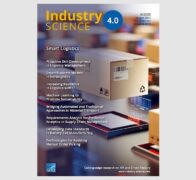
I4S 4/2025: Smart Logistics

I4S 4/2025: Smart Logistics

Sustainable, resilient processes along the entire value chain
Logistics is entering a new era. Climate change and geopolitical uncertainties are shifting the focus to resilience and sustainability. The concept of smart logistics is gaining importance. But what exactly makes logistics smart, and how can it help us organize our societies and the economy? Approaches such as predictive analytics, demand analysis, and machine learning show why smart logistics is more than just a technological trend.
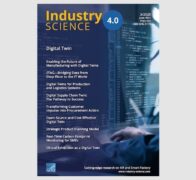
I4S 3/2025: Digital Twin

I4S 3/2025: Digital Twin

Innovative concepts for manufacturing, logistics, and learning environments
In the connected world, digital twins open up completely new possibilities: they virtually replicate physical systems, processes, or products. However, key challenges remain, including the collection of current product data. This issue of Industry 4.0 Science covers a wide range of topics, from the basic concept of the digital twin to its benefits in procurement and its use in supply chain management.
The “InTraLab” Learning Factory

The “InTraLab” Learning Factory

Gaining experience and knowledge in digitally transformed work environments
Norbert Gronau ORCID Icon, Malte Teichmann
Learning factories offer a practical environment for simulating production processes in which learners can acquire skills through the direct application of new technologies. The Industrial Transformation Lab (InTraLab) models hybrid production processes by combining real-world demonstrators and virtual simulations. This enables learners to acquire the skills that are crucial for the digitally transformed world of work.
Industry 4.0 Science | Volume 41 | Edition 2 | Pages 46-51
I4S 2/2025: The Future of Production with AI, Cobots and Virtual Worlds

I4S 2/2025: The Future of Production with AI, Cobots and Virtual Worlds

Technology needs innovative, value-adding business models
Artificial intelligence, collaborative robotics, and virtual worlds, such as the metaverse, are fueling visions for new forms of industrial value creation. However, innovation alone is not enough—given that these technologies only develop their full potential through intelligent business models. How can companies efficiently integrate AI-supported automation, cobots and digital twins into their processes?
Computer Use in Industrial Business Processes

Computer Use in Industrial Business Processes

A systematic literature review of the last 40 years
Norbert Gronau ORCID Icon
The most important value-adding industrial business processes are product creation and order processing. For 40 years now, Industry 4.0 Science and its predecessor titles have supported the development and implementation of the software used in these industrial business processes. In honor of the journal’s 40th anniversary, a systematic literature review is carried out to identify trends that played a role in the past but no longer do today. The research provides some surprising insights into the topics that have been important in the last 40 years – as well as those that will remain relevant in the future.
Industry 4.0 Science | Volume 41 | 2025 | Edition 1 | Pages 8-14 | DOI 10.30844/I4SE.25.1.8
I4S 1/2025: 40 Years of Digital Transformation in Manufacturing

I4S 1/2025: 40 Years of Digital Transformation in Manufacturing

Key research questions for tomorrow's production and logistics
Digital transformation has been a central focus of scientific discussions for years. Questions relating to data-driven decisions, artificial intelligence and resilient supply chains are at the heart of current research. The articles in this issue explain key trends and present scientific findings and practical solutions - from automation and the circular economy to cloud computing.
1 2 6