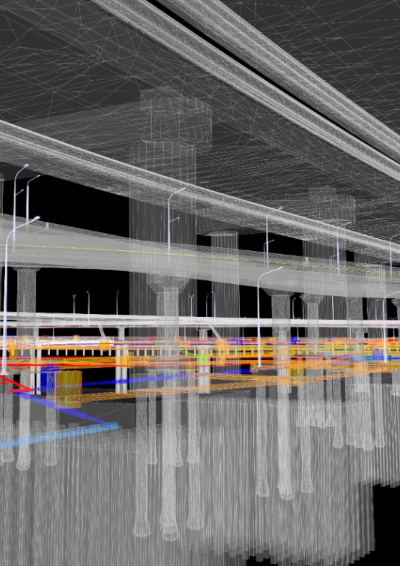
Digital Twin Technology and Architecture | 
|
A synthesis of concept and practice

| Journal | Industry 4.0 Science |
| Issue | Volume 42, 2026, Edition 3, Pages 114-122 |
| Bibliography | Share | Cite | Download |
Abstract
Digital twins are a key enabling technology of the fourth industrial revolution, integrating physical systems with their digital counterparts to create intelligent, data-driven environments. This conceptual/practice-oriented paper examines how to establish a modern architectural framework for digital twins leverages modern tech-stack like IoT, Data Fabric, AI/ML, seamless integration and enterprise grade security. The paper is grounded in an abundance of literature by leading vendors and analysts in space. It offers a comparative study of different vendors implementing the solution stack in the proposed architecture.
Keywords
Article
The fourth industrial revolution, commonly referred to as Industry 4.0, is transforming industrial systems through the integration of digital technologies such as the Internet of Things (IoT), artificial intelligence (AI), cloud computing, and advanced analytics. These technologies enable the convergence of physical and digital environments, creating interconnected, data-driven ecosystems that support real-time monitoring, predictive decision-making, and autonomous optimization [1]. Within this context, digital twin technology has emerged as a critical enabler of intelligent industrial systems. Despite growing interest, digital twin implementation remains complex due to fragmented literature focusing on isolated aspects. …
Access limited
You are currently not logged in / not yet registered.
To read the content in full, you must have an appropriate subscription. Alternatively, you can also obtain access by paying a one-off fee.
| Subscription | included | Purchase |
|---|---|---|
| without | − | 29,00 € |
| Digital | − | 27,55 € |
| Expert | ✓ | 0,00 € |
| Professional | ✓ | 0,00 € |
All prices include 7% VAT
After purchasing access rights, you will automatically be redirected back to this page.
You might also be interested in