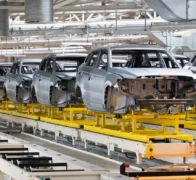
Industry 4.0—Progress and Digitalization in Limbo

Status of sustainable transformation and digitalization in production engineering

JournalIndustry 4.0 Science
Issue Volume 42, 2026, Edition 3, Pages 56-60
Bibliography Share Cite Download

Abstract

Digitalization projects help users represent complex processes more simply and efficiently. However, there are many obstacles to implementation. Reluctance to implement these projects is palpable. This affects, among others, employers and employees, who may fall behind economically by waiting or avoiding change. These observations can be traced back to an overarching research question: What barriers and systemic challenges hinder sustainable transformation within the context of Industry 4.0, particularly when considering human labor in production engineering? What questions are the affected stakeholders asking? The primary goal of this long-term research project is to define these questions decisively and in detail in order to develop a conceptual foundation that integrates research, teaching, and technological development and thus combines the potential of digital technologies with the experiential and practical knowledge of production workers.

Keywords

Article

It is widely accepted that Industry 4.0 is a key prerequisite for remaining competitive long term in the face of international competition. Deloitte’s 2026 Industry Outlook describes, among other things, the following industrial digitalization trends: Smart manufacturing and operations: Increased automation and analytics AI-powered supply chains: Managing the complexity of global supply chains Talent: Using agentic AI to optimize staff planning and learning These and other …

Access limited

You are currently not logged in / not yet registered.

To read the content in full, you must have an appropriate subscription. Alternatively, you can also obtain access by paying a one-off fee.

Subscription included Purchase
without 29,00 €
Digital 27,55 €
Expert 0,00 €
Professional 0,00 €

Read for once 29,00 €

All prices include 7% VAT

After purchasing access rights, you will automatically be redirected back to this page.


Potentials: Dynamics Leadership Strategy

You might also be interested in

Application Potentials of Chinese Knowledge Platforms

Application Potentials of Chinese Knowledge Platforms

Digital platforms for knowledge transfer in research and education
Yunhao Su, Martin Braun ORCID Icon
Knowledge drives innovation, which is why digital platforms are increasingly used for knowledge transfer. The People’s Republic of China (PRC) is a global leader in digitalization and digital platforms are central to Chinese knowledge transfer and innovation systems. This study supplements theoretical concepts of knowledge transfer with empirical findings on the (further) development of relevant knowledge platforms. It examines the influence of specific design features on the functionality and quality of digital knowledge platforms. A literature review identifies seven condensed success criteria. Nine leading Chinese knowledge platforms are categorized based on their transfer logic and functional scope. Online survey participants assess the platform-specific manifestations of the identified criteria and highlight potential and areas for improvement in platform-based knowledge transfer.
Industry 4.0 Science | Volume 42 | 2026 | Edition 3 | Pages 84-93
VR Training for Multimodal Cobot Interaction

VR Training for Multimodal Cobot Interaction

Virtual learning environments for collaborative robots
Christoph S. Zoller, Justus Langer, Kristoffer Waldow ORCID Icon, Merle Meyer, Arnulph Fuhrmann ORCID Icon
The VIRAMM research project is developing and prototyping a VR-based training concept for the integration of collaborative robots (cobots) in assembly-oriented U-cells. Since the benefits of cobots depend heavily on process, layout, and role integration, VIRAMM addresses the previously lacking consistent scenario design for variant comparisons with Key Performance Indicator (KPI)-based evaluation.
Industry 4.0 Science | Volume 42 | 2026 | Edition 3 | Pages 106-112
Decentralized Coordination of AMRs

Decentralized Coordination of AMRs

Regulations for Autonomous Mobile Robots
Manuel Savadogo, Malte Stonis ORCID Icon, Peter Nyhuis ORCID Icon, Jürgen Hupp
The increasing automation of intralogistics requires flexible and resilient control concepts for Autonomous Mobile Robots (AMR). While centralized coordination approaches enable stringent control, they quickly reach their limits in terms of scalability and robustness. This paper therefore presents regulations for the decentralized coordination of AMR within the framework of the ORPHEUS project. The focus is on translating known decentralized decision-making principles into a rule framework tailored to industrial material flow scenarios, addressing both operational task assignment and safety-related conflict situations. ORPHEUS thus makes a significant contribution to the methodological structuring, parameterization, and practical transferability of decentralized coordination logics.
Industry 4.0 Science | Volume 42 | 2026 | Edition 3 | Pages 96-105
Immersive Human Digital Twins for Industry 4.0

Immersive Human Digital Twins for Industry 4.0

Supporting adaptive human-centric production by integrating cognitive and physical states
Tajbeed A. Chowdhury ORCID Icon, Eric Wagner ORCID Icon, Paul Motzki ORCID Icon, Martina Lehser ORCID Icon
The rapid advancement of immersive technologies has created new opportunities to transform human-machine collaboration in industry. This paper presents an immersive platform with a digital twin that combines both physical and cognitive characteristics of human dynamics. By integrating multimodal sensing, human biomechanics, and cognitive state into digital twin technology, the proposed system enhances operational safety and ensures better ergonomics. The main argument is that human digital twins are not only desirable but essential for next-generation industrial systems. We discuss the limitations of existing human modeling approaches, outline the conceptual foundations of human digital twins, and demonstrate their industrial relevance across safety, productivity, ergonomics and sustainability.
Industry 4.0 Science | Volume 42 | 2026 | Edition 3 | Pages 6-13 | DOI 10.30844/I4SE.26.3.1
Serious Games as a Training Tool

Serious Games as a Training Tool

Game mechanics design to promote resilience
Annika Lange ORCID Icon, Thomas Knothe ORCID Icon
Unforeseen events are increasingly challenging manufacturing companies. Being resilient during crises is becoming a key competence. Serious games (SG) can help make resilience-building processes more transparent. This article derives specific requirements for SG from different phases of resilience and shows how these can be implemented in game mechanics in order to effectively support the training of resilience.
Industry 4.0 Science | Volume 42 | 2026 | Edition 2 | Pages 98-104