Autor: Sigrid Wenzel

Experiencing Digital Twins in Production and Logistics

Experiencing Digital Twins in Production and Logistics

The fischertechnik® Learning Factory 4.0 as a development platform for possible expansion stages
Deike Gliem ORCID Icon, Sigrid Wenzel ORCID Icon, Jan Schickram, Tareq Albeesh
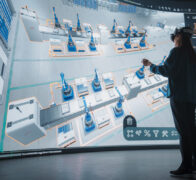
The fischertechnik® Learning Factory 4.0 has proven to be a suitable experimental environment for testing digital twins. Depending on the targeted maturity stage, the functions of a digital twin range from status monitoring and forecasting to the operational control of production and logistics systems. To systematically classify these functions, this article presents a maturity model that serves as a framework for the development of a digital twin. Building on this, selected use cases are implemented in a test and development environment based on a system architecture with multi-layered logic structure. These initial implementations serve to highlight application purposes, relevant methods, and typical challenges and potentials in the transfer to real factory environments.
Industry 4.0 Science | Volume 42 | Edition 2 | Pages 30-37 | DOI 10.30844/I4SE.26.2.30
Assistance for Simulation in Production and Logistics

Assistance for Simulation in Production and Logistics

A literature-based classification
Sigrid Wenzel ORCID Icon, Felix Özkul, Robin Sutherland ORCID Icon
Despite the commercial availability of simulation tools, using of discrete-event simulation for complex production and logistics systems is becoming increasingly challenging. It requires extensive expertise, high data quality, and considerable time and financial resources. For many years, therefore, there has been high demand for methodological and organizational support for the conduction of simulation studies. This article is based on an analysis of relevant publications and aims to classify previous research on improving the use of simulation. It also raises the question of the need for assistance in applying discrete event simulation and identifies areas for action.
Industry 4.0 Science | Volume 41 | 2025 | Edition 5 | Pages 66-76 | DOI 10.30844/I4SE.25.5.64
Digital Twins for Production and Logistics Systems

Digital Twins for Production and Logistics Systems

Challenges and focus areas in implementation and use
Deike Gliem ORCID Icon, Nicolas Wittine ORCID Icon, Sigrid Wenzel ORCID Icon
For a successful implementation as well as sustainable use and maintenance of digital twins for production and logistics systems, it is necessary to identify relevant use cases and master the associated challenges. This paper analyzes scientific literature on common applications and challenges in the implementation of digital twins for the planning and operation of production and logistics systems. To confirm the practical relevance of the results, the results of an empirical survey have also been included. The findings are used to derive key focus areas for the successful implementation and long-term use of digital twins in production and logistics.
Industry 4.0 Science | Volume 41 | 2025 | Edition 3 | Pages 42-49 | DOI 10.30844/I4SE.25.3.42
Double Transformation in Mechanical and Plant Engineering

Double Transformation in Mechanical and Plant Engineering

Digitalization and sustainability for one-of-a-kind and small-batch manufacturers
Christoph Laroque ORCID Icon, Deike Gliem ORCID Icon, Sigrid Wenzel ORCID Icon
A decisive competitive factor for smaller and medium-sized manufacturers of one-of-a-kind and small batches is their products’ timely completion, delivery and commissioning. Precise logistics planning is just as important as production control. However, the processes are often characterized by uncertainties, e.g. due to local conditions at the customer or cooperation with suppliers. Digital shadows for data evaluation in real time offer a convincing solution.
Industry 4.0 Science | Volume 40 | 2024 | Edition 5 | Pages 10-17 | DOI 10.30844/I4SE.24.5.10
Digital Transformation for SMEs

Digital Transformation for SMEs

Developing a roadmap for Industry 4.0 visions in small and medium-sized enterprises
Robin Sutherland ORCID Icon, Nicolas Wittine ORCID Icon, Deike Gliem ORCID Icon, Sigrid Wenzel ORCID Icon
Small and medium-sized enterprises still face the challenge of shaping their digital transformation. Maturity models offer a way to capture the situation within a company and support the formation of an Industry 4.0 vision. This paper presents a methodology that companies can use to develop a roadmap for shaping digital transformation by enabling the transfer of this vision into concrete decision-making steps.
Industrie 4.0 Management | Volume 39 | 2023 | Edition 4 | Pages 59-62 | DOI 10.30844/IM_23-4_59-62
Digitalization of Logistics Processes on Construction Sites

Digitalization of Logistics Processes on Construction Sites

Concept for the creation and use of a digital shadow for construction site logistics in mechanical and plant engineering
Sigrid Wenzel ORCID Icon, Daniel Vössing ORCID Icon, Deike Gliem ORCID Icon, Christoph Laroque ORCID Icon, Wibke Kusturica ORCID Icon
The planning of logistics processes and their efficient implementation are decisive competitive factors for customized plant construction. On the construction site, however, the collection of logistics data is often neglected, preventing the project planner from building a reliable database. Related information gaps can be closed with the help of a digital shadow that collects logistics-relevant data (partially) automatically, stores them in a consistent manner and makes them available to project management. This article describes the first important results of a research project on information and communication processes in construction site logistics and explains their vital role in the development and use of a digital shadow.
Industry 4.0 Science | Volume 39 | 2023 | Edition 1 | Pages 53-58 | DOI 10.30844/I4SE.23.1.53
Development of a Methodology for Selecting a Traceability System

Development of a Methodology for Selecting a Traceability System

Entwicklung einer Methodik zur Auswahl eines Traceability-Systems
Nicolas Wittine ORCID Icon, Tim Trostmann, Ana Luiza Amaral Bicalho, Christian Kern, Sigrid Wenzel ORCID Icon, Robert Refflinghaus
Traceability systems are used in large companies to trace and track products. Although these systems aid to avoid quality and cost risks, they are only used hesitantly in SMEs. This is partly due to a lack of market transparency. Consequently, a methodology is needed that enables SMEs to capture their requirements using reference products and processes and to map them to available software solutions. This paper deals with a methodology that simplifies the selection process and focuses on the approach regarding the creating reference products and processes.
Industrie 4.0 Management | Volume 36 | 2020 | Edition 6 | Pages 35-38
Digital Construction Site Logistics in Plant Construction

Digital Construction Site Logistics in Plant Construction

Ontology for the use of digital models for logistics planning on the construction site
Sigrid Wenzel ORCID Icon, Jana Stolipin, Jan M. Weber, Markus König
In order to support small and medium-sized enterprises (SME) in the field of large-scale plant construction, the requirements relevant for construction site logistics planning as well as the planning and controlling of logistics processes in large-scale plant construction using digital models are being investigated within the framework of the research project BIMLog. In this paper, the planning-relevant requirements and their description are presented in an ontology as the basis of a digital planning.
Industrie 4.0 Management | Volume 35 | 2019 | Edition 3 | Pages 55-59
Reliable Forecast of Logistic Process Durations

Reliable Forecast of Logistic Process Durations

Einflüsse auf die Dauer von Logistikprozessen der Unikat- und Kleinserienfertigung
Sigrid Wenzel ORCID Icon, Deike Gliem ORCID Icon, Christoph Laroque ORCID Icon, Wibke Kusturica ORCID Icon
One-of-a-kind or small batch manufacturer can only derive process times from previous projects to a limited extent for the planning of customer order and component-specific projects and transfer these to new projects. This is due to the fact that the process times depend on influencing parameters that are directly related to the respective component. As part of a research project, these influencing parameters to the duration for logistic processes are examined. The identification of the influencing parameters using a Delphi Study is explained in this article.
Industrie 4.0 Management | Volume 34 | 2018 | Edition 5 | Pages 43-46
Discrete-Event Simulation in Industry 4.0

Discrete-Event Simulation in Industry 4.0

Fields of Action for the Industrial Digital Transformation
Sigrid Wenzel ORCID Icon, Jana Stolipin, Ulrich Jessen
Discrete-event simulation of logistics and production systems plays an important role in the context of digital transformation. Its integration into modern planning and control processes is urgently required in order to realize Industry 4.0 concepts. In addition, simulation models will be an important part of the so-called digital twin in the planning and operation. However, the requirements for simulation models and tools are not yet comprehensively defined, and technical solutions have not been adequately implemented. This article presents the fields of action for the implementation.
Industrie 4.0 Management | Volume 34 | 2018 | Edition 3 | Pages 29-32
1 2