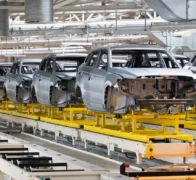
Industry 4.0—Progress and Digitalization in Limbo

Status of sustainable transformation and digitalization in production engineering

JournalIndustry 4.0 Science
Issue Volume 42, 2026, Edition 3, Pages 56-60
Bibliography Share Cite Download

Abstract

Digitalization projects help users represent complex processes more simply and efficiently. However, there are many obstacles to implementation. Reluctance to implement these projects is palpable. This affects, among others, employers and employees, who may fall behind economically by waiting or avoiding change. These observations can be traced back to an overarching research question: What barriers and systemic challenges hinder sustainable transformation within the context of Industry 4.0, particularly when considering human labor in production engineering? What questions are the affected stakeholders asking? The primary goal of this long-term research project is to define these questions decisively and in detail in order to develop a conceptual foundation that integrates research, teaching, and technological development and thus combines the potential of digital technologies with the experiential and practical knowledge of production workers.

Keywords

Article

It is widely accepted that Industry 4.0 is a key prerequisite for remaining competitive long term in the face of international competition. Deloitte’s 2026 Industry Outlook describes, among other things, the following industrial digitalization trends: Smart manufacturing and operations: Increased automation and analytics AI-powered supply chains: Managing the complexity of global supply chains Talent: Using agentic AI to optimize staff planning and learning These and other …

Access limited

You are currently not logged in / not yet registered.

To read the content in full, you must have an appropriate subscription. Alternatively, you can also obtain access by paying a one-off fee.

Subscription included Purchase
without 29,00 €
Digital 27,55 €
Expert 0,00 €
Professional 0,00 €

Read for once 29,00 €

All prices include 7% VAT

After purchasing access rights, you will automatically be redirected back to this page.


Potentials: Dynamics Leadership Strategy

You might also be interested in

Audio-Immersive Learning in Continuing Vocational Education

Audio-Immersive Learning in Continuing Vocational Education

From linear audio playback to AI-supported conversational learning companions
Tim Beichter, Vanessa Hartmann, Katharina Hölzle ORCID Icon, Manuel Kaiser
Artificial intelligence is increasingly shaping continuing vocational education and training by enabling the personalization of individual learning experiences. At the same time, audio-based learning formats are attracting growing interest among learners because of their flexibility and suitability for workplace learning. However, a conceptual framework for AI-supported audio learning, as well as the potential of combining artificial intelligence with audio-based learning, has received little attention to date. This paper therefore presents a conceptual perspective on the design possibilities and educational potential of AI-supported audio learning formats.
Industry 4.0 Science | Volume 42 | 2026 | Edition 5 | Pages 102-108 | DOI 10.30844/I4SE.26.5.12
Generative AI in Organizational Knowledge Management

Generative AI in Organizational Knowledge Management

AI literacy as a prerequisite for augmentation
Uta Wilkens ORCID Icon, Valentin Langholf ORCID Icon, Niklas Obermann ORCID Icon
Generative Artificial Intelligence (GenAI) offers new opportunities for organizational knowledge management, particularly when it comes to learning processes at the interface between explicit, firm-specific, and tacit knowledge. Its use is therefore of particular interest for application areas such as industrial maintenance. Based on a mechanical engineering case study, this article demonstrates that augmenting both processes and employees with GenAI requires AI literacy combined with professional skills.
Industry 4.0 Science | Volume 42 | 2026 | Edition 5 | Pages 118-126 | DOI 10.30844/I4SE.26.5.14
Explaining AI in Industrial Production in an Accessible Way

Explaining AI in Industrial Production in an Accessible Way

Requirements for AI demonstrators to promote acceptance
Jennifer Link ORCID Icon, Markus Harlacher ORCID Icon, Colin Srebny, Sascha Stowasser ORCID Icon
Artificial intelligence (AI) offers a wide range of possibilities in industrial production, but it also presents challenges regarding employee acceptance. AI demonstrators are therefore of central importance, as they enable hands-on experience with AI. However, there has been a lack of systematically identified requirements for demonstrators that specifically promote acceptance and address negative emotions. Using a multi-stage research design, 69 requirements were identified, structured into functional requirements, quality requirements, and boundary conditions.
Industry 4.0 Science | Volume 42 | 2026 | Edition 5 | Pages 6-14 | DOI 10.30844/I4SE.26.5.1
Work Design in the Use of Autonomous Systems

Work Design in the Use of Autonomous Systems

Addressing the shortage of skilled workers
Tim Jeske ORCID Icon, Sascha Stowasser ORCID Icon, Nicole Ottersböck, Sebastian Terstegen, Rasmus Adler ORCID Icon
Companies are increasingly challenged to address shortages of skilled workers while meeting rising demands for productivity, flexibility, and innovation. Because labor supply can only be expanded to a limited extent, there is a growing focus on designing work systems with productivity in mind. Autonomous systems offer significant potential in this regard. Their implementation requires not only technical adjustments but, above all, changes in organization, skills, and work design. This article analyzes empirically grounded change requirements in existing work systems as well as associated economic potential.
Industry 4.0 Science | Volume 42 | 2026 | Edition 5 | Pages 44-50 | DOI 10.30844/I4SE.26.5.5
Foundation Models in Industrial Robotics

Foundation Models in Industrial Robotics

Requirements for AI-supported assistance in production and logistics
Bernd Kuhlenkötter ORCID Icon, Daniel Syniawa ORCID Icon
Foundation models are increasingly changing the way robots are used in industry. Instead of writing complex programs line by line, programmers will soon be able to collaborate more closely with AI systems, describe tasks, and review generated solutions. This shifts their role from purely generating code to conceptual, supervisory, and validation activities. This article highlights the new possibilities that large AI models create for robot programming and the changes they entail for work and required skills in industrial practice.
Industry 4.0 Science | Volume 42 | 2026 | Edition 5 | Pages 16-23 | DOI 10.30844/I4SE.26.5.2
AI-Driven Organization as a New Work Paradigm

AI-Driven Organization as a New Work Paradigm

Implications for individual and organizational change
Katharina Hölzle ORCID Icon, Leonie Krauch, Wolfgang Beinhauer ORCID Icon, Carsten Schmidt, Josephine Hofmann ORCID Icon
Is it sufficient to train employees in the use of AI tools, or does the AI organization require an entirely new set of competencies? This paper introduces a digital enablement model comprising three competency dimensions and demonstrates, through an upskilling program implemented at the Fraunhofer Institute for Industrial Engineering IAO, how organizations can sustainably bridge the AI adoption gap.
Industry 4.0 Science | Volume 42 | 2026 | Edition 5 | Pages 94-100 | DOI 10.30844/I4SE.26.5.11