Digitale Transformation

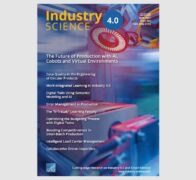
I4S 2/2025: The Future of Production with AI, Cobots and Virtual Worlds

I4S 2/2025: The Future of Production with AI, Cobots and Virtual Worlds

Technology needs innovative, value-adding business models
Artificial intelligence, collaborative robotics, and virtual worlds, such as the metaverse, are fueling visions for new forms of industrial value creation. However, innovation alone is not enough—given that these technologies only develop their full potential through intelligent business models. How can companies efficiently integrate AI-supported automation, cobots and digital twins into their processes?
Work-Integrated Learning in Industry 4.0

Work-Integrated Learning in Industry 4.0

A qualitative analysis of various assistance systems in assembly
Kathleen Warnhoff ORCID Icon
In the era of Industry 4.0, many industrial companies are facing major transformations. In the process of digitalization, factory management is adopting new technologies such as cognitive assistance systems, which has led to changes in work processes. Regarding assembly in the metal and electrical industries, it is unclear to what extent this development has promoted work-integrated learning. Therefore, the topic of this paper is a qualitative analysis that explores employees' perceptions of the learning opportunities and risks presented by cognitive assistance systems. Results: Not all assembly employees benefit equally from these new developments.
Industry 4.0 Science | Volume 41 | Edition 2 | Pages 20-29 | DOI 10.30844/I4SE.25.2.20
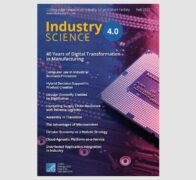
I4S 1/2025: 40 Years of Digital Transformation in Manufacturing

I4S 1/2025: 40 Years of Digital Transformation in Manufacturing

Key research questions for tomorrow's production and logistics
Digital transformation has been a central focus of scientific discussions for years. Questions relating to data-driven decisions, artificial intelligence and resilient supply chains are at the heart of current research. The articles in this issue explain key trends and present scientific findings and practical solutions - from automation and the circular economy to cloud computing.
Double Transformation in Mechanical and Plant Engineering

Double Transformation in Mechanical and Plant Engineering

Digitalization and sustainability for one-of-a-kind and small-batch manufacturers
Christoph Laroque ORCID Icon, Deike Gliem ORCID Icon, Sigrid Wenzel ORCID Icon
A decisive competitive factor for smaller and medium-sized manufacturers of one-of-a-kind and small batches is their products’ timely completion, delivery and commissioning. Precise logistics planning is just as important as production control. However, the processes are often characterized by uncertainties, e.g. due to local conditions at the customer or cooperation with suppliers. Digital shadows for data evaluation in real time offer a convincing solution.
Industry 4.0 Science | Volume 40 | 2024 | Edition 5 | Pages 10-17 | DOI 10.30844/I4SE.24.5.10
Leadership in Transition

Leadership in Transition

Transformational and shared leadership in the context of virtual collaboration
Christina Mayer ORCID Icon, Susanne Mütze-Niewöhner, Verena Nitsch ORCID Icon
Advances in information and communication technology (ICT) are opening up new opportunities for virtual collaboration. Shared leadership is a promising modern concept for overcoming challenges in the areas of communication, knowledge sharing and company loyalty. Empirical findings on shared leadership in virtual teams can shape recommendations on how successful leadership can support the virtualization of teamwork.
Industry 4.0 Science | Volume 40 | 2024 | Edition 5 | Pages 107-113 | DOI 10.30844/I4SE.24.5.106
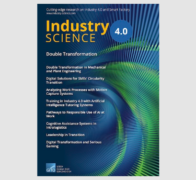
I4S 5/2024: Double Transformation

I4S 5/2024: Double Transformation

Integrating digital and ecological change in the world of work
Change is necessary for companies to maintain their competitive edge—both digital and ecological change. But while external support is at hand, the drive for change must come from companies themselves. In this issue of Industry 4.0 Science, experts of the Academic Society for Work and Industrial Organization discuss how the real-world application of innovative technologies lead to resource-efficient manufacturing.
Modular Learning Factories for Industry 4.0

Modular Learning Factories for Industry 4.0

Acquisition of a target-oriented acton competence to accelerate industrial implementation
Maximilian Dommermuth ORCID Icon
Industry 4.0 requires new teaching content due to its innovation potential. Skills profiles currently in demand often aren't reflected in vocational and tertiary education. Additionally, conventional further education and training often costs considerably money and time. Tailor-made learning opportunities and teaching targeted problem-solving skills in a modular learning factory are a more effective approach.
Industry 4.0 Science | Volume 40 | 2024 | Edition 4 | Pages 24-30 | DOI 10.30844/I4SE.24.4.24
ACHEMA 2024
Start 10.06.2024 - End 14.06.2024

ACHEMA 2024

Modern, interactive and always up to date: With a unique range of topics, exciting innovations and new event formats, the world's leading trade show for the process industries brings together experts, decision makers and trendsetters from all over the world on June 10–14 at Frankfurt am Main. Engineers and process technicians, chemists and biotechnologists, energy experts, environmental specialist and professionals in many more fields meet manufacturers and providers presenting innovative products for chemistry, pharmaceuticals, biotechnology, energy and the environment from over 50 countries at ACHEMA. Take part in the event and secure your ticket to the Weltleitmesse der Prozessindustrie in Frankfurt am Main!
Digital Business Models in Medium­Sized Family Businesses

Digital Business Models in Medium­Sized Family Businesses

Obstacles to the Estab­lishment and How They Are Defeated
Ove Friedrichsen, Michael Heins
Digital transformation is a crucial factor for the competitiveness of companies. This article explores obstacles and their interrelationships in establishing digital business models in medium-sized family businesses as well as initial approaches to overcoming these obstacles.
Industrie 4.0 Management | Volume 39 | 2023 | Edition 6 | Pages 12-16 | DOI 10.30844/IM_23-6_12-16
Sustainability in SME through Digitalization

Sustainability in SME through Digitalization

SME Use Cases for Improving Sustainability with Digital Technologies
Henry Ekwaro-Osire, Stefan Wiesner, Dennis Bode, Alexandra Pehlken
The impact of rapid technological change in a competitive global market is reaching small and medium-sized enterprises (SME) at an increasing rate; digitalization increases the interconnectedness among manufacturers, products and customers. Within this context, SME need to improve both their business processes and their technological capabilities in order to achieve internal and external sustainability goals, to be successful in the marketplace and to meet customer needs. This article discusses the opportunities of digitalization to improve sustainability by presenting two use cases from SME.
Industrie 4.0 Management | Volume 39 | 2023 | Edition 2 | Pages 36-40
1 2 3 5