Branche: Manufacturing

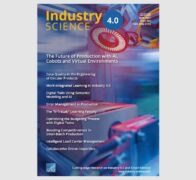
Distributed Application Integration in Industry

Distributed Application Integration in Industry

Employing microservices for enterprise application integration (EAI)
Jan-Peer Rudolph ORCID Icon
In line with current digital transformations, the number of software applications in use by companies is continuously increasing. This particularly affects industrial enterprises, which face challenges due to their often complex business processes. A holistic and sustainable integration of these business processes requires a strong link between the different information systems used. In this context, application integration, also known as enterprise application integration (EAI), is becoming more important. Modern approaches such as the use of microservices offer a particularly flexible and efficient solution for seamlessly connecting different applications and thus promoting the agility and scalability of a company’s IT landscape.
Industry 4.0 Science | Volume 41 | 2025 | Edition 1 | Pages 74-80
Computer Use in Industrial Business Processes

Computer Use in Industrial Business Processes

A systematic literature review of the last 40 years
Norbert Gronau ORCID Icon
The most important value-adding industrial business processes are product creation and order processing. For 40 years now, Industry 4.0 Science and its predecessor titles have supported the development and implementation of the software used in these industrial business processes. In honor of the journal’s 40th anniversary, a systematic literature review is carried out to identify trends that played a role in the past but no longer do today. The research provides some surprising insights into the topics that have been important in the last 40 years – as well as those that will remain relevant in the future.
Industry 4.0 Science | Volume 41 | 2025 | Edition 1 | Pages 8-14 | DOI 10.30844/I4SE.25.1.8
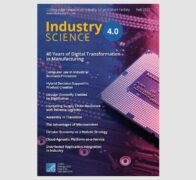
I4S 1/2025: 40 Years of Digital Transformation in Manufacturing

I4S 1/2025: 40 Years of Digital Transformation in Manufacturing

Key research questions for tomorrow's production and logistics
Digital transformation has been a central focus of scientific discussions for years. Questions relating to data-driven decisions, artificial intelligence and resilient supply chains are at the heart of current research. The articles in this issue explain key trends and present scientific findings and practical solutions - from automation and the circular economy to cloud computing.
Digitization of Raster Drawings with Deep Learning

Digitization of Raster Drawings with Deep Learning

Framework outperforms OCR software in extracting data from mechanical drawings
Xiao Zhao, Marko Weber, Jan Schöffmann, Daniela Oelke ORCID Icon
A new look into the depths of technical drawings: A deep learning framework reads CAD drawings more accurately than ever before, recognizing geometrical dimensioning and tolerancing, dimensions, and every other detail. What used to be tedious manual labor is now carried out by an AI that understands the special features of every line and label. This promising technology not only increases accuracy but also speeds up the processing of drawings considerably. The system thus opens up new avenues for precision in production.
Industry 4.0 Science | Volume 40 | 2024 | Edition 6 | Pages 10-17
Setting Up Assembly Assistance Systems

Setting Up Assembly Assistance Systems

System for the efficient configuration of assembly instructions and assistance functions
Dennis Keiser, Dario Niermann ORCID Icon, Michael Freitag ORCID Icon
In industrial assembly, humans are working more closely with machines due to assembly assistance. However, despite their great potential, the implementation of digital systems is time-consuming, which entails high training requirements. Small and medium-sized businesses, in particular, are reaching their limits. A newly developed setup system is designed to facilitate the introduction and use of such assembly assistance systems and increase their acceptance.
Industry 4.0 Science | Volume 40 | 2024 | Edition 6 | Pages 32-39
Double Transformation in Mechanical and Plant Engineering

Double Transformation in Mechanical and Plant Engineering

Digitalization and sustainability for one-of-a-kind and small-batch manufacturers
Christoph Laroque ORCID Icon, Deike Gliem ORCID Icon, Sigrid Wenzel ORCID Icon
A decisive competitive factor for smaller and medium-sized manufacturers of one-of-a-kind and small batches is their products’ timely completion, delivery and commissioning. Precise logistics planning is just as important as production control. However, the processes are often characterized by uncertainties, e.g. due to local conditions at the customer or cooperation with suppliers. Digital shadows for data evaluation in real time offer a convincing solution.
Industry 4.0 Science | Volume 40 | 2024 | Edition 5 | Pages 10-17 | DOI 10.30844/I4SE.24.5.10
Modular Learning Factories for Industry 4.0

Modular Learning Factories for Industry 4.0

Acquisition of a target-oriented acton competence to accelerate industrial implementation
Maximilian Dommermuth ORCID Icon
Industry 4.0 requires new teaching content due to its innovation potential. Skills profiles currently in demand often aren't reflected in vocational and tertiary education. Additionally, conventional further education and training often costs considerably money and time. Tailor-made learning opportunities and teaching targeted problem-solving skills in a modular learning factory are a more effective approach.
Industry 4.0 Science | Volume 40 | 2024 | Edition 4 | Pages 24-30 | DOI 10.30844/I4SE.24.4.24
Simulated Production Environment Today

Simulated Production Environment Today

Evaluation of the numerical process simulation of selective laser melting
Emre Sahin ORCID Icon, Lennart Grüger ORCID Icon, Sebastian Härtel ORCID Icon
Numerical simulation for the optimization of conventional manufacturing processes is common practice in industry, but isn’t yet fully developed for generative manufacturing processes. The simulation of powder bed fusion (PBF) especially, with their more than 130 influencing factors, poses major challenges. Nevertheless, the methods developed can substantially accelerate product development, as an examination of common procedures and innovative approaches shows.
Industry 4.0 Science | Volume 40 | 2024 | Edition 4 | Pages 70-77 | DOI 10.30844/I4SE.24.4.70
From Lean Production to the Sustainable Production System of the Future

From Lean Production to the Sustainable Production System of the Future

An innovation factory as a multi-stage learning factory
Markus Schneider, Christoph Müller
The typical problems of a medium-sized company, coupled with the new requirements for sustainability, harbor the potential for economic tension. Learning factories can counteract this: they simulate production processes and offer an environment where participants can develop knowledge and skills in a realistic production setting. Establishing an innovation factory not only increases productivity, but also significantly reduces land consumption.
Industry 4.0 Science | Volume 40 | 2024 | Edition 4 | Pages 78-84
Digital Platform Frameworks for Manufacturing Companies

Digital Platform Frameworks for Manufacturing Companies

A review
Marcel Rojahn ORCID Icon
In recent years, digital platforms have established themselves as a central concept in the IT field. Due to the wide variety of digital platforms available on the market, there is still a need for clear comparison with criteria to enable interested parties to select, change, operate and further develop these platforms. The following paper aims to contribute to the facilitation of this comparison by undertaking a systematic literature review of digital platform frameworks in the context of the Industrial Internet of Things (IIOT) for manufacturing companies and thus providing a basis for a number of potential ways to effectively compare current digital platforms and ecosystems.
Industry 4.0 Science | Volume 40 | 2024 | Edition 2 | Pages 8-15 | DOI 10.30844/I4SE.24.2.8
1 3 4 5