Potentials and Application of the Industrial Metaverse

Convergence from simulation to reality

JournalIndustrie 4.0 Management
Issue Volume 39, 2023, Edition 5, Pages 27-32
Open Accesshttps://doi.org/10.30844/IM_23-5_27-32
Bibliography Share Cite Download

Abstract

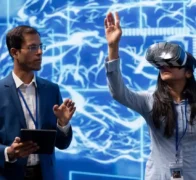
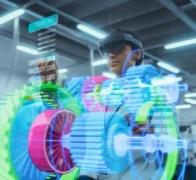
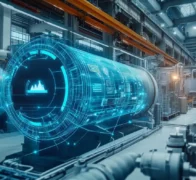
This paper deals with the concept of the Industrial Metaverse and its potential impact on the manufacturing industry. First, the possibilities of the Industrial Metaverse are explained in general and then possible resulting functionalities for production technology along the life cycle are presented. For the two topics "Synthetic Data Generation" and "Virtual Qualification" the implications of the Industrial Metaverse are considered more concretely.

Keywords


Bibliography

[1] Lee, L.-H. u. a.: All One Needs to Know about Metaverse: A Complete Survey on Technological Singularity, Virtual Ecosystem, and Research Agenda. 2021. DOI: 10.48550/arXiv.2110.05352.
[2] Mystakidis, S.: Metaverse. In: Encyclopedia 2 (2022) 1, S. 486-497. DOI: 10.3390/encyclopedia2010031.
[3] Grasso, A.: Industrial Metaverse: The autonomous business ecosystem paving theway toward Industry 5.0. URL: www.antgrasso.medium.com/in-dustrial-metaverse-the-a utonomous-business-ecosystem-paving-the-way-toward-industry-5-0-618033fabfc7, Abrufdatum 21.06.2023.
[4] BMW Group: BMW Group und NVIDIA heben virtuelle Fabrikplanung auf die nächste Ebene. URL: www.press.bmwgroup.com/deutschland/article/detail/T0329569DE/bmw-group-und-nvidia-heben-virtuelle-fabrikplanung-auf-die-naechste-ebene?language=de, Abrufdatum 21.06.2023.
[5] Shapiro, D.: Manufactured in the Metaverse: Mercedes-Benz Assembles Next-Gen Factories With NVIDIA Omniverse: Premium automaker implements digital-first approach to production. URL: www.blogs.nvidia.com/blog/2023/01/03/mercedes-benz-next-gen-factories-omniverse/, Abrufdatum 21.06.2023.
[6] Siemens: Siemens and NVIDIA partner to build the Industrial Metaverse. URL: www.siemens.com/global/en/company/insights/siemens-and-nvidia-partner-to-build-the-industrial-metaverse.html, Abrufdatum 15.08.2023.
[7] Dotson, K..: How the industrial metaverse will transform manufacturing. URL: www.siliconangle.com/2022/12/24/industrial-metaverse-will-transform-manufacturing/, Abrufdatum 21.06.2023.
[8] Petrovic, O.; Dias Duarte, D. L.; Storms, S.; Herfs, H.: Ontology-based Generation of Synthetic Datasets for Computer Vision Projects in production. In: 2023 IEEE/ASME International Conference on Advanced Intelligent Mechatronics (AIM).
[9] Petrovic, O.; Schaper, L.; Roggendorf, S.; Storms, S.; Brecher, C.: Sim2Real Deep Reinforcement Learning of Compliance-based Robotic Assembly Operations. In: 26th International Conference on Methods and Models in Automation and Robotics (MMAR): IEEE (2022), S. 300-305.
[10] Hwang, G.-J., Chien, S.-Y.: Definition, roles, and potential research issues of the metaverse in education: An artificial intelligence perspective. In: Computers and Edu-cation: Artificial Intelligence 3 (2022). Art.-Nr. 100082. DOI: 10.1016/j.caeai.2022.100082.
[11] NVIDIA: NVIDIA and Microsoft bring the Industrial Metaverse and AI to hundreds of millions of enterprise users via Azure Cloud. URL: www.investor.nvidia.com/news/press-release-details/2023/NVIDIA-and-Microsoft-to-Bring-the-Industrial-Metaverse-and-AIto-Hundreds-of-Millions-of-Enterprise-Users-via-Azure-Cloud/default.aspx, Abrufdatum 15.08.2023.

Your downloads


Potentials: Profitability

You might also be interested in
Experiencing Digital Twins in Production and Logistics

Experiencing Digital Twins in Production and Logistics

The fischertechnik® Learning Factory 4.0 as a development platform for possible expansion stages
Deike Gliem ORCID Icon, Sigrid Wenzel ORCID Icon, Jan Schickram, Tareq Albeesh
The fischertechnik® Learning Factory 4.0 has proven to be a suitable experimental environment for testing digital twins. Depending on the targeted maturity stage, the functions of a digital twin range from status monitoring and forecasting to the operational control of production and logistics systems. To systematically classify these functions, this article presents a maturity model that serves as a framework for the development of a digital twin. Building on this, selected use cases are implemented in a test and development environment based on a system architecture with multi-layered logic structure. These initial implementations serve to highlight application purposes, relevant methods, and typical challenges and potentials in the transfer to real factory environments.
Industry 4.0 Science | Volume 42 | Edition 2 | Pages 30-37 | DOI 10.30844/I4SE.26.2.30
Empathic Assembly Assistance

Empathic Assembly Assistance

Combining AI-based data analysis and empathic human digital twins
Matthias Lück ORCID Icon, Katharina Hölzle ORCID Icon, Christian Saba-Gayoso, Joachim Lentes
Industrial companies in Germany face demographic change and stagnating productivity in an increasingly complex world. Manual assembly remains essential for complex, low-volume products, yet productivity and quality lag due to human variability. This paper introduces a concept and demonstrator for an empathic assembly assistance system that merges a human digital twin and AI-based screwdriver data analytics within a modular architecture. Tightening anomalies are classified, linked to inferred worker states and translated into information and recommendations.
Industry 4.0 Science | Volume 41 | 2025 | Edition 5 | Pages 6-13 | DOI 10.30844/I4SE.25.5.6
Enabler for the Digital Twin

Enabler for the Digital Twin

Requirements for Technical Documentation 4.0
Christian Koch, Lukas Schulte, René Wöstmann, Jochen Deuse ORCID Icon
The increasing heterogeneity and complexity of industrial plant components from different manufacturers make it difficult to handle technical documentation consistently. In addition, the flexibility required for system changes challenges the long-term usability and legally compliant design of this documentation throughout the entire life cycle of cyber-physical production systems. This article contributes to the discussion on Technical Documentation 4.0 by systematically analyzing existing specifications and approaches and by proposing a concept for a holistic documentation framework.
Industry 4.0 Science | Volume 41 | 2025 | Edition 4 | Pages 76-85
Real-Time Monitoring of the Carbon Footprint for SMEs

Real-Time Monitoring of the Carbon Footprint for SMEs

Sustainability in real time — from operation to finished products
Henning Strauß ORCID Icon, Julian Sasse ORCID Icon
Although SMEs are not directly affected by the statutory reporting obligations for carbon accounting, as suppliers they are obliged to meet the requirements of sustainability reporting. In addition to a holistic life cycle analysis, this requires a high-quality database within production in order to determine the specific CO₂ footprint. A central element is the implementation of a Machine Carbon Footprint (MCF). This article aims to develop and implement an MCF focusing on its applicability for SMEs. For this purpose, data is recorded and visualized in real time on a machine tool. The measurement data is then processed, stored and visualized using open-source low-code platforms. Real-time data flows enable the precise determination of the production-specific carbon footprint and, in conjunction with order data, the Product Carbon Footprint.
Industry 4.0 Science | Volume 41 | Edition 3 | Pages 102-109
Enabling the Future of Manufacturing with Digital Twins

Enabling the Future of Manufacturing with Digital Twins

Opportunities and obstacles
Javad Ghofrani, Darian Lemke, Tassilo Söldner
Digital twins connect physical and digital systems, furthering efficiency, enabling predictive maintenance, and allowing the production of more customized products. Despite these advantages, challenges such as high costs, data synchronization, and security risks hinder widespread adoption. This article explores the potential of digital twins and examines key barriers to integration and implementation, also considering some industrial applications including additive manufacturing as a relevant use case.
Industry 4.0 Science | Volume 41 | Edition 3 | Pages 72-81
Digital Supply Chain Twin: The Pathway to Success

Digital Supply Chain Twin: The Pathway to Success

A catalyst for increasing competitiveness
Gökhan Cenk ORCID Icon, Jonas Andersson, Tobias Engel ORCID Icon
Companies face a variety of challenges when optimizing global supply chains. Economic interests must be balanced with legal requirements, such as the German Supply Chain Due Diligence Act (SCDDA) and the European Sustainability Reporting Standards (ESRS). A digital supply chain twin (DSCT) enables the visualization of value creation networks and supports key business functions, such as purchasing, supply chain management, distribution, service, and sales. By leveraging immersive technologies, the DSCT helps generate sustainable competitive advantages across the entire supply network.
Industry 4.0 Science | Volume 41 | 2025 | Edition 3 | Pages 52-60 | DOI 10.30844/I4SE.25.3.52