Industrial Application of Immersive Technologies |
Exploring XR solutions for training, instruction, design review, and assembly planning
 , Faikar Zakky Haidar
, Matheus Lenzi dos Santos
, Kussai AI Jairoud
, Eduardo Koscianski
, Faikar Zakky Haidar
, Matheus Lenzi dos Santos
, Kussai AI Jairoud
, Eduardo Koscianski
| Journal | Industry 4.0 Science |
| Issue | Volume 42, 2026, Edition 3, Pages 38-47 |
| Open Access | https://doi.org/10.30844/I4SE.26.3.4 |
| Bibliography | Share | Cite | Download |
Abstract
Keywords
Article
Over the past two decades, immersive technologies have transitioned from expensive, lab-restricted systems like the Cave Automatic Virtual Environment (CAVE) [1] to accessible, standalone extended reality (XR) devices. Microsoft pioneered mixed reality (MR) with introducing the HoloLens in 2016 and the HoloLens2 in 2019 [2], whereas the release of the Oculus Quest in 2019 marked a turning point toward affordable, self-contained systems with inside-out tracking [3]. Since then, the market has expanded to spatial computing devices like Apple’s Vision Pro [4] and AI-integrated systems from Samsung and Google [5].
However, hardware accessibility is only the first step toward industrial viability. Palmarini et al. reviewed augmented reality (AR) maintenance applications in 2018, highlighting the predominance of head-mounted displays (HMDs) and handheld displays (HHDs), the limitations of vision-based tracking in industrial environments, and the high cost of manual content creation. They concluded that broader industrial adoption would require improvements in hardware, tracking reliability, and authoring tools [6].
More recent studies indicate that the industrial XR literature has expanded considerably beyond these early maintenance-focused reviews. De Giorgio et al. provide a systematic review of manufacturing teaching and training applications, showing that XR is increasingly used in industrial training, particularly in assembly-related contexts, while also emphasizing heterogeneous evaluation approaches and varying technology readiness levels [7]. Di Pasquale et al. further examine the effects of augmented and virtual technologies on worker performance in manufacturing and identify recurring expected benefits such as improvements in quality, safety, and productivity, while also pointing to the need for better understanding of human-technology interaction in smart factory settings [8].
This trend is also visible in more focused reviews on immersive training. Di Pasquale et al. present a systematic literature review on virtual reality for assembly and disassembly training and describe the field as promising for learning, productivity, and safety, while noting that broader deployment still requires further validation in industrial practice [9]. Similarly, Ibarra Kwick et al. review XR applications for CNC machine training and characterize the field as comparatively mature in terms of training use cases, while also identifying continuing opportunities for Industry 4.0-oriented development [10].
In addition, Bödding et al. synthesize evidence on mixed reality in vocational education and training and report significant behavioral, cognitive, and affective training outcomes, suggesting that immersive technologies can support learning effectiveness in professional settings when appropriately designed and integrated [11].
Taken together, these more recent studies reinforce the view that immersive technologies are increasingly relevant for training, procedural support, and industrial learning environments. At the same time, they also show that the evidence base remains heterogeneous, that evaluation methods are not yet fully standardized, and that questions of scalability, long-term integration, and comparative effectiveness across use cases remain open.
Against this background, the present paper does not aim to provide a systematic review of the full XR literature, but rather to outline selected industrial application areas through representative commercially available software solutions and to describe the kinds of functionalities and application scenarios that they currently enable. The selection of the software solutions is based on the author’s practical experience applying these tools and technologies in teaching, laboratory experiments and student projects with industry partners.
For immersive technologies to achieve broad industrial adoption, two fundamental conditions must be met:
- The availability of affordable, user-friendly, and ergonomically suitable XR hardware
- The existence of specialized XR software platforms that fully exploit this hardware while enabling no-code or low-code creation of immersive content.
In key applicatiofn domains such as product development, design engineering, and assembly planning, domain experts typically lack software development resources, and custom XR programming is both time-consuming and costly. In this paper, the authors examine contemporary XR software solutions for industrial use that emphasize no-code content creation, with the aim of assessing whether they can play a transformative role in advancing the practical adoption of immersive technologies in industry.
Application areas of industrial immersive technologies
Although the application areas examined in this paper can also be supported by conventional, non-immersive technologies such as desktop computers with 2D monitors or mobile tablets, immersive technologies offer distinct advantages in terms of spatial presence, depth perception, and natural user interaction. These characteristics are particularly valuable in industrial contexts, where spatial understanding, situational awareness, and hands-free interaction are critical.
This paper focuses on four principal categories of industrial immersive applications: training and simulation, spatial instructions and guides, collaborative design review, and assembly and production planning.
Each category addresses specific operational requirements in industrial environments and is supported by dedicated XR software solutions. The following sections introduce one representative tool for each application category. For each tool, we provide a concise description, examine its core capabilities, and discuss relevant industrial use cases. The selection of tools was based on three criteria:
- Active commercial deployment in industrial settings, to ensure practical relevance,
- Direct hands-on laboratory experience with the tool, so that the assessment is grounded in first-hand use rather than solely in vendor documentation,
- Coverage of distinct functional areas identified in the literature, with training and assembly repeatedly highlighted in recent systematic reviews [7, 9–11], while guidance and design review emerged from the authors’ laboratory experience. Each category is represented by a single tool; although alternative solutions exist, they are beyond the scope of this overview.
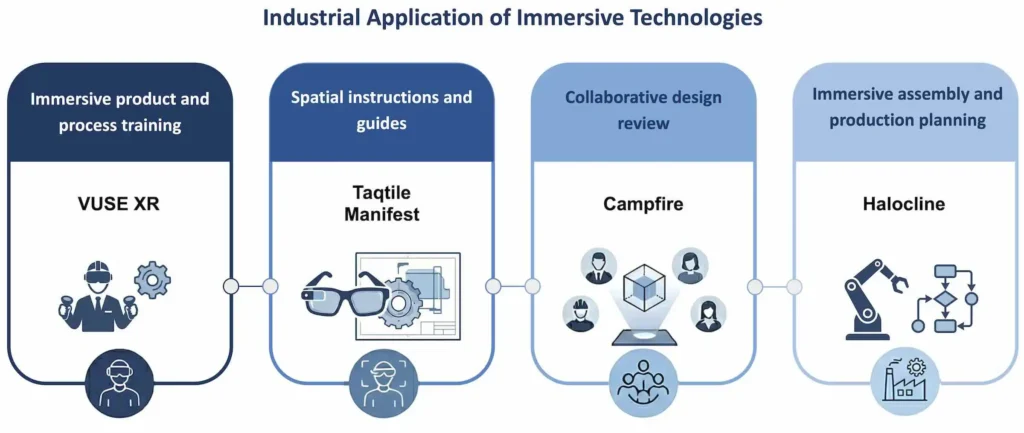
Figure 1 summarizes the identified application categories and the representative software tools examined in this study.
Immersive product and process training: VUSE XR
Product and process training represent core application areas for immersive technologies in industrial contexts. XR enables workers to practice tasks safely, repeatedly, and under conditions that closely resemble real working environments, while simultaneously reducing costs, risks, and operational downtime [6].
Web-based XR platforms such as VUSE XR [12] focus on scalable and easily accessible product and process training scenarios. VUSE XR is a no-code Software-as-a-Service (SaaS) platform that enables the creation of XR “experiences” for training, support, and product communication based on computer-aided design (CAD) data and other 3D assets. Experiences are structured into scenes representing individual tasks or product features, each further subdivided into ordered steps to support a clear didactic flow for procedural learning.
Since VUSE XR operates entirely within the browser, the same content can be accessed across multiple devices, including desktop PCs, tablets, smartphones, and standalone XR headsets. On devices such as the Meta Quest, users may choose between full VR or a pass-through MR mode that keeps the physical environment visible. This flexibility can help reduce cybersickness during longer training sessions. Interaction is primarily designed for individual users: components can be highlighted and grabbed (Fig. 2), moved, rotated, or activated via buttons or hand gestures, and simple animations such as translations and rotations can be triggered.
![Figure 2: View of a planetary gearbox via the VUSE XR Hub: desktop exploded view (left) and in-headset interactive view highlighting user interaction with parts (right) [12].](https://industry-science.com/wp-content/uploads/2026/06/Straube_I4S-26-3_Figure-2-1024x346.webp)
The training experiences implemented in VUSE XR typically follow linear, step-by-step workflows without conditional branching or automated performance feedback. Alternative scenarios can, however, be realized as separate scenes within a single experience and selected via a menu. Training sessions can be cast from the headset to an external display, allowing instructors or observers to follow the session in real time, although the platform does not currently support true multi-user co-presence.
From an authoring perspective, content creators work within a browser-based editor, where assets are uploaded and scenes assembled without the need for programming skills. For large industrial CAD models, preprocessing and simplification are often required to ensure smooth performance on standalone headsets, whereas PC-based viewing environments can handle higher model complexity.
Spatial instructions and guides: Taqtile Manifest
The application domain of spatial instructions and guides represents a key use case for immersive technologies, particularly in industrial environments where procedural tasks must be executed accurately and consistently by operators but where programming expertise does not exist.
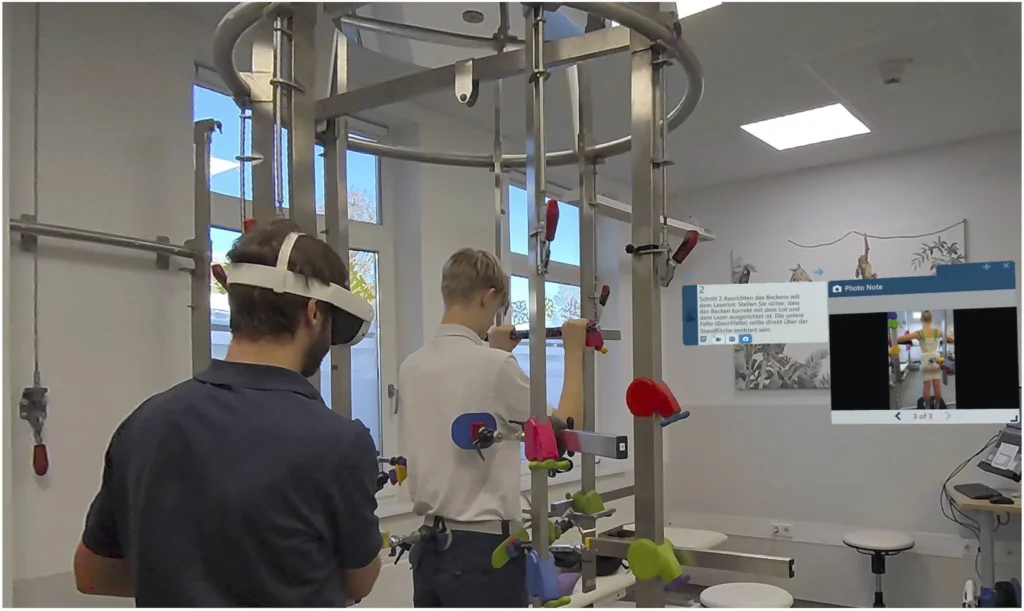
Taqtile Manifest [13] is an immersive guidance platform specifically designed for industrial environments in which procedures must be structured, traceable, and auditable. The system enables the creation of step-by-step workflows that integrate visual instructions, spatial annotations, embedded documentation, and verification checkpoints. Figure 3 shows an example of a Manifest-guided workflow in an orthopedic assembly context, highlighting the overlay of spatial instructions and the capture of photographic evidence directly within the operator’s field of view while their hands remain free to operate the equipment.
These workflows support operators during maintenance, inspection, and assembly tasks, helping to improve procedural consistency and reduce error rates. By overlaying digital instructions directly onto physical equipment, Manifest enhances spatial understanding and reduces cognitive load, as operators no longer need to switch between printed manuals, tablets, or separate computer screens. Sasikumar et al. researched how 3D annotations and hand gestures (both available in Taqtile) support users in MR environments and proved that both average task performance and impacts related to mental load, effort and frustration improved [14].
A central capability of Manifest is the recording of execution evidence, including photographs, confirmations, and structured data logs. This allows supervisors and quality managers to monitor procedural compliance, document task completion, and identify deviations or errors in near real time. Such traceability is particularly relevant in regulated industrial sectors where documentation and auditability are mandatory.
In addition to guided workflows, Manifest supports immersive remote assistance scenarios. Operators can initiate live connections with supervisors or subject matter experts when encountering unexpected conditions. Through a built-in communication feature, remote experts can view the operator’s first-person perspective, place spatial annotations, and provide contextual guidance directly within the immersive environment. This combination of structured task guidance, procedural verification, and real-time remote support positions Taqtile Manifest as a robust solution for spatial instructions and guides in industrial applications [15].
Collaborative design review: Campfire
Among the identified application categories, collaborative design review represents a particularly relevant use case for XR, as it enables engineering teams to jointly inspect and discuss complex 3D models in a shared immersive environment.
Campfire [16] is an immersive design review platform focused on enabling engineering teams to collaboratively explore, discuss, and evaluate three-dimensional models in MR. The system supports immersive multi-user collaboration, allowing multiple participants to join a shared virtual workspace and communicate naturally through integrated voice interaction. Collaboration can take place in a co-located setting, where all participants perceive the same virtual object spatially anchored in the physical room, each from their individual viewpoint. This mode is illustrated in Figure 4, which shows three users jointly reviewing a virtual engine model in MR.
In addition to in-room collaboration, Campfire supports remote participation, in which geographically distributed users join the same session as avatars. These avatars visualize the position, orientation, and viewing direction of remote participants, thereby conveying spatial context and attention focus during discussions. This shared sense of presence enhances communication efficiency, supports joint decision-making, and accelerates design evaluation processes. By providing direct integration with CAD data and supporting a wide range of common 3D file formats, Campfire enables rapid import and review of complex industrial models, helping to shorten feedback cycles and reduce time-to-market.
Campfire further offers a comprehensive set of interaction tools for detailed inspection of complex assemblies. These include exploded views, cutting planes, highlighting functions, and direct object manipulation such as grabbing, rotating, or repositioning individual components. Such tools allow engineering teams to examine internal structures, analyze spatial relationships, and identify potential design conflicts that may be difficult to detect in conventional desktop-based or 2D CAD reviews.
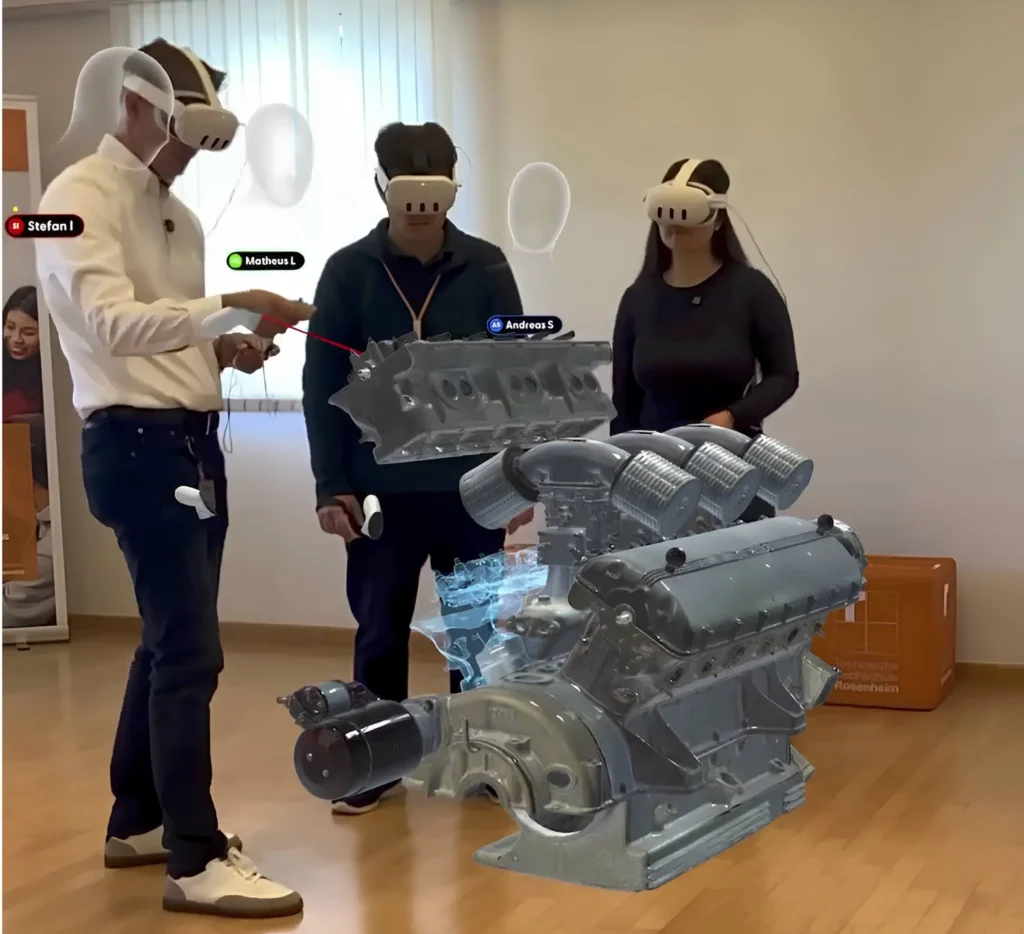
By combining real-time multi-user collaboration with intuitive spatial interaction capabilities, Campfire provides an effective environment for immersive design review, particularly in early development phases where rapid iteration, shared understanding, and interdisciplinary communication are critical [16].
Immersive assembly and production planning: Halocline
Conventional lean production methods rely on physical mock-ups made from cardboard or wood to validate workstation layouts and assembly processes. Although effective, these approaches require considerable floor space, are labor-intensive, and offer limited flexibility once physical structures are built [19].
In the domain of assembly and production planning, Halocline [17] introduces a methodological shift away from traditional cardboard engineering toward virtual cardboard engineering (VCE) [18]. Halocline addresses these constraints by providing an immersive VR environment that enables industrial engineers to design, evaluate, and iteratively optimize production layouts at a 1:1 scale without physical prototypes [17].
Unlike pure visualization tools, Halocline supports constructive interaction with the virtual shop floor. Using no-code spatial interaction, planners can assemble workstations, position equipment, and simulate manual assembly operations directly in the immersive environment. This enables early verification of reach distances, fields of view, collision risks, and component accessibility, before hardware is procured (Fig. 5).
During virtual assembly execution, users control a tracked avatar via head and controller input, allowing realistic motion representation. Movement paths can be recorded and analyzed using virtual spaghetti diagrams to identify unnecessary walking distances or inefficient motion sequences. In parallel, ergonomic evaluations are conducted by highlighting critical body regions directly on the avatar.
Recent academic studies show that VCE can significantly accelerate early planning phases by replacing full-scale physical prototyping in factory halls with compact VR safety areas. This approach supports rapid, non-destructive iteration of layout alternatives while reducing spatial, material, and organizational effort [19].
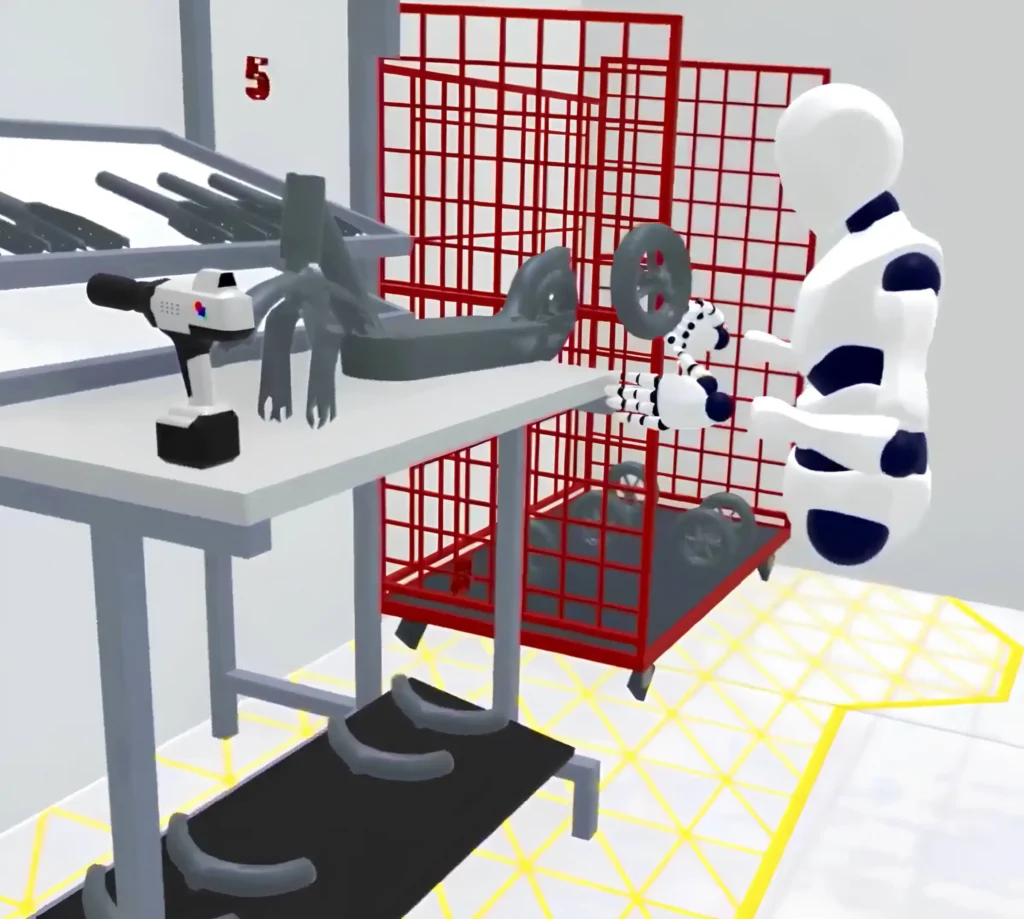
A key advancement of Halocline is its integration with the Methods-Time Measurement (MTM) standard through the MTMmotion interface. This capability transforms VR from a predominantly qualitative planning tool into a quantitative analytical instrument [19]. By capturing hand and body movement data during virtual assembly trials, the system automatically derives MTM process elements and calculates standardized process times. Empirical implementations demonstrate that this digitally supported workflow promotes preventive ergonomics, optimizing cycle times, motion efficiency, and human factors prior to production ramp-up [18–19].
Findings on the practical effectiveness of industrial XR applications
This paper examined four current application areas of immersive technologies in industrial contexts: product and process training, spatial instructions and guides, collaborative design review, and assembly and production planning. Using one representative tool for each category, the paper showed that contemporary XR solutions are no longer limited to experimental visualization but increasingly support practical industrial workflows through accessible hardware, browser-based deployment, and no-code or low-code content creation approaches.
Across all four categories, a central finding is that the effectiveness of immersive technologies lies less in immersion as an end in itself and more in their ability to improve spatial understanding, contextual guidance, and interaction with digital product and process information. In training scenarios, XR can create safe and repeatable learning environments. In spatial guidance applications, it can deliver task-relevant information directly in the operator’s field of view while supporting traceability and documentation.
In design review, immersive multi-user environments can foster shared understanding of complex 3D models and improve interdisciplinary communication. In assembly and production planning, immersive environments can support early validation of layouts, ergonomics, and process sequences before physical implementation.
The examples discussed in this paper also indicate that low-code and no-code XR platforms can play an important enabling role in industrial adoption. Their effectiveness derives from lowering technical barriers for domain experts who are not software developers, while still allowing them to create, adapt, and deploy immersive content for relevant use cases.
This is particularly important in industrial engineering environments, where practical value depends on short iteration cycles, direct involvement of process experts, and the ability to integrate digital content into existing workflows. From this perspective, low-code and no-code approaches appear especially effective at accelerating implementation, reducing dependence on custom software development, and supporting scalable use of XR across multiple devices and user groups.
At the same time, the paper also shows that the effectiveness of these approaches is application-dependent and bound by current limitations. The reviewed tools differ considerably in their focus and capabilities, for example with respect to multi-user collaboration, workflow flexibility, CAD model handling, evidence capture, and quantitative analysis.
In addition, hardware constraints, model preprocessing requirements, proprietary software ecosystems, and the limited depth of configurable interaction can restrict broader deployment. Low-code and no-code platforms therefore do not replace specialized development in all cases but rather provide a pragmatic and often highly useful middle ground in industrial scenarios.
The contribution of this paper is therefore neither a systematic review of the full XR market nor an empirical comparison of tools but an illustrative categorization of relevant industrial XR application areas based on selected representative examples. Within this scope, the paper highlights that industrial XR has matured beyond isolated demonstrations and now offers practical solutions for training, guidance, collaboration, and planning. The findings suggest that the combination of affordable XR hardware and specialized no-code or low-code software platforms is a key factor for broader industrial adoption.
Future work should extend this foundation through a more systematic comparison of XR solutions, transparent selection criteria, broader integration of peer-reviewed literature, and empirical evaluation in real industrial settings. In particular, measurable outcomes related to usability, training effectiveness, productivity, ergonomics, and collaboration quality would help to assess the practical impact of immersive technologies more rigorously.
This is an original article. The German translation can be accessed via DOI: 10.30844/I4SD.26.3.4
Bibliography
[1] Cruz-Neira, C.; Sandin, D. J.; DeFanti, T. A.: Surround-screen projection-based virtual reality: The design and implementation of the CAVE. In: Proceedings of SIGGRAPH ’93. Anaheim 1993.[2] Lang, S.; Sheikh Dastagir Kota, M. S.; Weigert, D.; Behrendt, F.: Mixed reality in production and logistics: Discussing the application potentials of Microsoft HoloLensTM. In: Procedia Computer Science 149 (2019), pp. 118-129. DOI: 10.1016/j.procs.2019.01.115.
[3] Meta Reality Labs: The story behind Oculus Insight technology: From the lab to the living room. In: Tech at Meta. Menlo Park 2019. URL: https://tech.facebook.com/reality-labs/2019/8/the-story-behind-oculus-insight-technology, accessed 10.12.2025.
[4] Apple: Introducing Apple Vision Pro: Apple’s first spatial computer. In: Apple Newsroom. Cupertino 2023. URL: https://www.apple.com/newsroom/2023/06/introducing-apple-vision-pro, accessed 10.12.2025.
[5] Samsung Electronics: Introducing Galaxy XR: Opening new worlds. In: Samsung Newsroom. Suwon 2023. URL: https://news.samsung.com/global/introducing-galaxy-xr-opening-new-world, accessed 10.12.2025.
[6] Palmarini, R.; Erkoyuncu, J. A.; Roy, R.; Torabmostaedi, H.: A systematic review of augmented reality applications in maintenance. In: Robotics and Computer-Integrated Manufacturing 49 (2018), pp. 215-228. DOI: https://doi.org/10.1016/j.rcim.2017.06.002.
[7] de Giorgio, A.; Monetti, F. M.; Maffei, A.; Romero, M.; Wang, L.: Adopting extended reality? A systematic review of manufacturing training and teaching applications. In: Journal of Manufacturing Systems 71 (2023), pp. 645-663. DOI: 10.1016/j.jmsy.2023.10.016.
[8] Di Pasquale, V.; De Simone, V.; Miranda, S.; Riemma, S.: Smart operators: How augmented and virtual technologies are affecting the worker‘s performance in manufacturing contexts. In: Journal of Industrial Engineering and Management 15 (2022) 2, pp. 233-255. DOI: 10.3926/jiem.3607.
[9] Di Pasquale, V.; Cutolo, P.; Esposito, C.; Franco, B.; Iannone, R.; Miranda, S.: Virtual Reality for Training in Assembly and Disassembly Tasks: A Systematic Literature Review. In: Machines 12 (2024) 8, Article 528. DOI: 10.3390/machines12080528.
[10] Ibarra Kwick, J. M.; Hernández-Uribe, Ó.; Cárdenas-Robledo, L. A.; Luque-Morales, R. A.: Extended Reality Applications for CNC Machine Training: A Systematic Review. In: Multimodal Technol. Interact. 8 (2024) 9, Article 80. DOI: 10.3390/mti8090080.
[11] Bödding, R.; Schriek, S. A.; Maier, G. W.: A systematic review and meta-analysis of mixed reality in vocational education and training: examining behavioral, cognitive, and affective training outcomes and possible moderators. In: Virtual Reality 29 (2025), Article 44. DOI: 10.1007/s10055-025-01118-z.
[12] VUSE XR: VIEWS-XR – Industrial XR software platform. URL: https://www.vuse-xr.de, accessed 05.12.2025.
[13] Taqtile: The Taqtile Manifest. URL: https://taqtile.com/manifest, accessed 05.12.2025.
[14] Sasikumar, P.; Chittajallu, S.; Raj, N.; Bai, H.; Billinghurst, M.: Spatial perception enhancement in assembly training using augmented volumetric playback. In: Frontiers in Virtual Reality 2 (2021), Article 698523. DOI: https://doi.org/10.3389/frvir.2021.698523.
[15] Taqtile: Remote Assistance – Mixed Reality Field Support. In: Taqtile Product Documentation. Seattle 2025. URL: https://taqtile.com/remote-assistance, accessed 05.12.2025.
[16] Campfire: Communicate & Collaborate – Mixed Reality Design Review Tools. In: Campfire Support Documentation. San Mateo 2025. URL: https://support.campfire3d.com/communicate-collaborate, accessed 05.12.2025.
[17] Halocline: Halocline – digital 3D production planning and layout optimization in VR. URL: https://halocline.io/, accessed 05.12.2025.
[18] Disselkamp, J.-P.; Lick, J.; Ptock, L.; Zacke, J.; Wilk, M. et al.: Case Study For Introducing Digital Cardboard Engineering. In: Proceedings of the Conference on Production Systems and Logistics (CPSL 2025). Lima 2025, pp. 618-627. DOI: https://doi.org/10.15488/18904.
[19] Kuhlang, P. et al.: Digitalization of MTM methods – Perspectives for designing productive and ergonomic work in production and logistics. In: MTM-Series of Publications Industrial Engineering 18 (2023). Zeuthen 2023. URL: https://mtm.org/forschung/veroeffentlichungen/mtm-schriften-ie, accessed 10.12.2025.
Your downloads
Potentials: Innovation
Solutions: Assembly
You might also be interested in