Typeset

Improving Social Media Moderation with Generative Language Models

Improving Social Media Moderation with Generative Language Models

Study on the detection and correction of disinformation
Anton Schegolev, Maximilian Ambros ORCID Icon
Fake news are increasingly dominating the digital world. The question arises: Can modern technologies reverse this trend? The article highlights the potential of the GPT-4o language model for identifying fake news in online comments and news articles and for correcting false information. With impressive accuracy, the model shows how language technology can combat misinformation.
Industry 4.0 Science | Volume 40 | 2024 | Edition 6 | Pages 72-79 | DOI 10.30844/I4SE.24.6.72
Digitization of Raster Drawings with Deep Learning

Digitization of Raster Drawings with Deep Learning

Framework outperforms OCR software in extracting data from mechanical drawings
Xiao Zhao, Marko Weber, Jan Schöffmann, Daniela Oelke ORCID Icon
A new look into the depths of technical drawings: A deep learning framework reads CAD drawings more accurately than ever before, recognizing geometrical dimensioning and tolerancing, dimensions, and every other detail. What used to be tedious manual labor is now carried out by an AI that understands the special features of every line and label. This promising technology not only increases accuracy but also speeds up the processing of drawings considerably. The system thus opens up new avenues for precision in production.
Industry 4.0 Science | Volume 40 | 2024 | Edition 6 | Pages 10-17
Introduction of Machine Learning in Production

Introduction of Machine Learning in Production

An SME-specific, holistic guide
Manuel Savadogo, Malte Stonis ORCID Icon, Peter Nyhuis ORCID Icon
Machine learning offers a wide range of potential, especially in production, and is therefore becoming increasingly important. However, small and medium-sized businesses are lacking guidelines that are specifically tailored to their individual challenges to guide them step-by-step through the process. In conjunction with a potential analysis, the determination of relevant prerequisites and a maturity assessment, this article can serve as a guide for SMEs.
Industry 4.0 Science | Volume 40 | 2024 | Edition 6 | Pages 88-95
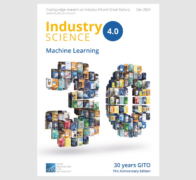
I4S 6/2024: Machine Learning

I4S 6/2024: Machine Learning

A technology with optimization potential in terms of efficiency, transparency and sustainability
Machine learning takes automation to a new level. But what does this imply for the role of humans, who seem to remain essential for the effective control of AI systems. The development of energy-efficient and fair algorithms and the optimization of data quality are crucial for the future viability of machine learning and artificial intelligence. The articles in this issue examine the technology's key potential and areas of application.
Cognitive Assistance Systems in Intralogistics

Cognitive Assistance Systems in Intralogistics

User studies with augmented reality and an AI chatbot
Hendrik Stern ORCID Icon, Michael Freitag ORCID Icon
Assistance systems improve work processes, shorten learning times and increase flexibility in the workplace. Human-centered, resilient and sustainable production approaches where user acceptance is of the utmost importance play a crucial role in the digitized Industry 5.0. Two user studies investigate how useful the support of technologies like augmented reality and AI chat actually is. In the context of cognitive assistance systems in intralogistics, artificial intelligence and augmented reality have a great potential and can contribute to an improvement in process performance. The usability of these systems in terms of human-centricity of Industry 5.0 is crucial. This article describes the results and findings of two user studies conducted in the laboratory for intralogistics work processes (picking and packing). The assistance systems used were evaluated using the System Usability Scale.   Cognitive assistance systems in intralogistics Assistance systems make a ...
Industry 4.0 Science | Volume 40 | 2024 | Edition 5 | Pages 67-72 | DOI 10.30844/I4SE.24.5.66
Double Transformation as the Key to Sustainability

Double Transformation as the Key to Sustainability

Methodology for evaluating an AI application in manufacturing companies
Jennifer Link ORCID Icon, Markus Harlacher ORCID Icon, Olaf Eisele, Sascha Stowasser ORCID Icon
EU regulations demand more intensive and transparent sustainable practices from companies. Industry needs to adapt many processes and products to take charge of this responsibility. Artificial Intelligence (AI) in particular offers innovative potential. Firstly, however, this technology needs to be evaluated focusing on weak AI—market-ready systems that perform specific tasks using algorithms and data-supported models efficiently.
Industry 4.0 Science | Volume 40 | 2024 | Edition 5 | Pages 82-89 | DOI 10.30844/I4SE.24.5.82
Transforming Under Pressure

Transforming Under Pressure

An analysis of coping strategies along the value chain in agriculture
Niklas Obermann ORCID Icon, Saskia Hohagen ORCID Icon, Uta Wilkens ORCID Icon
The transformation in production offers the chance to redesign existing value chains. Cooperation between various ecological, social and governmental stakeholders is seen as particularly key to sustainable development. However, little research has been conducted into how companies can best manage the resulting interdependencies. Agriculture is used as an example to examine how businesses can activate resources along the value chain.
Industry 4.0 Science | Volume 40 | 2024 | Edition 5 | Pages 99-106 | DOI 10.30844/I4SE.24.5.99
Leadership in Transition

Leadership in Transition

Transformational and shared leadership in the context of virtual collaboration
Christina Mayer ORCID Icon, Susanne Mütze-Niewöhner, Verena Nitsch ORCID Icon
Advances in information and communication technology (ICT) are opening up new opportunities for virtual collaboration. Shared leadership is a promising modern concept for overcoming challenges in the areas of communication, knowledge sharing and company loyalty. Empirical findings on shared leadership in virtual teams can shape recommendations on how successful leadership can support the virtualization of teamwork.
Industry 4.0 Science | Volume 40 | 2024 | Edition 5 | Pages 107-113 | DOI 10.30844/I4SE.24.5.106
Digital Transformation and Serious Gaming

Digital Transformation and Serious Gaming

Identifying success factors for smart factories
Maria Freese ORCID Icon, Melanie Kessler ORCID Icon, Julia Arlinghaus ORCID Icon, Eike Maaß
Digital technologies are crucial for the competitiveness and innovative capacity of industry. While Industry 4.0 strives for greater efficiency through the intelligent networking of people, machines and information systems, the concept of Industry 5.0 focuses on people—and defines their well-being and identification capabilities as crucial to the success of digitalization. An analysis of their success factors can only help.
Industry 4.0 Science | Volume 40 | 2024 | Edition 5 | Pages 114-121 | DOI 10.30844/I4SE.24.5.114
Digital Solutions for SMEs’ Circularity Transition

Digital Solutions for SMEs’ Circularity Transition

Examples from the textile industry
Markus Winkler, Dieter Stellmach, Guido Grau, Marcus Winkler, Meike Tilebein ORCID Icon
The EU Strategy for sustainable and circular textiles aims to reduce the industry’s environmental impact while at the same time increasing its competitiveness. In this transition towards circularity, firms in the highly fragmented textile value chains need solutions that help overcome barriers and provide support. This paper presents digital solutions that are particularly suited for SMEs and that have been developed with public funding. It aims at encouraging SMEs, not only from the textile industry, to specify their individual transition paths towards circularity and to use digitalization to foster implementation.
Industry 4.0 Science | Volume 40 | 2024 | Edition 5 | Pages 26-33 | DOI 10.30844/I4SE.24.5.26
1 … 16 17 18 … 48