Digital Transformation and Serious Gaming |
Identifying success factors for smart factories

| Journal | Industry 4.0 Science |
| Issue | Volume 40, 2024, Edition 5, Pages 114-121 |
| Open Access | https://doi.org/10.30844/I4SE.24.5.114 |
| Bibliography | Share | Cite | Download |
Abstract
Keywords
Article
In industry, integrating digital technologies into manufacturing processes has become crucial for organizations to maintain their competitiveness, increase their production as well as to improve innovations in their operations [1]. Smart factories focusing on this integration are complex systems characterized by interconnected systems and data-driven decision-making. This aligns with the concept of Industry 4.0, which is defined as a “[…] real-time, intelligent, horizontal, and vertical networking of people, machines, objects, and information and communication systems with the aim of dynamically controlling complex systems” [2].
This paradigm shift towards a digitalized future is aimed at optimizing the current challenges of industrial value creation [2, 3] and encompasses a variety of new digital technologies and applications that will enable automation in the manufacturing industry [4]. The core objective of Industry 4.0 is to enhance and improve upon efficiency and productivity of operations, new business models, services, and products [5].
Building on the concept of Industry 4.0, the European Commission introduced the concept of Industry 5.0 in early 2021 as a human-centered and resilient evolution of Industry 4.0 [6]. They identified human needs, behavior and decision-making as essential for maximizing the capabilities of Industry 4.0, which had been envisioned when that concept was introduced in 2011 [7]. The combination of digital technologies and human-beings, with a focus on their wellbeing, is seen by [8] as an emerging trend in manufacturing. This makes it imperative to understand the underlying factors that influence digital transformation processes, and thus the evolution towards a smart factory [9].
Analysis of publications on digital transformation
To identify success factors for digital transformation processes towards smart factories, a systematic literature review was conducted. According to [10], the review process followed a structured three-step process. The authors gathered a wide range of journal articles from multiple databases to provide important perspectives on this topic. The central databases “Scopus” and “Web of Science” were used due to their internationally recognized citation indexes [11].
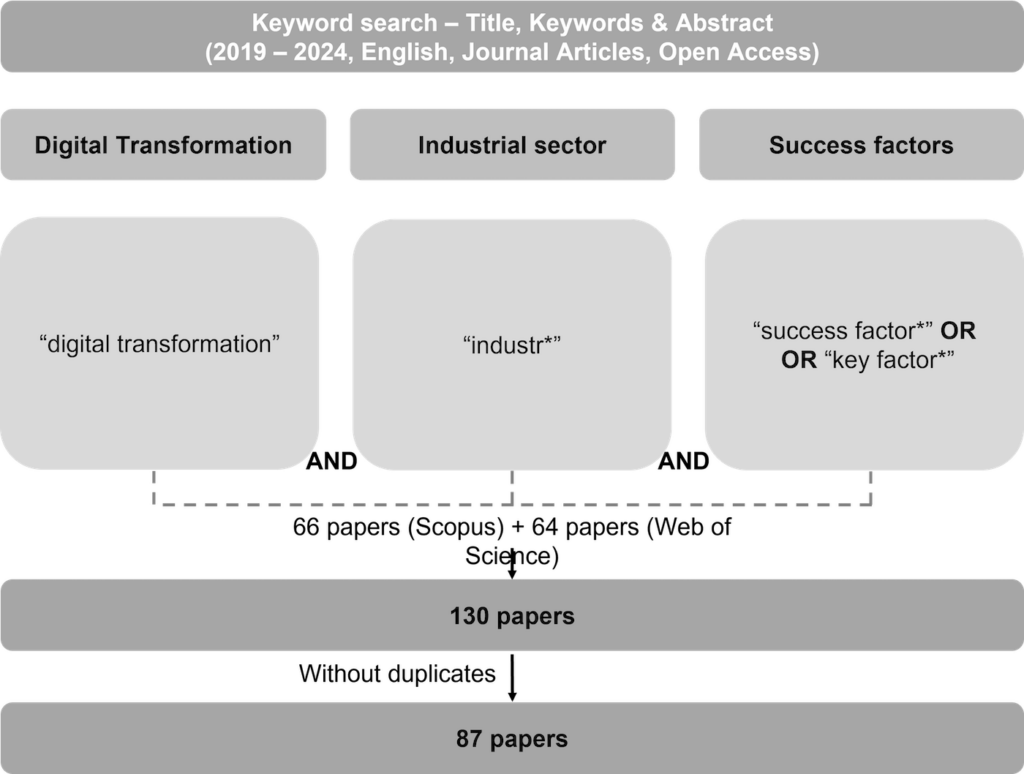
The relevant publications for this paper were identified using the following keywords (Fig. 1). English-written open access journal publications in the period from 2019 to 2024 were considered for analysis. In a second step, the authors coded and analyzed the content of relevant publications by using the data analysis tool ‘MAXQDA’. The success factors were grouped by the authors in an iterative procedure, taking into account the content of each individual success factor. In the final step, the emerging themes were analyzed following the grounded theory methodology [12].
Success factors for digital transformation
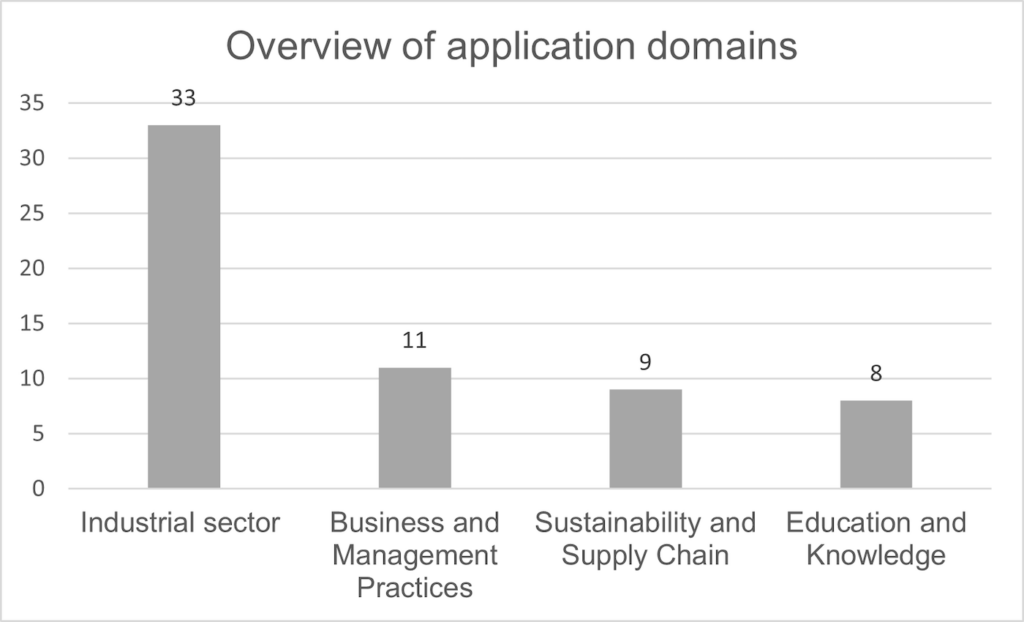
The first step was to analyze the domains of application in detail. It is visible that the majority of studies come from the industrial sector (Fig. 2), which can be explained by the search term, but other application areas also become apparent that overlap with the industrial sector but have different objectives. Publications from the industrial sector include papers from manufacturing, automotive, retail, logistics and transport, construction, energy, information technology and small and medium enterprises.
Human Factor
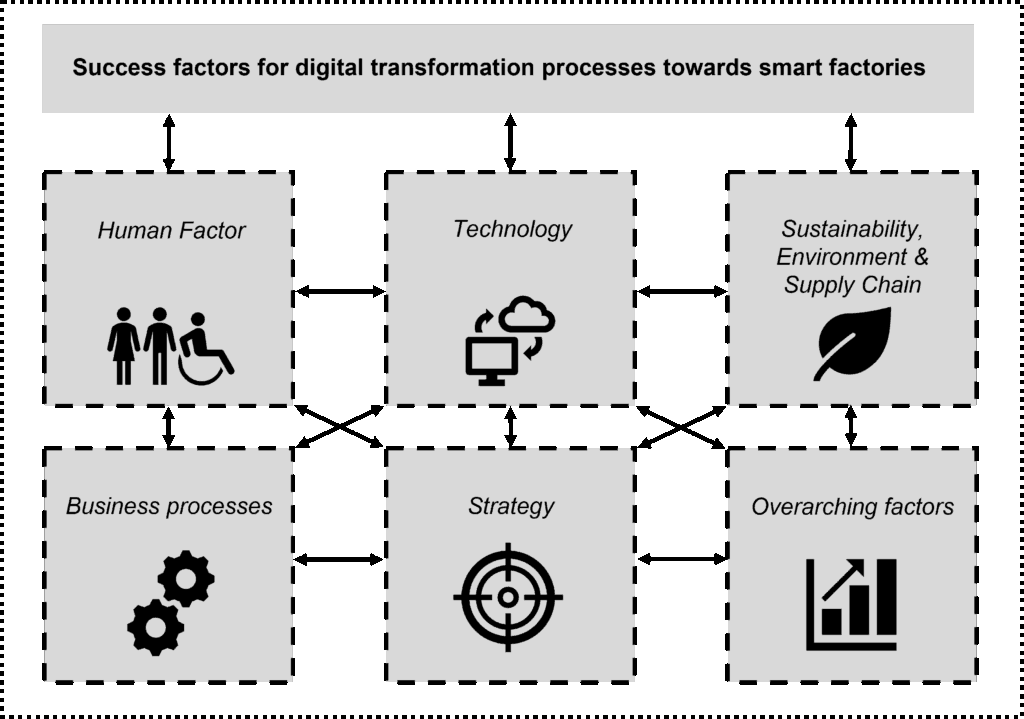
To enable digital transformation, the human factor must be taken into account considering the current challenges of our time, such as demographic change or shortage of skilled workers (Fig. 3). According to [1], “[…] training is the most important factor for success […]”. By offering training programs and other measures, employees can be equipped with the necessary (future) skills for navigating technological advancements.
The focus on the human factor refers not only to the individual level, but also to the organizational level. Organizational culture, for example, must be taken into account. To guide digital transformation efforts, management leadership and support are essential, for instance by showing “[…] commitment to the initiatives through the establishment of a dedicated Digital Information Officer role […]” [3]. Collaboration and teamwork, both internally and externally, foster innovation and synergy.
Attention to ergonomic factors ensures employee well-being and productivity in digitalized environments. Moreover, implementing change management strategies facilitates smooth transitions and adaptations, vital for achieving successful digital transformation processes in smart factories.
[13] emphasized that “[T]the advantage of implementing Industry 4.0 as a radical change may help because it can be implemented quickly; however, there is a drawback that sometimes projects failure risk due to chaos and loss of individual identity. To reduce the chaos, information about Industry 4.0 can be disseminated in the organization.” The key is to share relevant information to create transparency and focus on knowledge management.
Technology
The effective integration of new technologies is necessary to ensure the success of digital transformation processes in smart factories. According to [14], “[…] the choice of technology is essential.” This involves the selection and integration of suitable digital or smart technologies, taking into account the specific requirements, IT infrastructure and capabilities of the users. The assessment and development of technological capabilities ensures readiness for integration and adaptation. [15] identified data governance as the most important success factors for introducing technologies in the automotive industry.
Data governance measures are crucial for ensuring data security, data protection and data integrity throughout the entire transformation process. [13] conclude that “[T]the successful implementation of Industry 4.0 will depend on the successful implementation of cyber-security strategy.” In addition, [3] discussed the role of lean and its importance in the successful implementation of Industry 4.0. In the age of artificial intelligence and machine learning, particular weight must also be given to the responsible use of these technologies. All of these points should be addressed as part of a digital transformation strategy.
Sustainability, Environment & Supply Chain
Sustainability, environment, and supply chain are important when talking about success factors for digital transformation processes towards smart factories. Quality management practices aim to achieve excellence in both products and processes, thereby contributing to customer satisfaction and operational efficiency [16]. [13] state that “[…] for the Industry 4.0 initiative to be a success, the Industry 4.0 initiative should be linked to economic, social and environmental benefits for the organization”.
Building on the concept of Industry 4.0, Industry 5.0 aims to contribute significantly to sustainability by implementing smart technologies and processes that reduce for instance energy consumption and minimize environmental impact under consideration of regulatory standards. Integrating aspects of sustainability into supply chain management practices and digitalizing supply chain elements [13] are crucial to ensure that the entire supply chain network is environmentally, socially, and economically viable in the long term. Supply chain optimization improves efficiency and resilience, ensuring smooth operations and timely deliveries. These are all points that also need to be anchored in the (long-term) organizational strategy [1, 13].
Business processes
The optimization and standardization of business processes is another success factor in digital transformation processes towards smart factories [17, 18]. This process standardization not only improves operational efficiency, but also lays the foundation for the seamless integration of digital technologies, paving the way for a more agile and responsive smart factory ecosystem.
Strategy
Strategic alignment is also an important element for the success of digital transformation processes towards smart factories. This includes, for instance, a “[…] holistic digital transformation strategy […]” [19]. In addition, the involvement of the leadership contributes as a success factor [20]. Support from the top management as well as a strong commitment can drive innovation ensuring that the digital strategy is aligned with the business objectives.
Overarching factors
Last but not least, there are numerous overarching factors. These includes regulatory aspects, political framework, and government support [21]. All of them contribute to the economic benefits and competitive advantages resulting from digitalization efforts. To conclude, identifying and considering these all six success factors is crucial for the development towards a smart factory. The extent to which these success factors are addressed by means of innovative approaches, such as serious games, to support companies in digital transformation processes on their way to becoming a smart factory is part of the next section.
The role of serious games for digital transformation
According to the definition, serious games are games that pursue a specific purpose [22]. Serious games exist in different forms (analogue, digital, hybrid), can be experienced with a different number of players (from single-player to massively multiplayer online games) and are used in a wide variety of application contexts (from agriculture to zero waste) for different purposes. Originating in the military, serious games are also frequently used for educational or training purposes in order to let the target group acquire knowledge, train competencies, develop skills, or change behavior [23], but they can also be understood as a human-centered innovation method.
Human Factor
Educational activities or training programs play a particularly important role in Industry 5.0. [24] discussed the importance of the curriculum and the extent to which digital and technology skills and capabilities should be taken into account “[…] alongside innovative and experiential delivery modes including simulated environments, online learning, on-the-job training, flexible delivery and micro-credentials.” Also, [25] state that “[C]companies that are not adopting an integrated approach and training employees with new skills, are failing to capitalize on a significant opportunities digital workplace could deliver.” [26] highlight that „[…] the most suitable approach to training staff for the digital economy is formation of fundamental knowledge as well as developing applied skills.”
Serious games create a safe environment where one can experience uncertain future scenarios without fearing any negative consequences that occur in reality. This makes serious games powerful tools for gaining new insights [27]. Taking into account the challenges of our time, such as demographical change, shortage of skilled workers etc. and the associated consequences for employees in the industrial sector, such as up- and reskilling in the context of lifelong learning [6], serious games represent an adequate form of learning characterized by interaction and innovation.
Serious games are also suitable at different levels when it comes to lifelong learning [28]. By incorporating serious games into training programs, organizations can foster a culture of continuous learning, ensuring the adaptability of their employees in a rapidly changing environment. Serious games can facilitate collaboration and teamwork [29], e.g. by experiencing the need for collaborative decision-making processes within a serious game [30].
By implementing mechanisms that require the sharing of relevant information, serious games create transparency, which is a critical factor in effectively managing digital transformation efforts. Using serious games to address issues related to change management processes or strategies can support transformation processes [31], thus fostering the adaptations necessary for successful digital transformation processes within smart factories.
Technology
In addition to focusing on the human factor, serious games can also raise awareness of the functionalities of new technologies in an engaging way [32]. This enables employees to familiarize themselves with new technologies, such as artificial intelligence or robotics, in a safe environment. By providing hands-on experience, prejudice and resistance to the use of advanced technologies can be reduced and acceptance of the use of new technologies can be increased. Serious games themselves can make use of immersive technologies.
Sustainability
Serious games may focus on topics that emphasize the importance of sustainability and environmental responsibility. In their systematic literature review, [33] found that serious games concerning the circular economy were mainly used for educational purposes. In this way, employees can be trained in sustainable practices. By implementing sustainability aspects in a serious game, it’s easier to show to employees the consequences of their actions and the impact on their daily work, e.g. in the area of energy or resource management.
Business Processes
Serious games are also widely used in a business context. They provide a framework for simulating business processes and workflows, allowing employees to test different strategies with the aim of identifying the most efficient approach [34] This can help to optimize specific performance indicators or even entire processes, improving overall operational efficiency. Business games can also be used to address issues such as finance, marketing or sales [35].
Strategy
Serious games provide a platform for strategic planning [36]. They make it possible to approach the strategic planning process of an organization as well as the evaluation of its outcomes, which is particularly important when considering the development and implementation of a digital strategy. This makes it possible to test different strategies and identify the best possible on pre-defined parameters (e.g. long-term goals). Serious games also encourage innovation and continuous improvement [37].
Practical contribution
This research identified success factors for digital transformation processes towards smart factories and evaluated to what extent these factors are integrated in serious games. In relation to the success factors, it has been shown that—besides technology integration—human centricity and sustainability play a major role in the implementation of successful digital transformation processes. This is also reflected in the concept of Industry 5.0. By incorporating the principles of Industry 5.0 when developing serious games, this creates tools that simulate complex scenarios where human factors and technology efficiency converge, providing deeper insights into processes of smart factories.
To conclude, serious games are powerful tools for designing and analyzing socio-technical systems that also address the success factors of the digital transformation towards a smart factory identified in this publication. This research is beneficial to both practitioners and scholars active in the field of production system design, digital assistance systems, and risk management for smart factories in terms of the knowledge of the identified success factors, but also in terms of the use of innovative approaches such as serious games, which address these success factors.
Bibliography
[1] Moeuf, A.; Lamouri, S.; Pellerin, R.; Tamayo-Giraldo, S.; Tobon-Valencia, E.; Eburdy, R.: Identification of Critical Success Factors, Risks and Opportunities of Industry 4.0 in SMEs. In: International Journal of Production Research 58 (2020) 5, pp. 1384–1400.[2] Birkel, H.; Veile, J.; Müller, J.; Hartmann, E.; Voigt, K.-I.: Development of a Risk Framework for Industry 4.0 in the Context of Sustainability for Established Manufacturers. In: Sustainability 11 (2019) 2, p. 384.
[3] Pozzi, R.; Rossi, T.; Secchi, R.: Industry 4.0 Technologies: Critical Success Factors for Implementation and Improvements in Manufacturing Companies. In: Production Planning & Control 34 (2023) 2, pp. 139–158.
[4] Da Xu, L.; Xu, E. L.; Li, L.: Industry 4.0: State of the Art and Future Trends. In: International Journal of Production Research 56 (2018) 8, pp. 2941–2962.
[5] Oztemel, E.; Gursev, S.: Literature Review of Industry 4.0 and Related Technologies. In: Journal of Intelligent Manufacturing 31 (2020) 1, pp. 127–182.
[6] Renda, A.; Schwaag Serger, S.; Tataj, D.: Industry 5.0, a Transformative Vision for Europe: Governing Systemic Transformations Towards a Sustainable Industry. Office for Official Publications of the European Union. URL: https://data.europa.eu/doi/10.2777/17322, accessed 15.04.2024.
[7] Kagermann, H.; Wahlster, W.; Helbig, J.: Securing the Future of German Manufacturing Industry: Recommendations for Implementing the Strategic Initiative Industrie 4.0. Final report of the Industrie 4.0 Working Group. URL: www.din.de/resource/blob/76902/e8cac883f42bf28536e7e8165993f1fd/recommendations-for-implementing-industry-4-0-data.pdf, accessed 15.04.2024.
[8] Cimini, C.; Pirola, F.; Pinto, R.: A Human-In-The-Loop Manufacturing Control Architecture for the Next Generation of Production Systems. In: Journal of Manufacturing Systems 54 (2020), pp. 258–271.
[9] Soori, M.; Arezoo, B.; Dastres, R.: Internet of Things for Smart Factories in Industry 4.0: A Review. In: Internet of Things and Cyber-Physical Systems 3 (2023), pp. 192–204.
[10] Tranfield, D.; Denyer, D.; Smart, P.: Towards a Methodology for Developing Evidence: Informed Management Knowledge by Means of Systematic Review. In: British Journal of Management 14 (2003) 3, pp. 207–222.
[11] Groote, S. L. De; Raszewski, R.: Coverage of Google Scholar, Scopus, and Web of Science: A Case Study of the H-Index in Nursing. In: Nursing Outlook 60 (2012) 6, pp. 391–400.
[12] Strauss, A.; Corbin, J.: Basics of Qualitative Research: Techniques and Procedures for Developing Grounded Theory. Sage Publications, Inc. 1998.
[13] Sony, M.; Naik, S.: Critical Factors for the Successful Implementation of Industry 4.0: A Review and Future Research Direction. In: Production Planning & Control 31 (2020) 10, pp. 799–815.
[14] Vogelsang, K.; Liere-Netheler, K.; Packmohr, S.; Hoppe, U.: Success Factors for Fostering a Digital Transformation in Manufacturing Companies. In: Journal of Enterprise Transformation 8 (2018) 1-2, pp. 121–142.
[15] Bhatia, M. S.; Kumar, S.: Critical Success Factors of Industry 4.0 in Automotive Manufacturing Industry. In: IEEE Transactions on Engineering Management 69 (2020) 5, pp. 2439–2453.
[16] Lee, R.: The Effects of Smart Factory Operational Strategies and System Management on the Innovative Performance of Small- and Medium-Sized Manufacturing Firms. In: Sustainability 13 (2021), p. 3087.
[17] Afriliana, N.; Ramadhan, A.: The Trends and Roles of Robotic Process Automation Technology in Digital Transformation: A Literature Review. In: Journal of System and Management Sciences 12 (2022) 3, pp. 51–73.
[18] Kitsios, F.; Kapetaneas, N.: Digital Transformation in Healthcare 4.0: Critical Factors for Business Intelligence Systems. In: Information 13 (2022), p. 247.
[19] Al-lami, A.; Shirkhodaie, M.; Safari, M.: The Digital Transformation Model for Innovative Marketing Maturity in the Oil Companies. In: Revista De Gestão Social E Ambiental 18 (2024) 9, e06535.
[20] Daxbacher, E. F.; Meira, S. R. L.; Soares, S. C. B.: Critical Success Factors in Digital Transformation Projects in the Brazilian Automotive Industry: A Qualitative Study. In: International Journal of Innovation 12 (2024) 1, pp. 1–44.
[21] Chu, M.; Li, B.; Yu, X.: Identification of Key Factors of Digital Transformation of Manufacturing Companies Using Hybrid DEMATEL Method. In: Decision Making: Applications in Management and Engineering 7 (2024) 1, pp. 380–395.
[22] Abt, C.: Serious Games. Maryland 1987.
[23] Bellotti, F.; Kapralos, B.; Lee, K.; Moreno-Ger, P.; Berta, R.: Assessment in and of Serious Games: An Overview. In: Advances in Human-Computer Interaction 1 (2013).
[24] Laundon, M.; McDonald, P.; Greentree, J.: How Education and Training Systems Can Support a Digitally-Enabled Workforce for the Manufacturing Industry of the Future: An Exploratory Study. In: Education & Training 65 (2023) 6–7, pp. 909–922.
[25] Attaran, M.; Attaran, S.; Kirkland, D.: The Need for Digital Workplace: Increasing Workforce Productivity in the Information Age. In: International Journal of Enterprise Information Systems 15 (2019) 1, pp. 1–23.
[26] Barykin, S.; Borovkov, A.; Rozhdestvenskiy, O.; Tarshin, A.; Yadykin, V.: Staff Competence and Training for Digital Industry. In: IOP Conference Series: Materials Science and Engineering 940 (2020), p. 012106.
[27] Bekebrede, G.; Lo, J.; Lukosch, H.: Understanding Complexity: The Use of Simulation Games for Engineering Systems. In: Simulation & Gaming 46 (2015) 5, pp. 447–454.
[28] Rasco, A.; Chan, J.; Peko, G.; Sundaram, D.: Evolution of Serious Games to Support Lifelong Learning and Decision Making: Design and Implementation of a Financial Literacy Game. In: Proceedings of the 54th Hawaii International Conference on System Sciences. 2021, p. 64.
[29] Cariou, P.; Guillotreau, P.: Capacity Management by Global Shipping Alliances: Findings From a Game Experiment. In: Maritime Economics & Logistics 24 (2022), pp. 41–66.
[30] Freese, M.; Zürn, B.; Freese, L.: Entrepreneurs in Simulation Games: Approaching Challenges of Game-Based Learning in the Context of Entrepreneurship Education. In: Learning and Teaching in Higher Education: Gulf Perspectives 18 (2021) 1, pp. 1–25.
[31] Azadegan, A.; Riedel, J. C. K. H.: Serious Games Integration in Companies: A Research and Application Framework. In: IEEE 12th International Conference on Advanced Learning Technologies. Rome 2012, pp. 485–487.
[32] Susi, T.; Johannesson, M.; Backlund, P.: Serious Games: An Overview. Technical Report HS-IKI-TR-07-001. URL: https://his.diva-portal.org/smash/get/diva2:2416/fulltext01.pdf, accessed 10.06.2024.
[33] Behnert, A.-K.; Arlinghaus, J.; Kessler, M.; Freese, M.: Approaching Cognitive Biases in the Circular Economy Through Serious Gaming: Applied Human Factors and Ergonomics International. Nice 2024.
[34] Freese, M.; Zürn, B.; Wittenzellner, H.: How Entrepreneurs Learn about Artificial Intelligence by Using an Analogue Card Game. In: International Simulation and Gaming Association’s Conference. Christchurch 2024.
[35] Beranič, T.; Heričko, M.: The Impact of Serious Games in Economic and Business Education: A Case of ERP Business Simulation. In: Sustainability 14 (2022) 2, p. 683.
[36] Taillandier, F.; Adam, C.: Games Ready to Use: A Serious Game for Teaching Natural Risk Management. In: Simulation & Gaming 49 (2018) 4, pp. 441–470.
[37] Kinitzki, M.; Hertweck, D.; Kühfuß, P.; Kinitzki, V.: How SMEs Can Use Games to Assess the Innovation Potential of New Technologies. In: Proceedings of the Central European Conference on Information and Intelligent Systems, September 19–21, 2018, Varaždin. URL: https://publikationen.reutlingen-university.de/frontdoor/deliver/index/docId/2005/file/2005.pdf, accessed 04.10.2023.
Your downloads
Potentials: Management Training
You might also be interested in