Translate

Double Transformation in Mechanical and Plant Engineering

Double Transformation in Mechanical and Plant Engineering

Digitalization and sustainability for one-of-a-kind and small-batch manufacturers
Christoph Laroque ORCID Icon, Deike Gliem ORCID Icon, Sigrid Wenzel ORCID Icon
A decisive competitive factor for smaller and medium-sized manufacturers of one-of-a-kind and small batches is their products’ timely completion, delivery and commissioning. Precise logistics planning is just as important as production control. However, the processes are often characterized by uncertainties, e.g. due to local conditions at the customer or cooperation with suppliers. Digital shadows for data evaluation in real time offer a convincing solution.
Industry 4.0 Science | Volume 40 | 2024 | Edition 5 | Pages 10-17 | DOI 10.30844/I4SE.24.5.10
From Pixels to Presence

From Pixels to Presence

Transforming remote interactions with telepresence robots
Angelika C. Bullinger ORCID Icon, Danny Rueffert ORCID Icon, Francisco Hernandez ORCID Icon, Holger Hoffmann ORCID Icon
Telepresence Robots (TPR) support the ongoing digital transformation in work and leisure amid climate and societal changes. This article presents two cases, one set in production and one in social participation, to illustrate users’ requirements, which largely coincide. Key requirements include audio and camera quality, a stable Wi-Fi connection, active and passive visual capabilities, and even floor covering.
Industry 4.0 Science | Volume 40 | Edition 5 | Pages 18-25 | DOI 10.30844/I4SD.24.5.18
Cognitive Assistance Systems in Intralogistics

Cognitive Assistance Systems in Intralogistics

User studies with augmented reality and an AI chatbot
Hendrik Stern ORCID Icon, Michael Freitag ORCID Icon
Assistance systems improve work processes, shorten learning times and increase flexibility in the workplace. Human-centered, resilient and sustainable production approaches where user acceptance is of the utmost importance play a crucial role in the digitized Industry 5.0. Two user studies investigate how useful the support of technologies like augmented reality and AI chat actually is. In the context of cognitive assistance systems in intralogistics, artificial intelligence and augmented reality have a great potential and can contribute to an improvement in process performance. The usability of these systems in terms of human-centricity of Industry 5.0 is crucial. This article describes the results and findings of two user studies conducted in the laboratory for intralogistics work processes (picking and packing). The assistance systems used were evaluated using the System Usability Scale.   Cognitive assistance systems in intralogistics Assistance systems make a ...
Industry 4.0 Science | Volume 40 | 2024 | Edition 5 | Pages 67-72 | DOI 10.30844/I4SE.24.5.66
AI-Assisted Work Planning

AI-Assisted Work Planning

Extracting expert knowledge from historical data for streamlined efficiency and error mitigation
Jochen Deuse ORCID Icon, Mathias Keil, Nils Killich, Ralph Hensel-Unger
Global competitive pressure is forcing companies to use resources efficiently, especially in high-wage countries. This is further intensified by market and legislative pressure for sustainable products and processes. In the face of digital and ecological change, holistic approaches to optimizing manual work processes are essential. An AI-supported assistance system for work plan creation is intended to remedy this and thus enable more efficient process design.
Industry 4.0 Science | Volume 40 | 2024 | Edition 5 | Pages 74-80 | DOI 10.30844/I4SE.24.5.74
Double Transformation as the Key to Sustainability

Double Transformation as the Key to Sustainability

Methodology for evaluating an AI application in manufacturing companies
Jennifer Link ORCID Icon, Markus Harlacher, Olaf Eisele, Sascha Stowasser
EU regulations demand more intensive and transparent sustainable practices from companies. Industry needs to adapt many processes and products to take charge of this responsibility. Artificial Intelligence (AI) in particular offers innovative potential. Firstly, however, this technology needs to be evaluated focusing on weak AI—market-ready systems that perform specific tasks using algorithms and data-supported models efficiently.
Industry 4.0 Science | Volume 40 | 2024 | Edition 5 | Pages 82-89 | DOI 10.30844/I4SE.24.5.82
Turning in Circles

Turning in Circles

Exploiting the potential of circular economy in wind turbine operations
Sebastian Schlund ORCID Icon, Stefanie Eisl
The decarbonization of the energy sector is crucial for a climate-neutral EU, as a large proportion of greenhouse gas emissions come from energy use. Especially the wind energy sector, with its high material costs, faces major challenges. The rapid expansion of wind energy requires innovative solutions to establish sustainable End-of-Life (EoL) management practices. A digital decision-making framework for sustainable EoL strategies is therefore extremely useful.
Industry 4.0 Science | Volume 40 | 2024 | Edition 5 | Pages 90-98 | DOI 10.30844/I4SE.24.5.90
Transforming Under Pressure

Transforming Under Pressure

An analysis of coping strategies along the value chain in agriculture
Niklas Obermann ORCID Icon, Saskia Hohagen ORCID Icon, Uta Wilkens ORCID Icon
The transformation in production offers the chance to redesign existing value chains. Cooperation between various ecological, social and governmental stakeholders is seen as particularly key to sustainable development. However, little research has been conducted into how companies can best manage the resulting interdependencies. Agriculture is used as an example to examine how businesses can activate resources along the value chain.
Industry 4.0 Science | Volume 40 | 2024 | Edition 5 | Pages 99-106 | DOI 10.30844/I4SE.24.5.99
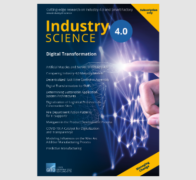
I4S 5/2024: Double Transformation

I4S 5/2024: Double Transformation

Integrating digital and ecological change in the world of work
Change is necessary for companies to maintain their competitive edge—both digital and ecological change. But while external support is at hand, the drive for change must come from companies themselves. In this issue of Industry 4.0 Science, experts of the Academic Society for Work and Industrial Organization discuss how the real-world application of innovative technologies lead to resource-efficient manufacturing.
A Learning Factory in Transition

A Learning Factory in Transition

Innovatively meeting the demands of the modern labor market
Nick Ackerhans, Benjamin März
Agile methods are extremely useful in solving complex problems. This is particularly beneficial in market environments where the routines of traditional corporate management are constantly being questioned. Agility is closely linked to the core ideas of Lean Management, as evidenced by the focus on processes and people. Lean factories facilitate a hands-on engagement with Lean principles, thereby promoting agile process management in various production contexts.
Industry 4.0 Science | Volume 40 | Edition 4 | Pages 63-68
The Key to Successful Digitalization

The Key to Successful Digitalization

Development, implementation and benefits of digital twins in Industry 4.0
Andreas Bayha ORCID Icon, Sönke Knoch ORCID Icon, Dirk Schöttke ORCID Icon
The success of technologies depends not only on their innovative strength and acceptance, but also on their management. Decision-makers evaluate factors like technical framework conditions and organizational requirements, with the demand for flexibility adding to the complexity. Industry 4.0 addresses this with networking, transparency and decentralized decisions. Digital twins, which can be implemented with open source software, play a key role.
Industry 4.0 Science | Volume 40 | Edition 4 | Pages 42-49
1 12 13 14 40