Autor: Michael Wahl

Sustainability in Industrial Manufacturing

Sustainability in Industrial Manufacturing

Resource-efficient circular economy through the use of a pellet 3D printer
Bruno Gallace, Michael Blug, Adrian Huwer ORCID Icon, Michael Mattern, Michael Wahl
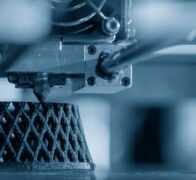
In additive manufacturing – which is also known as 3D printing – plastic waste is produced, for example in the form of required support structures or faulty prints. One option for resource recirculation in additive manufacturing is direct use in a pellet 3D printer that incorporates fused granulate fabrication (FGF). The elimination of the filament production process step reduces the manufacturing time and the energy required for recirculation.
Industry 4.0 Science | Volume 40 | 2024 | Edition 1 | Pages 14-21
Innovation Laboratory Digitalization

Innovation Laboratory Digitalization

Product Development Utilizing Design Thinking in a Makerspace
Michael Mattern, Sebastian Bast ORCID Icon, Kai Scherer ORCID Icon, Klaus-Uwe Gollmer ORCID Icon, Michael Wahl
Makerspaces foster creativity, collaborative work and craftsmanship. Anyone interested can use tools, machines and technologies to realize their own projects and develop their technical skills in the process. They also provide an inspiring environment where people with different backgrounds and expertise come together to learn, experiment and support each other. The following article discusses the importance, features and equipment of makerspaces, in particular the Innovation Laboratory Digitalization, which promotes interdisciplinary work at the Trier University of Applied Sciences and serves as an interface to the specialized labs. In addition, the process of prototyping is described using several application examples.
Industrie 4.0 Management | Volume 39 | 2023 | Edition 6 | Pages 61-65 | DOI 10.30844/IM_23-6_61-65
Sustainable and Intelligent Additive Manufacturing

Sustainable and Intelligent Additive Manufacturing

Early Recognition of Manufacturing Defects in 3D-Printing with Artificial Intelligence
Kai Scherer ORCID Icon, Sebastian Bast ORCID Icon, Julien Murach, Stephan Didas, Guido Dartmann, Michael Wahl
Additive manufacturing is an increasingly important manufacturing technology with huge economical potential. However, its popularity is accompanied by high material and time losses, as defects are often detected at a very late stage. One solution for a more sustainable production is the automated detection of manufacturing defects using artificial intelligence. This article describes the digitization of the defect detection process in additive manufacturing using a system based on a neural network. In addition to the steps for automated defect detection, system performance is also discussed.
Industrie 4.0 Management | Volume 39 | 2023 | Edition 2 | Pages 56-59
Digital Product Optimisation for the Use of Additive Manufacturing

Digital Product Optimisation for the Use of Additive Manufacturing

Michael Wahl, Martin Bonenberger, Julian Morbach, Adrian Huwer ORCID Icon, Lauri Hoffmann
Additive manufacturing, i.e. the printing of three- dimensional workpieces from different materials, offers the possibility of quickly producing functional prototypes. Digital optimisation is an important building block for the rapid implementation of functional product ideas. Based on digital models, the product is virtually optimised and continuously improved. Once the product has been digitally optimised in terms of its properties, it is checked and, if necessary, adapted for additive manufacturing. The product is then manufactured, reworked and finally tested. The article shows the optimisation possibilities using the example of a dispenser from the food industry. An existing component is digitised, a flow optimisation is carried out on the digital model and the improved product is additively manufactured.
Industrie 4.0 Management | Volume 38 | 2022 | Edition 5 | Pages 25-29 | DOI 10.30844/IM_22-5_25-29
Heterogeneous Fields of Application in Additive Manufacturing

Heterogeneous Fields of Application in Additive Manufacturing

Henrik te Heesen, Michael Wahl, Mats Bremer, Adrian Huwer ORCID Icon, Joachim Messemer
Additive manufacturing is a central component of the fourth industrial revolution, which was initiated a few years ago. The growing interconnection of machines and processes and the ever-increasing individualization of customer needs mean that manufacturers have to adapt to changing markets in a continual process due to global competition. The production of prototypes or individual series using machines that produce complex three-dimensional workpieces is becoming increasingly important for manufacturing companies and, thus, for research institutions in the training of qualified specialists.
Industrie 4.0 Management | Volume 36 | 2020 | Edition 4 | Pages 25-29 | DOI 10.30844/I40M_20-4_S25-29