Autor: Norbert Gronau

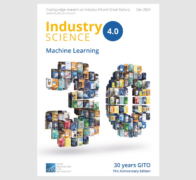
I4S 6/2024: Machine Learning

I4S 6/2024: Machine Learning

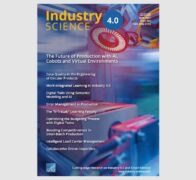
A technology with optimization potential in terms of efficiency, transparency and sustainability
Machine learning takes automation to a new level. But what does this imply for the role of humans, who seem to remain essential for the effective control of AI systems. The development of energy-efficient and fair algorithms and the optimization of data quality are crucial for the future viability of machine learning and artificial intelligence. The articles in this issue examine the technology's key potential and areas of application.
Training in Industry 4.0 with AI Tutoring Systems

Training in Industry 4.0 with AI Tutoring Systems

State of technology
Norbert Gronau ORCID Icon, Georg David Ritterbusch ORCID Icon
The rapid development of artificial intelligence (AI) is constantly opening new opportunities, particularly in training for the factory of the future. For employees, this not only means a significant advantage in the actual manufacturing process, but also in the field of continuing education. This paper provides an overview of AI tutoring systems continuing education in the context of Industry 4.0 by presenting a categorization that discusses different approaches of AI tutoring systems by learning methods, application areas and their respective technologies. In addition, an outlook on the disruptive effect of generative AI on AI tutoring systems in Industry 4.0 is given.
Industry 4.0 Science | Volume 40 | 2024 | Edition 5 | Pages 50-57 | DOI 10.30844/I4SE.24.5.50
Increasing Resilience in Factories: The Example of Disturbance Management – A Research Approach

Increasing Resilience in Factories: The Example of Disturbance Management – A Research Approach

Norbert Gronau ORCID Icon
Disruptions in in-plant production systems, such as variant-rich series production, can lead to serious production downtimes. The longer the production stoppage lasts, the greater the damage to companies and supply chains. The capabilities to ensure emergency operation until full performance is restored after disruptions as well as the fast restart of production systems represent a crucial competitive factor for companies and also increase production agility. Therefore, it is of central importance to reduce the time between the occurrence of a disruption and the return to the initial level in order to minimize downtime costs. In the context of this paper the state of research on disturbance management and assistance systems for disturbance management ist stated and a research approach for investigating the potentials of assistance systems will be presented.
Industry 4.0 Science | 2023 | | DOI 10.30844/wgab_2023_9
I4S 1/2023: Digital Transformation (Special Issue)

I4S 1/2023: Digital Transformation (Special Issue)

Paving the way to the 4th Industrial Revolution
Industry 4.0 and Smart Factory have become a real source of hope and are the technological answer to some of the biggest challenges of our time: sustainable production, global interconnections, intelligent exchange of knowledge. This special issue discusses research questions relating to process improvement, artificial intelligence and factory software.
Regional Remanufacturing Networks

Regional Remanufacturing Networks

Potentials and Challenges of Local Product Refabrication
André Ullrich ORCID Icon, Edzard Weber, Norbert Gronau ORCID Icon
The manufacturing of products ties up energy as well as material resources. The awareness of consumers and producers as well as legislative activities to achieve a sustainable use of available resources are developing much too slowly. In this paper, a local remanufacturing approach is presented, which makes it possible to reduce resource consumption, to promote local enterprises and to offer efficient solutions for the regional reuse of goods.
Industrie 4.0 Management | Volume 39 | 2023 | Edition 2 | Pages 11-14
Comparing Industry 4.0 Maturity Models

Comparing Industry 4.0 Maturity Models

Jochen Schumacher, Norbert Gronau ORCID Icon
In recent years, numerous maturity models have been developed with the aim of providing a clear indication of the progress each company has made in terms of Industry 4.0 development. However, not all models include all aspects of Industry 4.0. The models are also not equally practical. This article offers an in-depth comparison and assessment of the comprehensiveness of the ten most important Industry 4.0 maturity models.
Industry 4.0 Science | Volume 39 | 2023 | Edition 1 | Pages 16-33 | DOI 10.30844/I4SE.23.1.16
Determining Sustainable Application System Architectures

Determining Sustainable Application System Architectures

EAM as enabler for the design of transferable AI solutions
André Ullrich ORCID Icon, Norbert Gronau ORCID Icon
The need to sometimes respond very quickly to changes requires companies to have a high degree of flexibility and speed of reaction. Application system architectures, which usually consist of old and self-developed systems, often do not allow companies to meet these requirements. However, investment funds for new software are limited, so priorities must be set when it comes to replacing legacy systems. An adaptability analysis is an efficient analysis method for planning the renewal of the application system landscape. This article describes the procedure and results of an adaptability analysis, using the example of an internationally active automotive supplier.
Industry 4.0 Science | Volume 39 | 2023 | Edition 1 | Pages 46-52 | DOI 10.30844/I4SE.23.1.46
Fire Department Action Patterns for IT Support?

Fire Department Action Patterns for IT Support?

Norbert Gronau ORCID Icon, Eva-Maria Kern
Emergency organizations such as fire departments or technical relief organizations are expected to react very quickly – sometimes to unknown situations – and provide the appropriate assistance. Can principles used in these organizations be transferred to IT support, e.g. for ERP systems? An experiment in an IT service unit investigates this question – with surprising results.
Industry 4.0 Science | Volume 39 | 2023 | Edition 1 | Pages 59-63 | DOI 10.30844/I4SE.23.1.59
Integration of Artificial Intelligence into Factory Control

Integration of Artificial Intelligence into Factory Control

Norbert Gronau ORCID Icon
With the increasing availability of IoT devices and significantly greater incorporation of Internet-enabled technologies into manufacturing processes, the idea of improving factory control through the use of artificial intelligence (AI) is also coming to the fore. Using the example of high-variation series manufacturing, this article describes which steps need to be taken to improve factory control with AI.
Industry 4.0 Science | Volume 39 | 2023 | Edition 1 | Pages 95-99 | DOI 10.30844/I4SE.23.1.95
Trends and Challenges in Factory Software

Trends and Challenges in Factory Software

Norbert Gronau ORCID Icon
Any networked information system that is used in the context of manufacturing and logistics in a factory can be referred to as factory software. This article describes six trends that will significantly influence the way software is used in factories in the near future. The trends are described in ascending order in terms of significance of impact.
Industry 4.0 Science | Volume 39 | 2023 | Edition 1 | Pages 114-119 | DOI 10.30844/I4SE.23.1.114
1 2 3 6