Autonomous Systems in Production

Toward a planning and development methodology

JournalIndustrie 4.0 Management
Issue Volume 34, 2018, Edition 6, Pages 17-20
Open Accesshttps://doi.org/10.30844/I40M_18-6_17-20
Bibliography Share Cite Download

Abstract

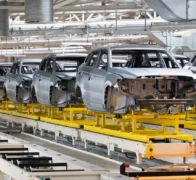
The performance of assistance systems, especially in the automotive sector, has become an unique selling point. The trend toward Autonomous driving represents the expected impact of innovation resulting from the exploitation of the latest technologies. Besides autonomous driving, other areas of application for autonomous systems could trigger social change - the prime example being industrial production. The following article presents a planning approach tailored to the complex engineering task of planning and designing autonomous systems for industrial applications.

Keywords


Bibliography

[1] Walker, J.: The Self-Driving Car Timeline – Predictions from the Top 11 Global Au- tomakers. URL: https://www.techemergence.com/self-driving-car-timeline-themselves-top-11-automakers/, Abrufdatum 25.07.2018.
[2] Broy, M.: Cyber-Physical Systems. Berlin Heidelberg 2010.
[3] Kagermann, H.; Wahlster, W.; Helbig, J.: Umsetzungsempfehlungen für das Zukunftsprojekt Industrie 4.0 – Deutschlands Zukunft als Industriestandort sichern, Forschungsunion Wirtschaft und Wissenschaft, Arbeitskreis Industrie 4.0. Ort 2013.
[4] SAE International: https://www.sae.org/standards/content/j3016_201401/preview/, Abrufdatum 31.07.2018.
[5] Dumitrescu, R.; Gausemeier, J.; Slusallek, P.; Cieslik, S.; Demme, G.; Falkowski, T.; Hoffmann, H.; Kadner, S.; Reinhart, F.; Westermann, T.; Winter, J.: Autonome Systeme. Studien zum deutschen Innovationssystem. Berlin 2018.
[6] Westermann, T.: Systematik zur Reifegradmodell-basierten Planung von Cyber-Physical Systems des Maschinen- und Anlagenbaus. Dissertation. Universität Paderborn 2017.

Your downloads


Solutions: Product Development

You might also be interested in

Industry 4.0—Progress and Digitalization in Limbo

Industry 4.0—Progress and Digitalization in Limbo

Status of sustainable transformation and digitalization in production engineering
Christian Donhauser ORCID Icon, Daniel Riepl
Digitalization projects help users represent complex processes more simply and efficiently. However, there are many obstacles to implementation. Reluctance to implement these projects is palpable. This affects, among others, employers and employees, who may fall behind economically by waiting or avoiding change. These observations can be traced back to an overarching research question: What barriers and systemic challenges hinder sustainable transformation within the context of Industry 4.0, particularly when considering human labor in production engineering? What questions are the affected stakeholders asking? The primary goal of this long-term research project is to define these questions decisively and in detail in order to develop a conceptual foundation that integrates research, teaching, and technological development and thus combines the potential of digital technologies with the experiential and practical knowledge of production workers.
Industry 4.0 Science | Volume 42 | 2026 | Edition 3 | Pages 56-60
AI-Powered Lubrication Strategies for Thread Forming

AI-Powered Lubrication Strategies for Thread Forming

Adaptive spray jet control to increase process reliability and tool life
Reinhard Schmied, Marco Susic, Christian Donhauser ORCID Icon
Thread forming requires precise lubricant application because high contact pressures and process temperatures strongly influence tool loading, friction, and process stability. Although minimum quantity lubrication (MQL) systems are widely used, current spray-based approaches can still suffer from spray losses, insufficient wetting of the thread grooves, and unstable droplet transport. This article presents a concept for adaptive precision lubrication in thread forming based on computational fluid dynamics (CFD)-supported flow analysis, experimental validation, and artificial intelligence (AI)-assisted optimization. The focus is on droplet size, spray jet geometry, nozzle position, ambient flow conditions, and their influence on wetting intensity. Preliminary simulation-based investigations indicate that data-driven optimization can help identify wetting deficiencies and support the development of future control strategies for resource-efficient lubricant application.
Industry 4.0 Science | Volume 42 | 2027 | Edition 3 | Pages 76-83
Optimized Manual Processes in Automotive Production

Optimized Manual Processes in Automotive Production

A module-based approach for the efficient creation of work system simulations
Barbara Brockmann, Tobias Jurk, Beate Stoffels, Jochen Deuse ORCID Icon
In the manufacturing industry, the integration of digital human models into the product development and manufacturing process is becoming increasingly important. Particularly in assembly, which is characterized by a high proportion of manual tasks, motion simulations enable a realistic representation of human work and thus make a significant contribution to the evaluation of motion economy, process validation, and efficiency improvement. However, widespread application in production planning faces various challenges, such as the high initial effort required to create human simulations as well as volatile planning conditions. This article presents a practice-oriented solution from the automotive assembly sector that enables the creation of simulations with reduced effort as well as their early and consistent use in the planning process.
Industry 4.0 Science | Volume 42 | 2026 | Edition 3 | Pages 48-55
Application Potentials of Chinese Knowledge Platforms

Application Potentials of Chinese Knowledge Platforms

Digital platforms for knowledge transfer in research and education
Yunhao Su, Martin Braun ORCID Icon
Knowledge drives innovation, which is why digital platforms are increasingly used for knowledge transfer. The People’s Republic of China (PRC) is a global leader in digitalization and digital platforms are central to Chinese knowledge transfer and innovation systems. This study supplements theoretical concepts of knowledge transfer with empirical findings on the (further) development of relevant knowledge platforms. It examines the influence of specific design features on the functionality and quality of digital knowledge platforms. A literature review identifies seven condensed success criteria. Nine leading Chinese knowledge platforms are categorized based on their transfer logic and functional scope. Online survey participants assess the platform-specific manifestations of the identified criteria and highlight potential and areas for improvement in platform-based knowledge transfer.
Industry 4.0 Science | Volume 42 | 2026 | Edition 3 | Pages 84-93
VR Training for Multimodal Cobot Interaction

VR Training for Multimodal Cobot Interaction

Virtual learning environments for collaborative robots
Christoph S. Zoller, Justus Langer, Kristoffer Waldow ORCID Icon, Merle Meyer, Arnulph Fuhrmann ORCID Icon
The VIRAMM research project is developing and prototyping a VR-based training concept for the integration of collaborative robots (cobots) in assembly-oriented U-cells. Since the benefits of cobots depend heavily on process, layout, and role integration, VIRAMM addresses the previously lacking consistent scenario design for variant comparisons with Key Performance Indicator (KPI)-based evaluation.
Industry 4.0 Science | Volume 42 | 2026 | Edition 3 | Pages 106-112
Decentralized Coordination of AMRs

Decentralized Coordination of AMRs

Regulations for Autonomous Mobile Robots
Manuel Savadogo, Malte Stonis ORCID Icon, Peter Nyhuis ORCID Icon, Jürgen Hupp
The increasing automation of intralogistics requires flexible and resilient control concepts for Autonomous Mobile Robots (AMR). While centralized coordination approaches enable stringent control, they quickly reach their limits in terms of scalability and robustness. This paper therefore presents regulations for the decentralized coordination of AMR within the framework of the ORPHEUS project. The focus is on translating known decentralized decision-making principles into a rule framework tailored to industrial material flow scenarios, addressing both operational task assignment and safety-related conflict situations. ORPHEUS thus makes a significant contribution to the methodological structuring, parameterization, and practical transferability of decentralized coordination logics.
Industry 4.0 Science | Volume 42 | 2026 | Edition 3 | Pages 96-105