Autor: Jan Sender

Increased Productivity in Engineer-to-Order Production

Increased Productivity in Engineer-to-Order Production

Digital assistance between design and production in shipbuilding
Jan Sender, David Jericho ORCID Icon, Konrad Jagusch
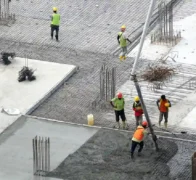
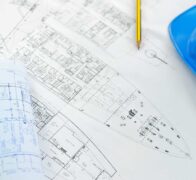
In engineer-to-order production systems, design and production processes are often carried out simultaneously to achieve shorter throughput times. Shipbuilding frequently adopts this approach. In practice, whilst this may lead to time savings, it can also result in efficiency losses. This article analyzes the causes of these inefficiencies and, as a counteractive measure, develops digital assistance systems for integration in the shipbuilding process chain. Digital assistance systems are based on a digital shadow of the shipbuilding process.
Industry 4.0 Science | Volume 41 | 2025 | Edition 5 | Pages 78-85 | DOI 10.30844/I4SE.25.5.76
Real-Time-Capable Information Flow in Shipbuilding Pipe Production

Real-Time-Capable Information Flow in Shipbuilding Pipe Production

Ein System zur datenbasierten Abbildung des Produktionsprozesses
Konrad Jagusch, Jan Sender, Wilko Flügge
Inadequate communication with media discontinuities makes it difficult to implement simulataneous engineering. Missing process data prevent data-based control measures and the layout of design adaptations to unfinished components. Therefore, the subject of this article is the description of a system for real-time data acquisition and the digitalization of the information flow in shipbuilding.
Industrie 4.0 Management | Volume 35 | 2019 | Edition 5 | Pages 9-12
Human-Robot-Collaboration in the Final Aircraft Assembly

Human-Robot-Collaboration in the Final Aircraft Assembly

Ein intelligentes Assistenzsystem für das mechanische Fügen in der manuellen Montage
Frederik Schmatz, Jens Meißner, Jan Sender, Wilko Flügge, Eugen Gorr
A newly developed hand guided collaborative robot system will be used for manual mechanical joining process in the final assembly of aircrafts. The tool can be moved quickly and precisely to reach all joining positions avoiding physical effort for the operator. Special focus was given on the integrated handling of the entire system. The interlinked sensory of all subsystems ensures a smart control of the system. A mobile device was implemented to increase the usability and to foster the employees’ acceptance of the solution. It enables significantly improved process documentation, reproducibility and transparency.
Industrie 4.0 Management | Volume 35 | 2019 | Edition 1 | Pages 19-22 | DOI 10.30844/I40M_19-1_S19-22