Typeset

Optimizing the Budgeting Process with Digital Twins

Optimizing the Budgeting Process with Digital Twins

Dashboards and process mining for process-oriented performance measurement
Bettina C. K. Binder ORCID Icon, Frank Morelli ORCID Icon
Traditional budgeting often resembles a marathon full of spreadsheets, manual reconciliations and time-consuming data collection. However, modern companies need agile, data-driven solutions that allow for transparency, efficiency and strategic foresight. Digital technologies such as digital twins, dashboards and process mining initiate this possibility: they transform the budgeting process from a static set of figures to a dynamic, simulation-capable management tool. Instead of getting lost in detailed work, companies can use them to analyze processes in real time, simulate scenarios and make well-informed decisions.
Industry 4.0 Science | Volume 41 | Edition 2 | Pages 52-58
Intelligent Load Carrier Management

Intelligent Load Carrier Management

AI-supported monitoring and reduction of losses in logistics
Dominik Augenstein, Lea Basler
Load carriers are essential for transporting manufactured parts in manufacturing companies. Despite their ‘simplicity’, they are usually expensive to purchase as they are manufactured expressly to fit purpose. While tracking methods such as GPS tracking can be used to prevent the loss of load carriers, this is associated with monitoring costs and presents challenges with regard to data protection as soon as the work performance of intralogistics employees is monitored. Assigning load carriers to designated clusters and monitoring these clusters provides an effective solution—without drawing conclusions about employee performance. Furthermore, artificial intelligence can optimize this approach whilst also deterring the theft of load carriers.
Industry 4.0 Science | Volume 41 | 2025 | Edition 2 | Pages 78-84
Boosting Competitiveness in Small Batch Production

Boosting Competitiveness in Small Batch Production

Scalable and flexible body-in-white production line with collaborative mobile robots
Walid Elleuch, Tadele Belay Tuli ORCID Icon, Martin Manns ORCID Icon
Due to the higher customization of products to customer groups and needs, body-in-white manufacturing industries are facing higher variant assembly at the later stages of the production line, thus increasing production costs per unit. Flexible production processes that involve flexible material flows, non-rigid manufacturing sequences, and the automatic reconfiguration of tools are regarded as the pillars of a resilient production system. This article presents a conceptual solution for flexible Body-in-White sheet metal production with autonomous collaborative robotic systems to make product costs affordable for a higher competitive advantage.
Industry 4.0 Science | Volume 41 | Edition 2 | Pages 60-67
The “InTraLab” Learning Factory

The “InTraLab” Learning Factory

Gaining experience and knowledge in digitally transformed work environments
Norbert Gronau ORCID Icon, Malte Rolf Teichmann, Malte Teichmann
Learning factories offer a practical environment for simulating production processes in which learners can acquire skills through the direct application of new technologies. The Industrial Transformation Lab (InTraLab) models hybrid production processes by combining real-world demonstrators and virtual simulations. This enables learners to acquire the skills that are crucial for the digitally transformed world of work.
Industry 4.0 Science | Volume 41 | Edition 2 | Pages 46-51
Collaborative Drone Inspection

Collaborative Drone Inspection

A new approach to inspection work with AI support
Till Becker, Agron Neziraj
Drone technology and the use of artificial intelligence (AI) offer promising advantages in various sectors, including in inspection. The use of innovative inspection technologies can make inspections more efficient overall. This research project examines various legal and economic aspects of AI-based autonomous drone inspections. It also develops a target process that represents the use of an AI-based drone inspection and controls the use of such inspection technology. In particular, this article focuses on a collaborative approach to this new inspection methodology.
Industry 4.0 Science | Volume 41 | Edition 2 | Pages 94-100
Functional Safety and Cyber Security in the Process Industry

Functional Safety and Cyber Security in the Process Industry

A tension between stability and agility
Thimmo Kugele, Claudia Nowak, Arno Götz, Alexander Lawall ORCID Icon
Functional safety (safety) and cyber security (security) are key aspects of modern industry and technology. Safety aims to minimize risks posed by system malfunctions. This includes measures to protect people and the environment from failures and errors within systems. Security focuses on protecting systems and networks from digital attacks. The primary security objectives include ensuring confidentiality, integrity, and availability. A joint consideration of safety and security is essential for the future of the process industry, as both the physical safety and digital integrity of modern systems must be ensured. In industrial practice, this creates a field of tension: measures to enhance security can negatively impact safety and vice versa. This article analyzes relevant standards and regulations, presents key approaches for the integrated consideration of safety and security, and highlights areas of further research.
Industry 4.0 Science | Volume 41 | 2025 | Edition 2 | Pages 87-93
Why Moving Toward a Circular Economy Is Crucial

Why Moving Toward a Circular Economy Is Crucial

The ten R-Strategies of sustainable management
Ralf T. Kreutzer
As environmental challenges such as climate change and resource scarcity intensify, with Earth Overshoot Day highlighting overconsumption, the circular economy emerges as a crucial solution. Legislation at the national and EU level obliges companies to become more sustainable. Simultaneously, the circular economy strengthens economic resilience, promotes innovation and creates competitive advantages. However, the impact on the labor market is controversial, as fewer primary resources and new products are needed. Sustainable corporate management requires a balanced consideration of the triple bottom line: Planet, People, and Profit, treating each as equally important. In contrast to the linear economy, the circular economy follows the ‘cradle to cradle’ principle and integrates the ten R-Strategies of sustainability. These strategies range from refuse (avoidance) and reduce (reduction) to recycling and repurpose (reuse). Companies should identify which strategies can be swiftly ...
Industry 4.0 Science | Volume 41 | 2025 | Edition 2 | Pages 68-76
I4S 2/2025: The Future of Production with AI, Cobots and Virtual Worlds

I4S 2/2025: The Future of Production with AI, Cobots and Virtual Worlds

Technology needs innovative, value-adding business models
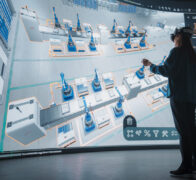
Artificial intelligence, collaborative robotics, and virtual worlds, such as the metaverse, are fueling visions for new forms of industrial value creation. However, innovation alone is not enough—given that these technologies only develop their full potential through intelligent business models. How can companies efficiently integrate AI-supported automation, cobots and digital twins into their processes?
Digital Twins Using Semantic Modeling and AI

Digital Twins Using Semantic Modeling and AI

Self-learning development and simulation of industrial production facilities
Wolfram Höpken ORCID Icon, Ralf Stetter ORCID Icon, Markus Pfeil ORCID Icon, Thomas Bayer ORCID Icon, Bernd Michelberger, Markus Till, Timo Schuchter, Alexander Lohr
The AI-driven, self-learning digital twin continuously adapts to real system behavior, ensuring an optimal representation of the production process. A comprehensive semantic model serves as the foundation for advanced artificial intelligence (AI) approaches. Insights derived from AI methods are integrated into this model, enhancing the interpretability and explainability of AI systems. Techniques from the field of eXplainable AI (XAI) facilitate the automated description of AI models and their findings, as well as the development of self-explanatory models.
Industry 4.0 Science | Volume 41 | Edition 2 | Pages 30-36
Error Management in Production

Error Management in Production

Current situation and challenges in the industry
Johannes Prior ORCID Icon, Milan Brisse ORCID Icon, Nikita Govorov, Robert Egel ORCID Icon, Bernd Kuhlenkötter ORCID Icon
This study explores experience-based error management on the basis of 23 participating companies. This study aims to identify essential criteria for effective error management in production. For this purpose, a comprehensive questionnaire was created, featuring 77 questions across eight key topics, including error culture, documentation, root cause analysis and software-supported knowledge management. The following analysis highlights both positive and negative measures, providing specific recommendations to optimize experience-based error management.
Industry 4.0 Science | Volume 41 | Edition 2 | Pages 38-45
1 9 10 11 44