
Federated Service Engineering |
A development methodology for the realization of mobility applications in the Gaia-X decentralized data ecosystem
| Journal | Industry 4.0 Science |
| Issue | Volume 40, 2024, Edition 2, Pages 40-47 |
| Bibliography | Share | Cite | Download |
Abstract
Keywords
Article
In order to secure the future of value creation and quality of life in Europe, a paradigm shift in the data economy based on open and trustworthy data infrastructures is required [2]. This change is associated with new requirements for digital sovereignty vis-à-vis established hyperscalers and new data-based innovation opportunities for commercial enterprises. The resulting need for fair and transparent digital competition led to the launch of the 2019 Gaia-X initiative within the European Union [3].
The project, which is established throughout Europe and supported by many companies, associations and research institutions, aims to standardize (data) ecosystems by establishing sector-specific and competitive data spaces [4]. The data spaces should enable the achievement of transparency and data protection in accordance with European values for sovereign data exchange across sectors [5]. By linking the specific data spaces, an open digital ecosystem that offers participating companies new opportunities for scalable digital business models is created [6].
The transformative effect of Gaia-X as an enabler of a sovereign data economy is particularly evident in automotive applications in the mobility sector. In addition to the open data ecosystem Catena-X for collaborative data use along the value chain in the automotive industry [7], the Gaia-X 4 Future Mobility project family in particular has established itself as a lighthouse project to drive forward the development of product-based innovative services [8].
Due to the highly dynamic and partially fragmented nature of the system areas in the mobility economy, Gaia-X supports the development of new services on the basis of data provided or used by the players in emerging data ecosystems. These efforts are highly relevant for the industry in order to strengthen service innovations overall and at the same time promote the path to a more sustainable mobility economy through decentralized infrastructures, for example in the area of the last mile in urban spaces [9].
In this respect, Gaia-X addresses the data protection and data sovereignty premises of the vehicle industry through uniform standards and interfaces that counteract the dangers of a lock-in effect [10] and harness the real-time data-based potential for new business models [11]. Against this background, the question arises as to how relevant use cases can be realized in Gaia-X from a service-oriented perspective.
In order to answer this question, a development methodology developed on the basis of the ongoing consortium research project Gaia-X 4 ROMS with the use case Smart Managed Freight Fleet is presented below [1]. The focus here is on the systematic development of application-oriented use cases with Gaia-X as the overarching technical framework for the development of federated services in decentralized data ecosystems and their transfer into suitable business model approaches [12].
Federated Service Engineering: A development methodology
With a view to the explorative research nature of Gaia-X as a technological development approach, process models for service development in the mobility context based on use cases have so far been the main focus [e.g. 13]. Agile use-case modeling is becoming increasingly important. It serves as a key component for combining the complex requirements of business experts with IT solution approaches.
Such use cases are often represented in graphical and standardized modeling languages such as the Unified Modeling Language (UML) found in ISO/IEC 19505. Corresponding UML tools support the specification, documentation and visualization of complex software systems and are used in particular due to their flexible properties. However, a key challenge here is bridging the conceptual and terminological gap between these disciplines. UML models are often not sufficiently precise if they are not supplemented with additional semantic descriptions that are attached to the graphical symbols [14].
FSE methodology
Without a predefined structure for these textual additions, the interpretation of the use cases is often not productive. The establishment of a consistent linguistic vocabulary created the basis for a more precise detailing of the use cases modeled in UML. The development methodology for innovative mobility applications shown in Fig. 1, based on [15], was adapted for implementation as part of the consortium’s research. This showcases Federated Service Engineering (FSE) in five process steps, and a prototype development with initial applications through fine-grained sub-use cases, taking into account requirements from a real operational and development technology perspective for the participating organizations is realized.
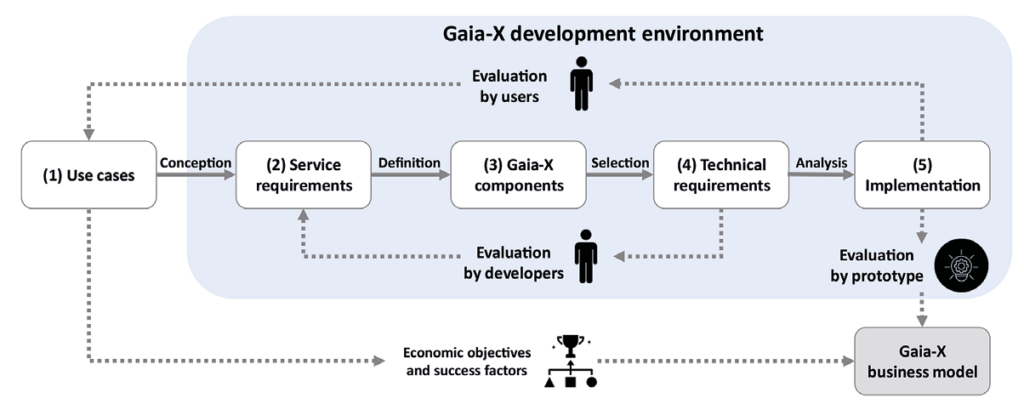
Figure 1: Framework of the FSE development methodology (based on [15]).
Based on the (1) conception of use cases, the development project is first motivated from a practical perspective. In step (2), the underlying service requirements for the execution of the application are specified. This is followed by (3) selection of the federated Gaia-X services, which are provided as open source [16]. Subsequently, in step (4), the technical requirements for the infrastructure for the operation of the services are identified and evaluated by developers. Finally, in step (5), prototype applications are implemented, which are evaluated by users as part of an iterative process and are recursively linked to the use cases. The use cases also form the basis for economic objectives and success factors for Gaia-X-specific business models, which are flanked by the development methodology. The process steps mentioned are specified below.
Step 1: Conception of (sub-)use cases
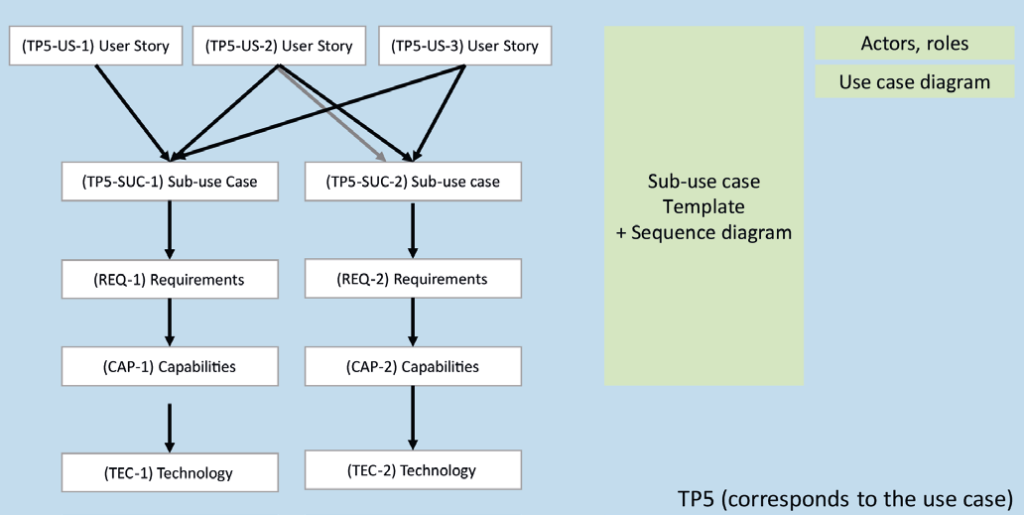
In the first step of designing the use cases, the importance of a standardized language vocabulary becomes clear: It enables a more precise and focused description of the use cases and lays the foundation for cascading different levels of consideration in order to break functional descriptions down to the level of technical capabilities (Fig. 2).
For this process, the SERVUS method according to [14] was used as a methodological framework to link the different levels of use case modeling up to the definition of technical capabilities. The method describes various artifacts that are linked to each other. User stories represent the everyday or business language of the stakeholders, which are refined via granular sub-use cases. Specific requirements and functional capabilities support a targeted selection of technologies that are precisely tailored to the requirements of the respective sub-use case.
Step 2: Definition of service requirements
The definition of concrete service requirements is an iterative process that requires close collaboration between all stakeholders in order to optimize the translation of functional requirements into technical specifications. This ensures that the developed systems are not only technically feasible, but also in line with the strategic business objectives.
In collaboration with the project partners, the assets and their data structures were analyzed and a comprehensive data management and flow analysis was carried out in the areas of fleet management, capacity and occupancy planning, transport requirements, data orchestration and provisioning. The insights gained from the requirements analysis form the basis for the development of an overall architecture that enables the support and implementation of innovative concepts for freight transportation services. Using standardized sub-use case templates, service requirements are linked to functional and technical requirements through user stories and supplemented by categorized descriptions in a repository (e.g. Gitlab) (Figure 3).
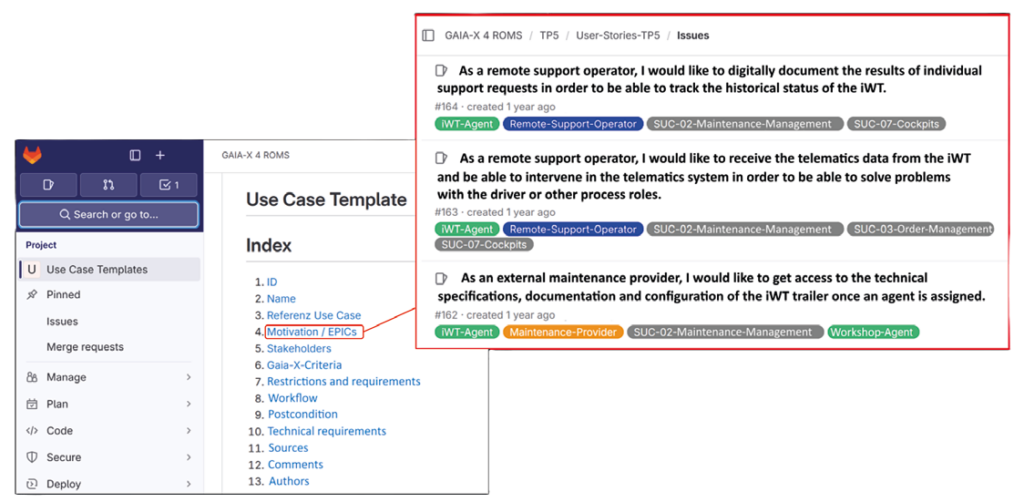
Figure 3: Sub-use case template and user story integration in Gitlab [own illustration].
Step 3: Selection of Gaia-X components
The existing description of the sub-use cases enables a detailed analysis of the technical requirements regarding access controls and data usage controls, which have priority in the design and development of data room infrastructures. The sub-use cases describe specific requirements for data sovereignty and for data access and usage control requirements. Using the evaluation matrix illustrated in Figure 4, these requirements are linked to the performance characteristics of the Gaia-X components provided.
The components are developed and provided as federated basic services that are intended to enable interoperable and secure data exchange [16]. As a result, the service requirements are first checked and the services are consolidated. The Gaia-X components are then evaluated in terms of their benefits and applicability, before a selection decision is finally made in interdisciplinary teams in order to fulfill the identified requirements with regard to data sovereignty.

Step 4: Analysis of technical requirements
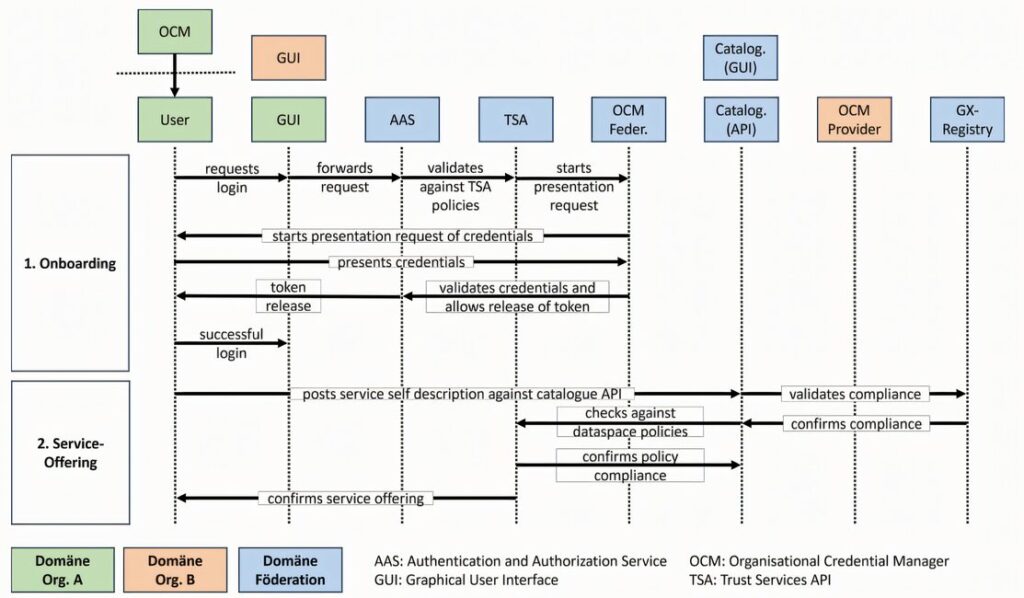
The next step is to model sequence diagrams to derive a technology selection, especially for hosting the Gaia-X components. These diagrams are crucial to visualizing the interactions between different system components and actors in the context of the defined sub-use cases. They provide an abstracted representation of how data and requests flow through the system and provide clarity regarding the communication patterns between the different Gaia-X components and services.
By visualizing these interactions in sequence diagrams, developers and architects can select the appropriate Gaia-X components more precisely (Figure 5). This selection is based not only on the general requirements of the sub-use cases, but also on the specific interaction patterns and data flows shown in the diagrams. This enables a more targeted and efficient integration of the Gaia-X components into the overall architecture of the project and also supports decision-making on functional and non-functional performance characteristics of the required infrastructures.
Step 5: Service implementation
In the context of agile and iterative development, the construct of a minimal viable demonstrator (MVD) is a crucial tool that builds the bridge from conception to prototype usability [17]. As part of the implementation, the MVD embodies the essence of the development project in its most rudimentary form. It is designed to demonstrate the central functions of the planned end product without necessitating full development of all features. This approach makes it possible to create an initial functional prototype that offers enough substance to be evaluated by users without full development having already taken place.
The MVD not only serves as a proof-of-concept, but also as a basis for collecting user feedback. This feedback is essential to ensuring that the end product meets the actual needs and expectations of users. The iterative approach, in which the MVD is continuously improved based on user feedback and recursive connections to the sub-use cases, produces a result that fulfills both the functional and non-functional requirements of the specific sub-use cases. In this respect, the MVD makes it possible to compare specific requirements from the point of view of technical experts and of IT, thus laying the foundation for the successful realization of the overall project.
Implications for practice
For the mobility industry, the European interoperable data infrastructure based on Gaia-X, which is currently under development, is associated with new solution offerings that meet the existing challenges for secure and self-determined data exchange. Achieving this goal requires a structured approach to be undertaken at the level of user-oriented applications in order to develop relevant services for the participating organizations.
Against this background, this article has presented a development methodology based on ongoing Gaia-X research that supports the realization of federated services with the help of use cases. As a result, an FSE comprises five process steps and promotes interdisciplinary cooperation between the organizations involved in the data space at different levels. This enables fleet operators in the field of local passenger and freight transport to systematically design applications together with technology and software providers and thus benefit operationally from the added value of using Gaia-X.
The iterative approach in the methodology ensures consistent testing of technical service requirements and evaluation by users in practice. The envisaged development result in the form of an MVD promotes the transfer to a Gaia-X-supported business model, which is addressed at the use-case level through economic goals and concrete success factors. The individual process steps thus provide the initial impetus for targeted communication in interdisciplinary development teams.
Practitioners, technical developers and researchers are therefore able to use Gaia-X as an active development environment for individual MVD developments across sectors. This is associated with further potential in the area of vehicle-oriented data usability in data ecosystems, which, in addition to individualized offers, also enables future configuration of (cataloged) services for user based on fleets.
Prospects for research and development
This article discusses a development methodology that supports the service-oriented realization of mobility applications based on use cases with Gaia-X in the context of evolving decentralized data ecosystems. The authors present a federated service engineering (FSE) in five steps: (1) conception of (sub-) use cases, (2) definition of service requirements, (3) selection of Gaia-X components, (4) analysis of technical requirements and (5) service implementation. The structured and interdisciplinary nature of the methodology enables the development of federated services with a high degree of application orientation.
In this respect, the FSE methodology offers the opportunity to accelerate the practical transfer from prototype development to innovative Gaia-X business models (e.g. marketplace-oriented data offerings). With regard to current research and development projects with Gaia-X, a further differentiation of concrete value creation potential in individual domains can be expected. Against this background, the regulatory framework and the results of the article provide important impulses for design-oriented research with practical application, which can be adapted and further developed, for example, in future consortium research projects.
This article was created as part of the Gaia-X 4 ROMS project – Support and Remote Operation of Automated and Networked Mobility Services (Grant number: 19S21005C). The joint project is funded by the Federal Ministry of Economics and Climate Protection (BMWK). Responsibility for the content of this article lies with the authors.
Bibliography
[1] Heinbach, C.; Gösling, H.; Meier, P; Thomas, O.: Smart Managed Freight Fleet: Ein automatisiertes und vernetztes Flottenmanagement in einem föderierten Datenökosystem. In: HMD Praxis der Wirtschaftsinformatik 60 (2023) 1, S. 193-213.[2] Hanselka, H.; Hassel, A.; Hölzle, K.; Riemensperger, F.: Zukunft der Wertschöpfung. Impulspapier, Hightech-Forum (2020).
[3] BMWi: Das Projekt GAIA-X – Eine vernetzte Dateninfrastruktur als Wiege eines vitalen, europäischen Ökosystems. URL: www.bmwk.de/Redaktion/DE/Publikationen/Digitale-Welt/das-projekt-gaia-x.html, Abrufdatum 04.03.2024.
[4] Otto, B.: GAIA-X and IDS (1.0). Zenodo (2021).
[5] Reiberg, A.; Niebel, C.; Kraemer, P.: Was ist ein Datenraum? Definition des Konzeptes Datenraum. Gaia-X Hub Germany, Whitepaper 1/2022 (2022).
[6] Kraemer, P.; Niebel, C.; Reiberg, A.: Gaia-X und Geschäftsmodelle: Typen und Beispiele. Gaia-X Hub Germany, Whitepaper 1/2023 (2023).
[7] Catena-X Automotive Network e.V.: Die Lösung: Catena-X!. URL: https://catena-x.net/de/vision, Abrufdatum 04.03.2024.
[8] DiMOS Operations GmbH: Gaia-X 4 Future Mobility. URL: https://www.gaia-x4futuremobility.de/, Abrufdatum 04.03.2024.
[9] Heinbach, C.; Gösling, H.; Thomas, O.: The Hitchhiker‘s Guide to Urban Spaces – Conceptualizing a Gaia-X-enabled Co-bility Hub Combining Public Transport, Crowd Mobility, and Last Mile Logistics. In: INFORMATIK 2023 – Designing Futures: Zukünfte gestalten (2023), S. 1359-1371.
[10] Leimeister, J. M.: Dienstleistungsengineering und -management: Data-driven Service Innovation, 2. Auflage. Springer Berlin Heidelberg (2020).
[11] Kagermann, H.; Süssenguth, F.; Körner, J.; Liepold, A.; Behrens, J. H.: Resilienz der Fahrzeugindustrie: Zwischen globalen Strukturen und lokalen Herausforderungen. acatech IMPULS (2021).
[12] BMWi: GAIA-X – das europäische Projekt startet in die nächste Phase. URL: https://www.bmwk.de/Redaktion/DE/Publikationen/Digitale-Welt/gaia-x-das-europaeische-projekt-startet-in-die-naechste-phase.html, Abrufdatum 04.03.2024.
[13] Konietzko, E.; Tanrikulu, C.; Schwarz, F.; Lindow, K.; Heinbach, C. et al.: How to Gaia-X? – Ein Vorgehensmodell zur erfolgreichen Teilnahme an interoperablen und dezentralen Datenökosystemen am Beispiel von Gaia-X. In: Industrie 4.0 Management 38 (2022) 6, S. 54-58.
[14] Usländer, T.; Batz, T.: Agile Service Engineering in the Industrial Internet of Things. In: Future Internet 10 (2018) 100, S. 1-18.
[15] Thomas, O.; Walter, P.; Loos, P.: Product-Service Systems: Konstruktion und Anwendung einer Entwicklungsmethodik. In: Wirtschaftsinformatik 50 (2008) 3, S. 208-219.
[16] eco – Verband der Internetwirtschaft e.V. (2023): Implementation. URL: https://www.gxfs.eu/implementation/, Abrufdatum 04.03.2024.
[17] Kremer, M.; Pohling, L.; Gösling, G.; Heinbach, C.; Sachweh, T. et al.: An Intelligent Arrival Time Prediction Service in a Federated Data Ecosystem: The Minimum Viable Demonstrator of the GAIA-X 4 ROMS Research Project. In: SSRN Electronic Journal (2023), Paper 4331859.
Your downloads
You might also be interested in