Künstliche Intelligenz

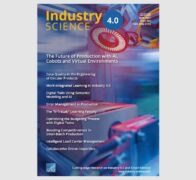
I4S 2/2025: The Future of Production with AI, Cobots and Virtual Worlds

I4S 2/2025: The Future of Production with AI, Cobots and Virtual Worlds

Technology needs innovative, value-adding business models
Artificial intelligence, collaborative robotics, and virtual worlds, such as the metaverse, are fueling visions for new forms of industrial value creation. However, innovation alone is not enough—given that these technologies only develop their full potential through intelligent business models. How can companies efficiently integrate AI-supported automation, cobots and digital twins into their processes?
Digital Twins Using Semantic Modeling and AI

Digital Twins Using Semantic Modeling and AI

Self-learning development and simulation of industrial production facilities
Wolfram Höpken ORCID Icon, Ralf Stetter ORCID Icon, Markus Pfeil ORCID Icon, Thomas Bayer ORCID Icon, Bernd Michelberger, Markus Till, Timo Schuchter, Alexander Lohr
The AI-driven, self-learning digital twin continuously adapts to real system behavior, ensuring an optimal representation of the production process. A comprehensive semantic model serves as the foundation for advanced artificial intelligence (AI) approaches. Insights derived from AI methods are integrated into this model, enhancing the interpretability and explainability of AI systems. Techniques from the field of eXplainable AI (XAI) facilitate the automated description of AI models and their findings, as well as the development of self-explanatory models.
Industry 4.0 Science | Volume 41 | Edition 2 | Pages 30-36
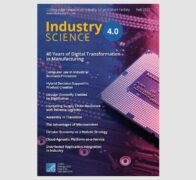
I4S 1/2025: 40 Years of Digital Transformation in Manufacturing

I4S 1/2025: 40 Years of Digital Transformation in Manufacturing

Key research questions for tomorrow's production and logistics
Digital transformation has been a central focus of scientific discussions for years. Questions relating to data-driven decisions, artificial intelligence and resilient supply chains are at the heart of current research. The articles in this issue explain key trends and present scientific findings and practical solutions - from automation and the circular economy to cloud computing.
Hybrid Decision Support in Product Creation

Hybrid Decision Support in Product Creation

Improving performance with data science and artificial intelligence
Iris Gräßler ORCID Icon, Jens Pottebaum ORCID Icon, Peter Nyhuis ORCID Icon, Rainer Stark ORCID Icon, Klaus-Dieter Thoben ORCID Icon, Petra Wiederkehr ORCID Icon
Technical systems are characterized by increasing interdisciplinarity, complexity and networking. A product and its corresponding production systems require interdisciplinary multi-objective optimization. Sustainability and recyclability demands increase said complexity. The efficiency of previously established engineering methods is reaching its limits, which can only be overcome by systematic integration of extreme data. The aim of "hybrid decision support" is as follows: Data science and artificial intelligence should be used to supplement human capabilities in conjunction with existing heuristics, methods, modeling and simulation to increase the efficiency of product creation.
Industry 4.0 Science | Volume 41 | Edition 1 | Pages 18-25 | DOI 10.30844/I4SE.25.1.18
Introduction of Machine Learning in Production

Introduction of Machine Learning in Production

An SME-specific, holistic guide
Manuel Savadogo, Malte Stonis ORCID Icon, Peter Nyhuis ORCID Icon
Machine learning offers a wide range of potential, especially in production, and is therefore becoming increasingly important. However, small and medium-sized businesses are lacking guidelines that are specifically tailored to their individual challenges to guide them step-by-step through the process. In conjunction with a potential analysis, the determination of relevant prerequisites and a maturity assessment, this article can serve as a guide for SMEs.
Industry 4.0 Science | Volume 40 | 2024 | Edition 6 | Pages 88-95
Can Artificial Intelligence (AI) Act as an Enabler for Industry 4.0 (4IR)?

Can Artificial Intelligence (AI) Act as an Enabler for Industry 4.0 (4IR)?

Impacts on the maturity level of Industry 4.0 technologies
Dennis Richter, Mildred Doe, Steffen Kinkel ORCID Icon
Artificial intelligence is often mentioned often mentioned in the same context as Industry 4.0, but the exact role of AI is unclear. Is AI just another 4IR technology or an essential "enabler" for other 4IR technologies? Six experts assess the impact of AI on 41 4IR technologies. AI could indeed be a decisive factor in unleashing the full potential of Industry 4.0.
Industry 4.0 Science | Volume 40 | 2024 | Edition 6 | Pages 80-87 | DOI 10.30844/I4SE.24.6.80
Process Reference Model (PRM) for AI Development in Vehicles

Process Reference Model (PRM) for AI Development in Vehicles

Practical guide to the development of AI functionalities in the automotive industry
Sebastian Grundstein ORCID Icon, Bernhard Burger, Andreas Aichele ORCID Icon
Artificial intelligence is increasingly being integrated into vehicles, but conventional product development processes often do not fully capture the specific requirements of AI projects. In order to meet these requirements, a process reference model (PRM) has been developed specifically for the development of AI functionalities in the automotive industry. This model is intended to support companies in adapting their conventional software development processes more easily to the special features of AI projects.
Industry 4.0 Science | Volume 40 | 2024 | Edition 6 | Pages 96-101
Intelligent Shopfloor Assistants

Intelligent Shopfloor Assistants

Increasing productivity through the use of generative AI
Eckart Uhlmann ORCID Icon, Julian Polte ORCID Icon, Christopher Mühlich ORCID Icon, Yassin Elsir
In modern production companies, a heterogeneous IT landscape often complicates day-to-day work. A promising antidote is the use of intelligent agents, which use generative AI for routine tasks and can therefore increase efficiency. Whether these intelligent systems can be successfully integrated into existing networks determines whether the flow of information can be improved and manual effort reduced.
Industry 4.0 Science | Volume 40 | 2024 | Edition 6 | Pages 64-71
I4S 6/2024: Machine Learning

I4S 6/2024: Machine Learning

A technology with optimization potential in terms of efficiency, transparency and sustainability
Machine learning takes automation to a new level. But what does this imply for the role of humans, who seem to remain essential for the effective control of AI systems. The development of energy-efficient and fair algorithms and the optimization of data quality are crucial for the future viability of machine learning and artificial intelligence. The articles in this issue examine the technology's key potential and areas of application.
Double Transformation as the Key to Sustainability

Double Transformation as the Key to Sustainability

Methodology for evaluating an AI application in manufacturing companies
Jennifer Link ORCID Icon, Markus Harlacher, Olaf Eisele, Sascha Stowasser
EU regulations demand more intensive and transparent sustainable practices from companies. Industry needs to adapt many processes and products to take charge of this responsibility. Artificial Intelligence (AI) in particular offers innovative potential. Firstly, however, this technology needs to be evaluated focusing on weak AI—market-ready systems that perform specific tasks using algorithms and data-supported models efficiently.
Industry 4.0 Science | Volume 40 | 2024 | Edition 5 | Pages 82-89 | DOI 10.30844/I4SE.24.5.82
1 2 3 4 7