Branche: Small and Medium-Sized Enterprises

Conducting Experiments in Hybrid Learning Factories

Conducting Experiments in Hybrid Learning Factories

The example of the InTraLab Potsdam
Industrial production is undergoing rapid transformation through digitalization, automation and cyber-physical systems, creating new competence requirements for employees. Learning factories provide experiential environments for developing these competences. This article presents the Industrial Transformation Lab (InTraLab) as a hybrid learning factory combining physical demonstrators and digital simulations.
Guidelines for the Fair Use of Generative AI

Guidelines for the Fair Use of Generative AI

Practical examples from production management and social welfare
Anja Gerlmaier, Paul-Fiete Kramer ORCID Icon, Dirk Marrenbach ORCID Icon, René Wenzel ORCID Icon
With the rapid spread of assistive AI tools such as ChatGPT, Gemini, and Copilot, companies are being challenged to address the opportunities and challenges of artificial intelligence. Based on two practical examples, this article provides insight into how companies can use company-specific risk and potential analyses to develop guidelines for the fair and responsible use of AI.
Industry 4.0 Science | Volume 42 | 2026 | Edition 1 | Pages 22-28 | DOI 10.30844/I4SE.26.1.22
Pre-Stages of GenAI Governance via Managerial Communication

Pre-Stages of GenAI Governance via Managerial Communication

Exploratory findings from SMEs in the Ruhr area
Niklas Obermann ORCID Icon, Uta Wilkens ORCID Icon, Antonia Weirich ORCID Icon, Matthias E. Cichon ORCID Icon, Jürgen Mazarov, Bernd Kuhlenkötter ORCID Icon
The governance of generative artificial intelligence (GenAI) usage is often described as a formalized reporting system. This neglects the early-stage mechanisms of coping with ethical challenges during the GenAI implementation period. Exploratory empirical findings from the Ruhr area reveal that managerial communicative practices serve as a substitute for missing institutional structures, particularly at an early stage of GenAI implementation in SMEs.
Industry 4.0 Science | Volume 42 | Edition 1 | Pages 6-13 | DOI 10.30844/I4SE.26.1.6
AI Skills for Responsible Use

AI Skills for Responsible Use

Realistic learning environments, critical thinking, and role design in teams
Valentin Langholf ORCID Icon, Niklas Obermann ORCID Icon, Uta Wilkens ORCID Icon, Marco Kuhnke, Michael Prüfer
Artificial intelligence (AI) is changing the world of work. But how can work teams learn to use AI support in a way that delivers speed advantages and ensures consistently high quality? One possible approach is to test it in a workplace-like simulation. Trying it out under realistic conditions shows the role that critical thinking plays.
Industry 4.0 Science | Volume 42 | Edition 1 | Pages 100-107 | DOI 10.30844/I4SE.26.1.92
Enabler for the Digital Twin

Enabler for the Digital Twin

Requirements for Technical Documentation 4.0
Christian Koch, Lukas Schulte, René Wöstmann, Jochen Deuse ORCID Icon
The increasing heterogeneity and complexity of industrial plant components from different manufacturers make it difficult to handle technical documentation consistently. In addition, the flexibility required for system changes challenges the long-term usability and legally compliant design of this documentation throughout the entire life cycle of cyber-physical production systems. This article contributes to the discussion on Technical Documentation 4.0 by systematically analyzing existing specifications and approaches and by proposing a concept for a holistic documentation framework.
Industry 4.0 Science | Volume 41 | 2025 | Edition 4 | Pages 76-85
Real-Time Monitoring of the Carbon Footprint for SMEs

Real-Time Monitoring of the Carbon Footprint for SMEs

Sustainability in real time — from operation to finished products
Henning Strauß ORCID Icon, Julian Sasse ORCID Icon
Although SMEs are not directly affected by the statutory reporting obligations for carbon accounting, as suppliers they are obliged to meet the requirements of sustainability reporting. In addition to a holistic life cycle analysis, this requires a high-quality database within production in order to determine the specific CO₂ footprint. A central element is the implementation of a Machine Carbon Footprint (MCF). This article aims to develop and implement an MCF focusing on its applicability for SMEs. For this purpose, data is recorded and visualized in real time on a machine tool. The measurement data is then processed, stored and visualized using open-source low-code platforms. Real-time data flows enable the precise determination of the production-specific carbon footprint and, in conjunction with order data, the Product Carbon Footprint.
Industry 4.0 Science | Volume 41 | Edition 3 | Pages 102-109
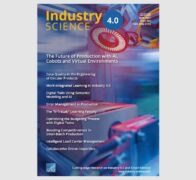
I4S 2/2025: The Future of Production with AI, Cobots and Virtual Worlds

I4S 2/2025: The Future of Production with AI, Cobots and Virtual Worlds

Technology needs innovative, value-adding business models
Artificial intelligence, collaborative robotics, and virtual worlds, such as the metaverse, are fueling visions for new forms of industrial value creation. However, innovation alone is not enough—given that these technologies only develop their full potential through intelligent business models. How can companies efficiently integrate AI-supported automation, cobots and digital twins into their processes?
Circular Economy Enabled by Digitization

Circular Economy Enabled by Digitization

Digital networking in the procurement of manufacturing companies
Pius Finkel ORCID Icon, Peter Wurster ORCID Icon, David Pfister
Current developments in digitalization and data economy, especially multilateral data sharing platforms, offer the potential to accelerate the implementation of circular economy practices in the manufacturing industry. This article systematically examines the extent to which digitalization could serve as a catalyst for circular economy in the procurement of such companies. As a basis for the following research, eight experts from five leading global manufacturers and suppliers in the automotive and aviation industries were interviewed. This article demonstrates practical hypotheses for the sustainable design of supply chains and proposes two specific use cases for circular economy practices that can proactively counteract the use of resources.
Industry 4.0 Science | Volume 41 | 2025 | Edition 1 | Pages 26-33 | DOI 10.30844/I4SE.25.1.26
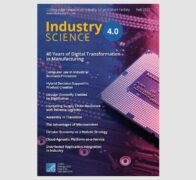
I4S 1/2025: 40 Years of Digital Transformation in Manufacturing

I4S 1/2025: 40 Years of Digital Transformation in Manufacturing

Key research questions for tomorrow's production and logistics
Digital transformation has been a central focus of scientific discussions for years. Questions relating to data-driven decisions, artificial intelligence and resilient supply chains are at the heart of current research. The articles in this issue explain key trends and present scientific findings and practical solutions - from automation and the circular economy to cloud computing.
Introduction of Machine Learning in Production

Introduction of Machine Learning in Production

An SME-specific, holistic guide
Manuel Savadogo, Malte Stonis ORCID Icon, Peter Nyhuis ORCID Icon
Machine learning offers a wide range of potential, especially in production, and is therefore becoming increasingly important. However, small and medium-sized businesses are lacking guidelines that are specifically tailored to their individual challenges to guide them step-by-step through the process. In conjunction with a potential analysis, the determination of relevant prerequisites and a maturity assessment, this article can serve as a guide for SMEs.
Industry 4.0 Science | Volume 40 | 2024 | Edition 6 | Pages 88-95
1 2 3