Artificial Intelligence

AI-Supported Personnel Planning in Industrial Maintenance

AI-Supported Personnel Planning in Industrial Maintenance

User-centered development and implementation in a pilot project
Philipp Hein ORCID Icon, Katharina Simon ORCID Icon, Alexander Kögel, Angelika C. Bullinger-Hoffmann, Thomas Löffler
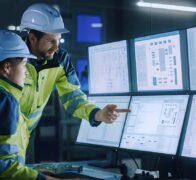
Personnel deployment planning in industrial maintenance is a complex challenge, as dispatchers often have to match incomplete customer requests with the appropriate employee skills. An AI-based assistance system can help by automatically analyzing relevant data and providing well-founded suggestions for employee selection. This article describes the user-centered development and introduction of such a system as part of a pilot project at a medium-sized service provider. The user-centered design ensures that dispatchers retain their autonomy. Involving employees from the outset creates acceptance and promotes a deeper understanding of the system’s advantages.
Industry 4.0 Science | Volume 41 | 2025 | Edition 5 | Pages 14-20 | DOI 10.30844/I4SE.25.5.14
Automation of Production Planning and Control

Automation of Production Planning and Control

A deep dive into production control with intelligent agents
Jonas Schneider, Peter Nyhuis ORCID Icon, Matthias Schmidt
How can artificial intelligence (AI) automate production planning and control? This study examines its potential to enhance efficiency in modern production environments. The focus is on establishing a robust data infrastructure that integrates real-time, historical, and contextual data to create a solid basis for AI models. Reinforcement learning (RL) is applied to aid automation. A roadmap for implementation, focusing on practical application, is presented. This roadmap incorporates simulation-based training methods and outlines strategies for continuous improvement and adaptation of production processes.
Industry 4.0 Science | Volume 41 | 2025 | Edition 5 | Pages 86-93 | DOI 10.30844/I4SE.25.5.84
Machine Learning to Promote Sustainability 

Machine Learning to Promote Sustainability 

Company analysis based on expert interviews
Niklas Bode ORCID Icon, Lukas Nagel ORCID Icon, Oskay Ozen ORCID Icon, Matthias Weigold
This article outlines the results of ten expert interviews on the use of machine learning to promote corporate sustainability and then compares them with relevant literature. The study shows that economic factors drive the use of machine learning, the introduction of which is initiated by both top management and specialist departments. However, grounded strategies for implementing machine learning are rarely available and use cases are often based on supervised learning. The environmental impact (the reduction of emissions, for example) outweighs the social impact, though quantification is difficult. Additionally, a lack of trust, expertise, and communication hinders the adoption of machine learning, while some technical challenges regarding data requirements also pose problems.
Industry 4.0 Science | Volume 41 | Edition 4 | Pages 44-51
Field Meets Code

Field Meets Code

Artificial intelligence for better collaboration in software development
Andreas Groche, Dominik Augenstein
Software development is fundamental to digital transformation. A good foundation of data is required for developers to tailor software to the needs of the commissioning department. Unfortunately, the data models required for this are incomplete, often created unilaterally by the development department and not embedded in the business context. This makes it difficult for both developers and AI to find the right algorithms. The present approach increases understanding and exchange between the specialist and development departments and offers digital assistance with data modeling as a basis for software development. Furthermore, AI approaches can help to increase the quality and completeness of the data.
Industry 4.0 Science | Volume 41 | Edition 4 | Pages 104-110
Enabling the Future of Manufacturing with Digital Twins

Enabling the Future of Manufacturing with Digital Twins

Opportunities and obstacles
Javad Ghofrani, Darian Lemke, Tassilo Söldner
Digital twins connect physical and digital systems, furthering efficiency, enabling predictive maintenance, and allowing the production of more customized products. Despite these advantages, challenges such as high costs, data synchronization, and security risks hinder widespread adoption. This article explores the potential of digital twins and examines key barriers to integration and implementation, also considering some industrial applications including additive manufacturing as a relevant use case.
Industry 4.0 Science | Volume 41 | Edition 3 | Pages 72-81
Open-Source and Cost-Effective Digital Twin

Open-Source and Cost-Effective Digital Twin

A case study with two weeks to succeed
Shantall Cisneros Saldana ORCID Icon, Sonali Pratap, Parth Punekar, Sampat Acharya, Heike Markus ORCID Icon
Digital Twin (DT) adoption remains a challenge due to high costs, complexity and lack of skills. This study proposes a cost-effective, TRL 5-validated DT model that can be built using open-source and office suite tools within just two weeks. Integrating real-time sensor data, predictive analytics, anomaly detection and notification, the model improves efficiency and sustainability in agriculture. Even with cloud service constraints, the system delivers a 7.76% average relative error and rapid, automated notifications. The findings show how open-source in combination with common commercial tools technologies can make advanced digital tools accessible to all, creating scalable, human-centered, and affordable solutions in line with Industry 5.0 principles.
Industry 4.0 Science | Volume 41 | Edition 3 | Pages 62-68 | DOI 10.30844/I4SE.25.3.62
Collaborative Drone Inspection

Collaborative Drone Inspection

A new approach to inspection work with AI support
Till Becker, Agron Neziraj
Drone technology and the use of artificial intelligence (AI) offer promising advantages in various sectors, including in inspection. The use of innovative inspection technologies can make inspections more efficient overall. This research project examines various legal and economic aspects of AI-based autonomous drone inspections. It also develops a target process that represents the use of an AI-based drone inspection and controls the use of such inspection technology. In particular, this article focuses on a collaborative approach to this new inspection methodology.
Industry 4.0 Science | Volume 41 | Edition 2 | Pages 94-100
Digital Twins Using Semantic Modeling and AI

Digital Twins Using Semantic Modeling and AI

Self-learning development and simulation of industrial production facilities
Wolfram Höpken ORCID Icon, Ralf Stetter ORCID Icon, Markus Pfeil ORCID Icon, Thomas Bayer ORCID Icon, Bernd Michelberger, Markus Till, Timo Schuchter, Alexander Lohr
The AI-driven, self-learning digital twin continuously adapts to real system behavior, ensuring an optimal representation of the production process. A comprehensive semantic model serves as the foundation for advanced artificial intelligence (AI) approaches. Insights derived from AI methods are integrated into this model, enhancing the interpretability and explainability of AI systems. Techniques from the field of eXplainable AI (XAI) facilitate the automated description of AI models and their findings, as well as the development of self-explanatory models.
Industry 4.0 Science | Volume 41 | Edition 2 | Pages 30-36
Improving Social Media Moderation with Generative Language Models

Improving Social Media Moderation with Generative Language Models

Study on the detection and correction of disinformation
Anton Schegolev, Maximilian Ambros ORCID Icon
Fake news are increasingly dominating the digital world. The question arises: Can modern technologies reverse this trend? The article highlights the potential of the GPT-4o language model for identifying fake news in online comments and news articles and for correcting false information. With impressive accuracy, the model shows how language technology can combat misinformation.
Industry 4.0 Science | Volume 40 | 2024 | Edition 6 | Pages 72-79 | DOI 10.30844/I4SE.24.6.72
Digitization of Raster Drawings with Deep Learning

Digitization of Raster Drawings with Deep Learning

Framework outperforms OCR software in extracting data from mechanical drawings
Xiao Zhao, Marko Weber, Jan Schöffmann, Daniela Oelke ORCID Icon
A new look into the depths of technical drawings: A deep learning framework reads CAD drawings more accurately than ever before, recognizing geometrical dimensioning and tolerancing, dimensions, and every other detail. What used to be tedious manual labor is now carried out by an AI that understands the special features of every line and label. This promising technology not only increases accuracy but also speeds up the processing of drawings considerably. The system thus opens up new avenues for precision in production.
Industry 4.0 Science | Volume 40 | 2024 | Edition 6 | Pages 10-17
1 3 4 5 15