Circular Economy |
A view from the perspective of entrepreneurship

| Journal | Industry 4.0 Science |
| Issue | Volume 40, 2024, Edition 1, Pages 22-29 |
| Bibliography | Share | Cite | Download |
Abstract
Keywords
Article
Entrepreneurship – a paradigm shift?
Public debates and political decisions are increasingly bringing the topic of the circular economy into the public consciousness. In particular, the growing pressure exerted on companies by regulatory measures, including those triggered by the “European Green Deal” [1] and the European Commission’s “Circular Economy Action Plan” [2, 3], requires companies to undergo comprehensive change processes. However, increasing demand pressure from customers also requires a rethink.
For example, the issue of packaging recycling is a much-discussed topic both in the plastics industry and throughout all sections of the population. Through material selection, product design and innovative business models, raw materials and products can be recycled, reducing raw material consumption and waste. Thinking in terms of circular value creation at an early stage can create competitive advantages, as trends resulting from changes in legislation and customer requirements can be identified and implemented at an early stage.
Entrepreneurship, in particular with disruptive business models, which can be seen in forms such as social entrepreneurship or an economy oriented towards social value creation, and the circular economy are two concepts that complement each other ideally across disciplines and departmental structures and together can lead to sustainable solutions for trends and problem areas of the future.
While social entrepreneurship aims to solve social problems through entrepreneurial action [4] or to create public value, i.e. to create social value [5], the circular economy [6] is focused on conserving resources and avoiding waste. Both concepts aim to combine ecological, economic and social aspects. Entrepreneurship can help to drive the circular economy forward by developing innovative business models that are geared towards sustainability.
For example, products and services that focus on the reuse of resources, aim to extend product life cycles or to prevent waste can be offered. Last but not least, by safeguarding existing jobs, creating new ones and promoting local communities in the form of new business models and legal forms for companies and initiatives, a socially responsible economy geared towards the common good can have an impact on the transformation of value creation from linear processes to cycles and on societal cooperation.
The contribution of materials science
Materials science can provide the technological basis for a shift from a linear economy to a circular economy (Figure 1).
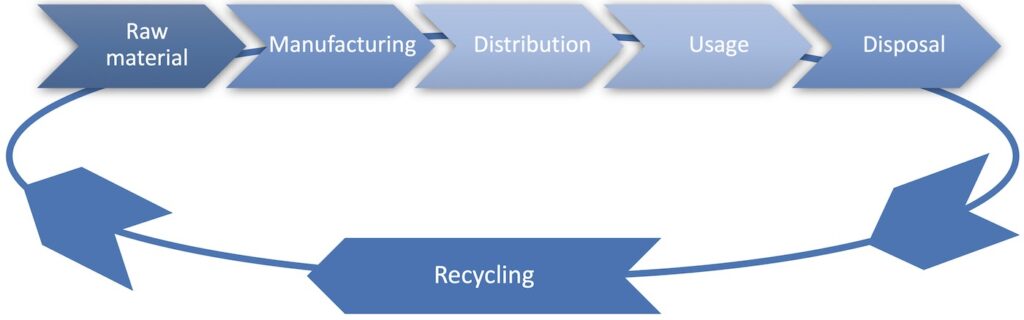
Many technical and economic decisions in the individual phases of the value chain have an influence on the possibility of closing the material cycle through a recycling process or reuse. The selection of raw materials and the manufacturing processes used play a special role here.
When using polymer materials, for example, it is possible to use bio-based raw materials in addition to petrochemical ones as starting points, though while the former have a better CO2 footprint, they may not be suitable for the recycling process.
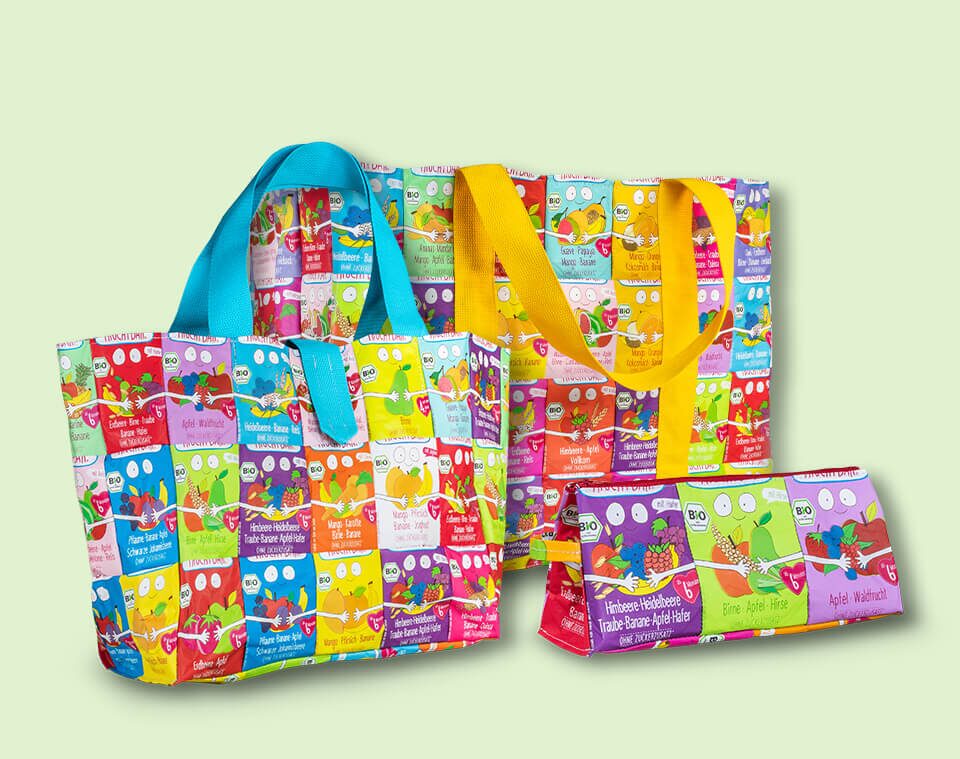
Furthermore, the closing of the material cycle can be facilitated by the repair-friendly design of components or the recycling-friendly design of packaging. Ultimately, the decisions to be made must be supported not only by monetary considerations, but also with regard to ecological effects, for example through a life cycle analysis (LCA). This shows the potential for new business ideas and entrepreneurship efforts to close the material cycle. As part of the summer school described below, participants were given a brief presentation on the theoretical background and some well-known and practiced examples of recycling and reusing polymer materials (Fig. 2).
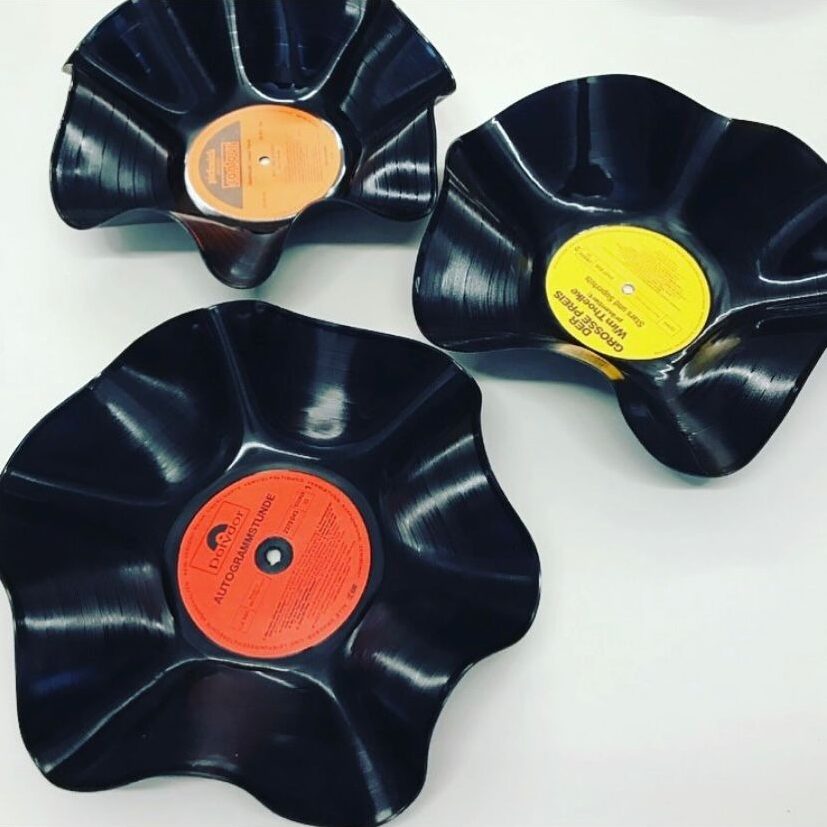
By heating and shaping vinyl records that are no longer used and were actually intended for disposal, it is possible to reuse them as an alternative fruit bowl. The easy formability and simple handling of polymer materials has already led to the development of a small manufacturing scene offering alternative products (Fig. 3).
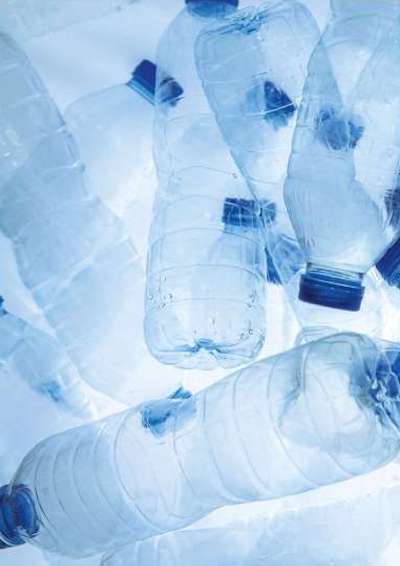
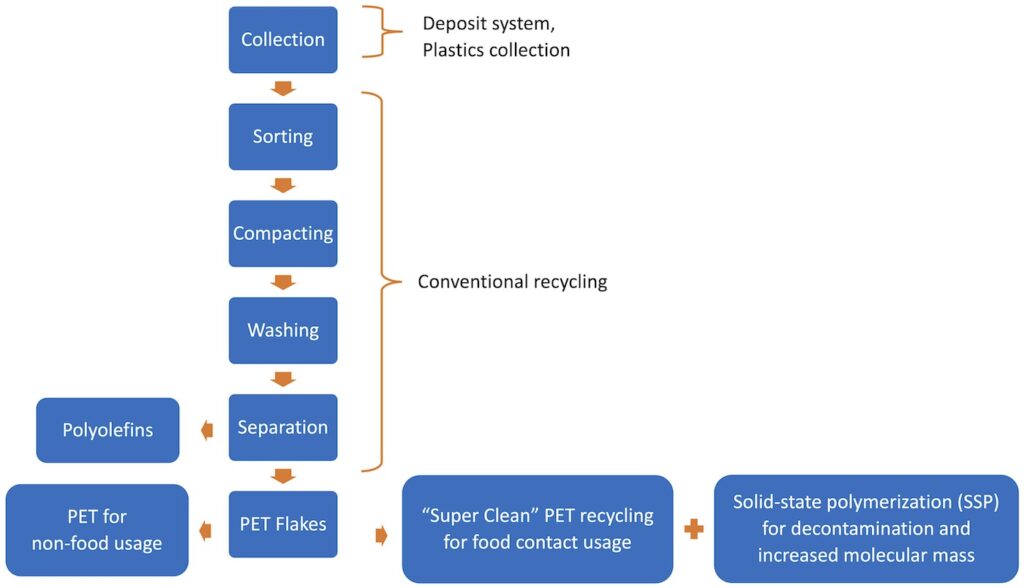
In industrial PET (Polyethylene terephthalate) recycling, SSP (Solid-state polymerization) (Fig. 4) can be used to improve quality.
This can be carried out on any PET material, e.g. flakes, from the bottle return in order to adapt the molecular weight or viscosity to the application or to compensate for any negative effects from the use phase.
In SSP, the PET is heated to temperatures of 180°C to 240°C for 5 h to 30 h in an inert gas or vacuum atmosphere, whereby the parameters depend on the initial viscosity value and the required molecular structure.
The current state of technology enables PET regranulates to be converted by this process into a state that is equivalent to virgin material. However, this potential is not fully exploited. Kauertz and Detzel criticize the fact that secondary PET material is currently not being optimally utilized in Germany [7].
Most of the secondary material obtained from PET beverage bottles is used in other applications with a significantly lower or simply non-existent probability of recycling in terms of material-specific processing. This means that a large proportion of the secondary material is lost after only a single further use stage. A positive example of the use of rPET (recycled PET) for food packaging is the company Alnatura, which already uses some packaging made from or with a proportion of recycled material and has converted the plastic packaging of some vegan convenience products. The packaging now contains 57 percent recycled PET from PET bottle recycling [8].
The Summer School
The topics of sustainability and the circular economy are covered by the research focus “Sustainable Processes” as well as by other relevant courses at Merseburg University of Applied Sciences. The start-up service at Merseburg University of Applied Sciences accompanies ideas developed in research and teaching on their way and supports start-ups as well as established companies with change processes.
By pooling expertise in the field of business model innovation and by bringing in experts – as in the case presented here – in the field of materials science with a view to developing new materials and products or furthering the reuse of recycled materials and their ecological and economic evaluation, the implementation of innovative solutions in circular company-specific business models on the market can be supported.
The start-up service at Merseburg University of Applied Sciences provides support through to the validation of corresponding business models and uses this experience to pass on this knowledge in entrepreneurship teaching in various formats of academic and practical education and training. One such offering will be outlined here.
The summer school in September 2023 was organized as part of the city partnership between the city of Merseburg and the city of Bottrop and thus between the start-up service of Merseburg University of Applied Sciences and Ruhrwest University of Applied Sciences, the latter of which is represented by Prof. Dr.-Ing. Saulo H. Freitas Seabra da Rocha, Professor of Environmental and Process Engineering and Head of the Circular Digital Economy Lab in cooperation with the start-up service of Ruhrwest University of Applied Sciences [9].
In interdisciplinary project teams, students from both universities, young scientists and doctoral students, young managers from regional companies and secondary school students worked on challenges surrounding circular value creation. Interdisciplinary thinking and independent action play an important role in the study orientation for secondary school students as well as in the career orientation of students and young scientists. It is a great challenge not only to create an awareness of social challenges among potential first-year students and young academics, but also to teach them methods and skills to develop innovative ideas and solutions for overcoming problems.
Against this background, the title of the summer school “Circular Economy” is a working concept that reflects the many facets of current social development that affect the younger generation and thus creates a high level of identification. The working concept covers both scientific and engineering approaches, here with a focus on chemistry, plastics, closed material cycles and ecological material conversion, as well as new forms of economic activity, e.g. business models oriented towards the common good, the re-use and circular economy or the sharing economy and social entrepreneurship. The event focused on combining these innovative economic models with new research approaches and technologies from the field of materials science.
Entrepreneurship education approaches [10] formed the link between the participating disciplines, with the aim of awakening enthusiasm for entrepreneurial thinking and action as well as discovering talents and ideas. One aim was to enable the participants to carefully weigh the pros and cons of implementing ideas to solve the problems of tomorrow from a technical engineering and scientific context. Entrepreneurship education is about imparting basic economic knowledge, coupled with the training of elementary personal skills. Participants learn to make decisions independently and on their own responsibility – they become entrepreneurs, the real engines that keep the economy moving.
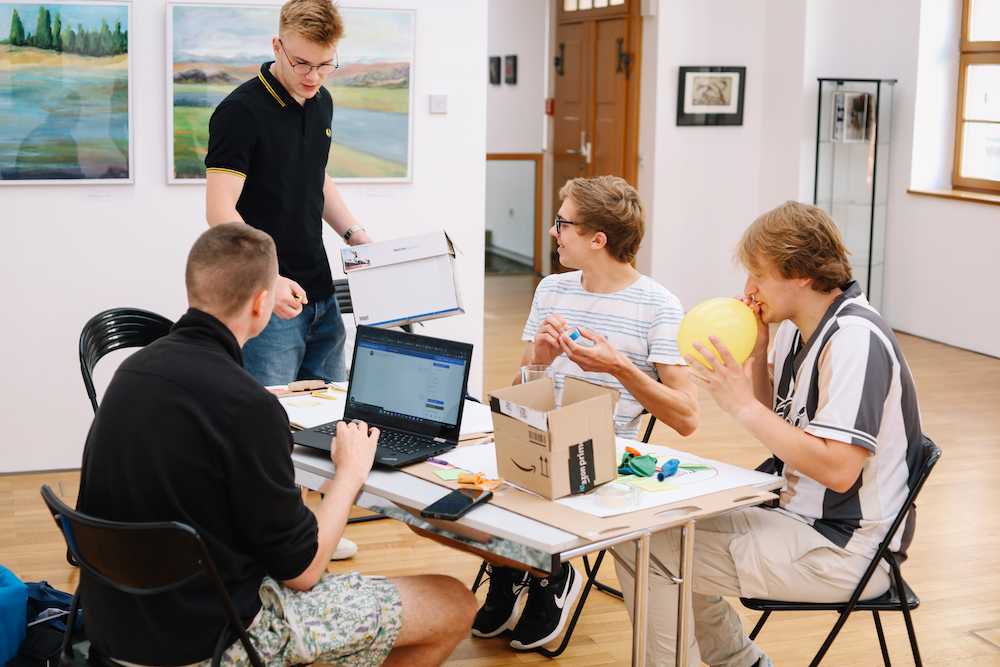
In particular, the inclusion of regional companies and start-ups through storytelling formats and entrepreneurial perspectives as well as experts from academia gave participants a comprehensive insight into their very different professionally and personally motivated approaches to the topic.
Important aspects of the circular economy are the avoidance of waste and the reuse of resources. This is not just about recycling materials, but also about extending the service life of products and creating cycles in which waste can be used as raw materials. In this context, Seabra da Rocha also emphasized the importance of mutual exchange, training opportunities and persuasive actions in order to promote sustainable consumption, waste avoidance, extending the useful life of consumer goods and sustainable behavior [11]. Ultimately, sustainable economic activities and political or social influence can only be achieved through a change in thinking.
It also became clear that another important aspect for more sustainable and socially responsible business is the switch to new product designs and innovative business models. This also includes research and development into new materials, the use of renewable bio-based materials and the reduction of resource use. One entrepreneur impressively demonstrated the important role played by SMEs in particular in advancing innovative sustainable solutions [12]. The participants were able to find out what challenges companies have to face when implementing these kinds of newly conceived business models.
Rethinking traditional business models was the approach of the guests from the regional start-up and innovation ecosystem. They reported on their experiences and gave feedback on the business ideas developed by the participants. Among other things, it became clear that a paradigm shift is still a long way from being implemented across the entire economy. In many cases, initial approaches to sustainable change in business processes only developed as a result of external pressure. They communicated a perception that a willingness to change only occurs once economic advantages come into play.
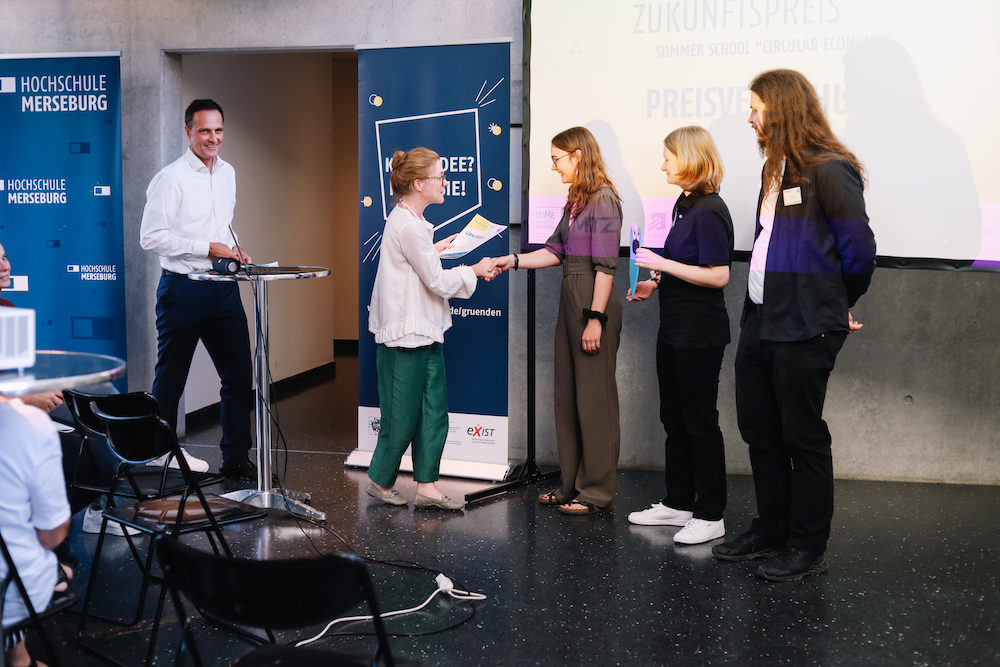
The event and, above all, the lively and persistent discussion during the final pitches of the prototypes developed from the teams’ ideas showed that entrepreneurship and the circular economy are not just concepts for the future, but can already be implemented today. By avoiding waste and reusing resources, among other things, costs can be saved and new business areas opened up.
Entrepreneurship and circular economy in harmony
Entrepreneurship and the circular economy can work together to help shape a sustainable future. By creating innovative business models and promoting local communities and regional initiatives as well as new economic forms, ecological, economic and social goals can be combined. It is important that companies and organizations are aware of these concepts and integrate them into their business models in order to have a positive impact on the environment and society.
Bibliography
[1] European Commission: The European Green Deal, PDF 2019, URL: eurlex.europa.eu/resource.html?uri=cellar:b828d165-1c22-11ea-8c1f-01aa75ed71a1.0002.02/DOC_1&format=PDF, Abrufdatum 24.11.2023.[2] European Commission: A New Circular Economy Action Plan. For a Cleaner and More Competitive Europe, PDF 2020, URL: eurlex.europa.eu/resource.html?uri=cellar:9903b325-6388-11ea-b735-01aa75ed71a1.0017.02/DOC_1&format=PDF, Abrufdatum 24.11.2023.
[3] Circular Economy: Definition, Importance and Benefits. European Parliament. URL: www.europarl.europa.eu/news/en/ headlines/economy/20151201STO05603/circular-economy- definition, Abrufdatum 24.11.2023.
[4] Thompson, J. L.: The World of the Social Entrepreneur. Das International Journal of Public Sector Management 15 (2002) 5, S. 412-431.
[5] Gomez, P.; Meynhardt, T.: Public Value – Gesellschaftliche Wertschöpfung als unternehmerische Pflicht. In: Managementperspektiven für die Zivilgesellschaft des 21. Jahrhunderts. Wiesbaden 2014.
[6] FruchtBar Upcycling Formular. (o. J.). Fruchtbarewelt. URL: www.fruchtbarewelt.de/ueber-uns/nachhaltigkeit-upcycling/upcycling-formular/, Abrufdatum 06.12.2023.
[7] Kauertz, B.; Detzel, A.: Verwendung und Recycling von PET in Deutschland. Verwendung von PET und PET Rezyklaten aus Verpackungen in Deutschland. Eine Kurzstudie im Auftrag des NABU – Naturschutzbund Deutschland e. V. (2017)
[8] Alnatura: alnatura-markenprodukte. URL: www.alnatura.de/de-de/magazin/oekologisch-sinnvolle-verpackung/faq-verpackung/alnatura-markenprodukte/, Abrufdatum 06.12.2023.
[9] Hochschule Merseburg: Summer School 2023. URL: www.hs-merseburg.de/forschung-und-transfer/existenzgruendung/summer-school-2023/, Abrufdatum 04.12.2023.
[10] Kirchner, V.; Loerwald, D.: Entrepreneurship Education in der ökonomischen Bildung. Hamburg 2014.
[11] Seabra da Rocha, S. H. F.: Circular Economy. Eine Einführung. Auftaktvorlesung am 05.09.2023.
[12] Koppe, J.: Etablierte Geschäftsmodelle neu denken, Storytelling anlässlich der Eröffnungsveranstaltung am 04.09.2023.
Potentials: Innovation
You might also be interested in