Can Artificial Intelligence (AI) Act as an Enabler for Industry 4.0 (4IR)? |
Impacts on the maturity level of Industry 4.0 technologies

| Journal | Industry 4.0 Science |
| Issue | Volume 40, 2024, Edition 6, Pages 80-87 |
| Open Access | https://doi.org/10.30844/I4SE.24.6.80 |
| Bibliography | Share | Cite | Download |
Abstract
Keywords
Article
The terms artificial intelligence (AI) [1] and Industry 4.0 (4IR) [2] have been studied and defined many times in recent years. AI describes the ability of machines to imitate human-like capabilities and make autonomous decisions to carry out actions based on data and thus solve complex problems [3]. 4IR refers to the technology-driven vision of a fourth industrial revolution made possible by the intelligent networking of cyber-physical systems (CPS) and the internet of things (IoT). The aim is to promote automation, flexible production and efficient human-machine interactions (HMI) in the smart factory as well as to strengthen competitiveness [4].
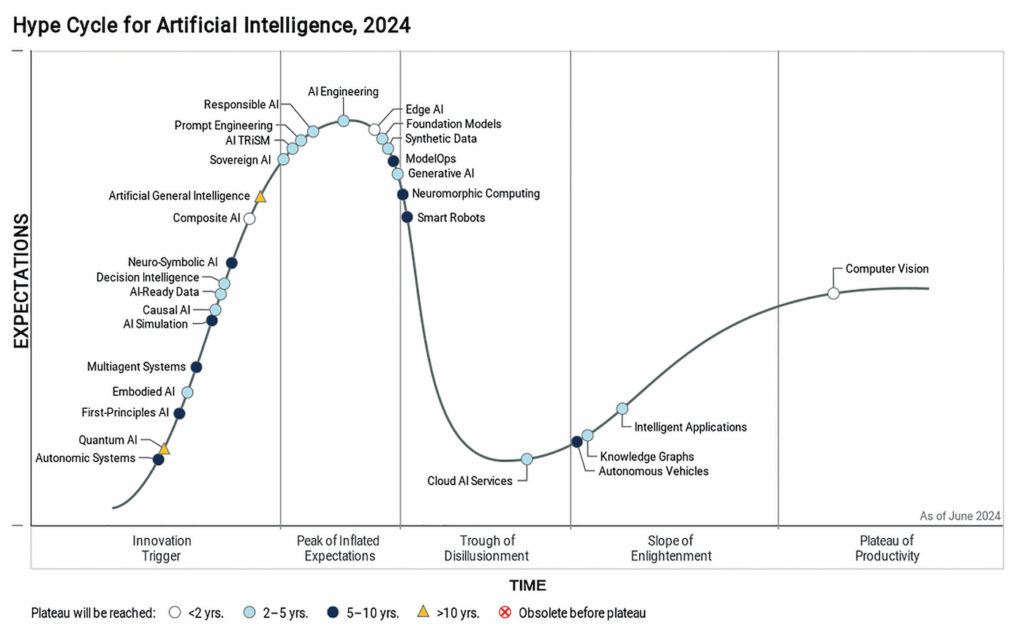
Based on this understanding, artificial intelligence could quickly be classified as another 4IR technology. However, due to the diverse areas of application of AI shown in Figure 1 [5], it should be questioned whether and to what extent the individual 4IR technologies benefit from AI. To answer this question, six experts were asked to what extent the progressive use of AI will drive the maturity level of individual 4IR technologies in the coming years.
Identification of current 4IR technologies
Firstly, a structured literature review was carried out to identify all 4IR technologies. The following search string was constructed for this purpose:
“Technolog* of Industry 4.0” OR “Technolog* of I 4.0” OR “Technolog* of I4.0”
The search string was last carried out in March 2024, using the Scopus scientific database, and only included English-language publications from 2011 (emergence of the term Industry 4.0) to 2023.
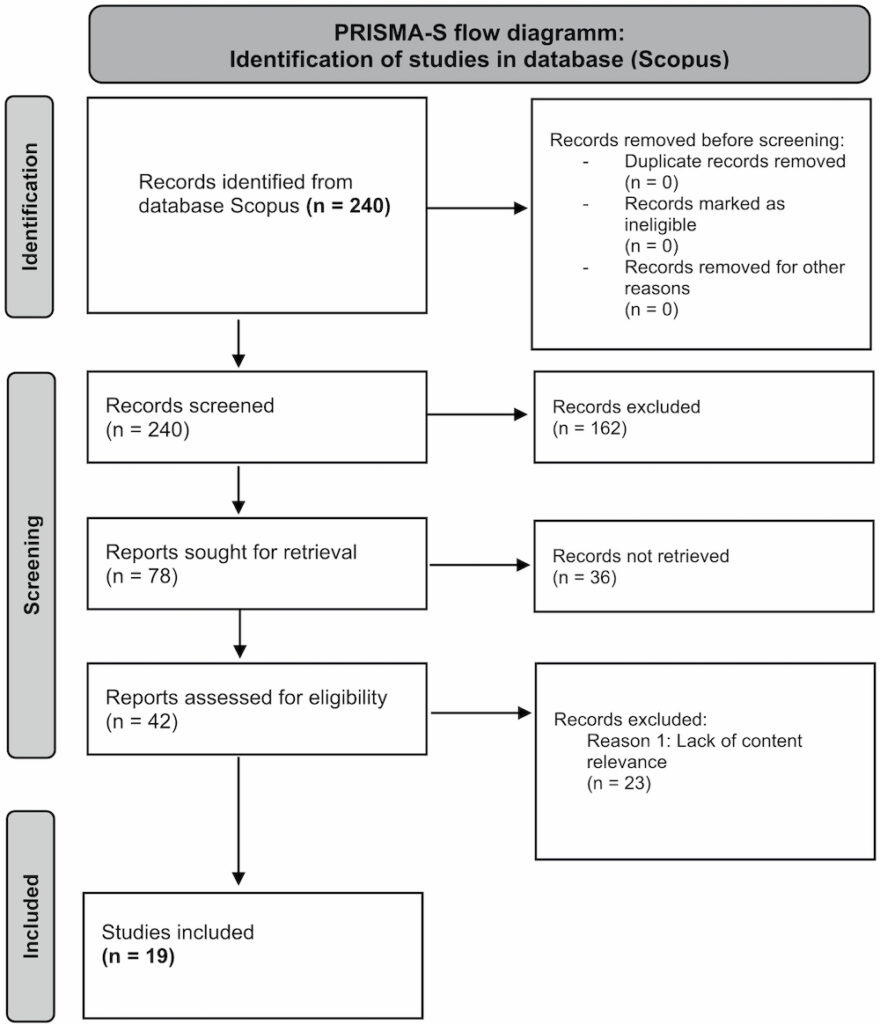
Only the titles, keywords and abstracts of peer-reviewed articles were included in the search, which led to an output of 240 publications. The Preferred Reporting Items for Systematic reviews and Meta-Analyses literature search extension (PRISMA-S) method was used to document well-structured results of the literature search [6]. The corresponding PRISMA-S flow diagram is shown in Figure 2.
The titles and abstracts were evaluated to determine the suitability of the publications for answering the question of which technologies can be assigned to 4IR. This left 19 articles that deal with technologies in the 4IR context. After evaluating these articles, a total of 38 4IR-related technologies were identified [8, 9, 10]. Three further technologies were added during the interviews.
Evaluating the relevance of AI for 4IR technologies
Six expert interviews were conducted to assess the impact of artificial intelligence on the 38 4IR technologies identified in the literature. Three of the experts each have a practical business background or work at universities as research associates or professors. All experts have a doctorate and deal with the topics of AI and 4IR on a daily basis. The average interview lasted 43 minutes (min. 34 minutes to max. 64 minutes).
A semi-structured interview guide was created for the interviews. Before the interview, each participant was asked for consent to record the conversation, so that the results could be transcribed afterwards using the Microsoft Word transcription function. Qualitative content analysis according to Mayring was chosen for the evaluation of the expert interviews. This is a systematic method for analyzing data from texts and other materials to answer various research questions [11]. The interviews were paraphrased using the MaxQDA analysis software. The subsequent steps of the content analysis were carried out in Microsoft Excel.
Assessing the relevance of AI for 4IR technologies
In the interviews, the experts were asked to estimate the current state of development (today) and the state of development in three to five years (with AI) for the 41 identified 4IR technologies, assuming that AI development is progressing and that AI integration into the respective 4IR technologies will improve (Figure 3). The scale for development of 4IR technologies ranges from 1 (not mature at all) to 10 (fully mature).
The experts were also asked whether the list of 4IR technologies was complete and whether the assignment to the technology groups was sensible since the authors chose this themselves. In addition to the 38 technologies identified from the literature, three further technologies were mentioned in the first interview (actuators, sensors and manufacturing execution systems (MES)), which could be requeried in the follow-up interviews. In total, this resulted in 41 4IR technologies being considered.
The focus, while selecting the experts, was to ensure that they had the broadest possible knowledge in the areas of 4IR and AI. However, due to the large number of technologies surveyed, the experts were only able to provide rough or no assessments of individual technologies. Uncertain assessments are therefore marked in blue in Figure 3.
If the experts were not able to assess a technology or were not familiar with it, it is marked with an X. Too few responses were given for the technologies nanotechnology (one assessment), fog computing (two assessments) and advanced robots, blockchain, holography, 3G and 4G (three assessments each). These are therefore not included in the following explanations. If the experts’ assessments were between two values, the mean value was calculated.
In the column “Development status with AI”, the values that, according to individual experts, will not benefit from AI in the next three to five years compared to the current development status, are underlined. Technologies that are not, according to individual assessments, production-related, are marked with “n.p.”.
According to the experts, the robotics technology group will benefit the most from the technological progress of AI in the coming years (average increase of 2.36). The groups of management software, simulation, the internet of things, cloud systems, autonomous vehicles, visualization technologies and cyber-physical systems also benefit more than average from the advancement of AI development, with average growth rates of between 1.9 and 1.51.
The groups of cyber security, sensors, data analysis and additive manufacturing are slightly below the group average of 1.31, with values between 1.29 and 0.83. The groups of identification technologies and wireless networks as well as all technologies contained therein do not appear to benefit from AI.
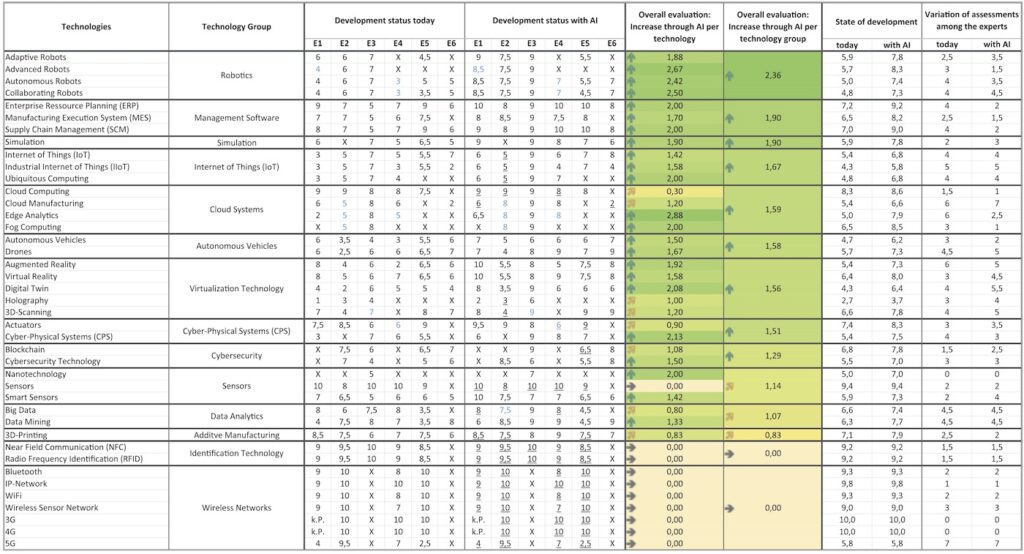
Among the technologies that could be assessed by at least four experts with regard to the current and future state of development with AI, the automated data analysis approach edge analytics will benefit the most from AI, marking an estimated increase of 2.88. This is followed by different types of industrial robots such as collaborative robots (cobots) and autonomous robots, with values of 2.50 and 2.42.
According to the experts, AI is expected to improve the learning ability and safety of robots, among other things. Cyber-physical systems (2.13) and the digital twin (2.08) are also expected to significantly improve over the next few years, with AI-related growth rates of over 2.0. By contrast, actuators (0.90), 3D printing (0.83), big data (0.80) and cloud computing (0.30) are less likely to benefit from AI.
Actuators can only benefit from AI if they have their own computing unit and, in the case of big data, the question arises as to whether this technology can rather be seen as a basis for the use of AI. According to the experts, the direct dependencies of 3D printing technology on AI are very low, and cloud computing is already quite sophisticated for most use cases, meaning that only minor leaps in development are to be expected here.
The industrial internet of things (IIoT) and the digital twin (4.3 each) are currently the least developed of the 4IR technologies, followed by autonomous vehicles (4.7) and ubiquitous computing and collaborative robots (4.8 each). According to some experts, this is due to the fact that these technologies have comparatively many dependencies. Security concerns, legal issues and a lack of standards are among the reasons for a comparatively low level of development of these technologies.
The two columns on “Variation in assessments among the experts” provide information on how a high level of agreement among experts regarding the stage of development of the individual 4IR technologies dominates. Low values indicate that these technologies are subject to a common understanding.
Insights into the experts’ perspective
Three experts questioned when a technology can be defined as fully mature. It was pointed out that the development status of a technology can only be answered in relative terms, as it is never clear how a technology will develop in the future. In principle, primarily those technologies that are no longer being developed further are mature, as they have, for instance, been overtaken by a new technology. This can be clearly seen with regard to the 3G, 4G and 5G technologies [12].
Alternatively, technologies can be quite advanced but still not count as fully mature, as there is still a potential for further development. It was also pointed out in an interview that AI is not the only technology responsible for the maturity level of other technologies. Hence, the maximum maturity level cannot exclusively be achieved through AI.
Two experts noted that big data is a prerequisite or enabler for AI and does not therefore benefit from the further development of AI. In addition, two interviews pointed out that big data itself should not be considered a technology, but that data mining should. This, in turn, is optimized by AI. However, other experts considered big data to be a technology. It was pointed out three times that there is no significant difference between the internet of things and cyber-physical systems and that these technologies could therefore be combined.
One interview went into more detail about the connection between AI and 3D printing. According to this interview, additive manufacturing is only indirectly optimized by AI, for example by using AI for acoustic testing to detect whether 3D-printed components have a defect. However, this does not represent a direct improvement in 3D printing. According to two experts, the digital twin should not be assigned to visualization technologies but to simulation. Two experts also questioned whether nanotechnology can be assigned to the sensor technology group. Three of the experts pointed out that individual technologies depend on each other or are not clearly distinguishable and that it would therefore be easier to evaluate the technology groups.
One example of this is the types of robots identified from the literature, which were criticized by three experts in regard to their selectivity. As the four robot types were taken from independent articles, there are redundancies in content between the robot types listed. Therefore, a reduction to two or three relevant types was suggested (Soori et al. [13] provide approaches for this). Nevertheless, the group of industrial robots is said to benefit massively from AI. According to two experts, simulation as a technology is too general, as there are too many different technologies with varying levels of development behind this term. A distinction needs to be made between the individual technologies.
One interview referenced a lack of bio-sensors, which are becoming increasingly important in the context of 4IR and should therefore be integrated into the survey. According to the assessment in this interview, the level of development would increase from 4 to 5 in the next few years due to AI. It was also noted once that driverless transportation systems are missing from the group of autonomous vehicles. The level of development would increase from 6 to 7 in the next few years as a result of AI.
In one interview, the importance of the scale used in this work was pointed out. According to this, an average increase through AI of 1 seems small, but in practice it results in an enormous increase in maturity, which is associated with high costs.
AI as an enabler for the fourth industrial revolution
After the experts had assessed the individual 4IR technologies in terms of their current and future state of development (with AI), the question was posed as to whether AI is an enabler for 4IR. All six experts underpinned the results of their qualitative assessments by classifying AI as a clear enabler for many, if not all, 4IR technologies. Three experts defined a technological enabler as a technology that improves existing processes, workflows or products in terms of quality and efficiency, compared to a previous state, or adds new features. This is in accordance with the understanding of technological enablers in other studies [14].
The enabling role of AI is reflected in both its impact on many other 4IR technologies and its prevalence in the production context today. AI is a key variable in the smart factory, thus improving the predictability and adaptability of technologies. AI is also a central piece of the puzzle that is necessary for the comprehensive implementation of 4IR. AI is expected to lead to generalization in 4IR. In general, 4IR technologies will always reach a higher level of maturity through AI, when data and networked systems are used.
It should be noted that the experts in this study were not equally familiar with all the technologies considered and that this survey should be conducted with a larger number of experts. Some of the technologies are quite new and do not (yet) belong directly to the core of 4IR, meaning that the assessments here differ widely (e.g. nanotechnology). It would be advisable to consult experts for these technologies in particular. Due to the time required for this survey, it was decided not to discuss the individual technologies in detail ahead of the evaluation.
Future work should focus on ensuring a common understanding of the technologies. In addition, alternative scales for the survey, as presented by Townes [15], could be used and the full maturity of a technology could be defined more clearly prior to the survey.
In conclusion, this work offers an important and realistic view of the relevance of AI in the 4IR context by quantifying the role of AI as an 4IR enabler.
This article was created as part of the project “Kompetenzzentrum KARL – Künstliche Intelligenz für Arbeit und Lernen in der Region Karlsruhe”, which is funded by the Federal Ministry of Education and Research (BMBF) via the program “Zukunft der Wertschöpfung – Forschung zu Produktion, Dienstleistung und Arbeit (grant number: 02L19C250) and supervised by the Projektträger Karlsruhe (PTKA).
Bibliography
[1] Monett, D.; Lewis, C. W. P.: Getting clarity by defining artificial intelligence-A survey. In: Philosophy and theory of artificial intelligence 2017 (2018), pp. 212-214.[2] Culot, G.; Nassimbeni, G.; Orzes, G.; Sartor, M.: Behind the definition of Industry 4.0: Analysis and open questions. In: International Journal of Production Economics 226 (2020) 107617.
[3] Zender, A.; Webert, H.; Weitemeyer, R.: Künstliche Intelligenz (KI). In: Richter, D. Bernhard-Skala, C.; Kinkel, S. (Ed.): Glossar Künstliche Intelligenz für die interdisziplinär vernetzte Arbeitsforschung. Bonn and Karlsruhe 2024, pp. 39-40.
[4] Link, J.: Industrie 4.0. In: Richter, D. Bernhard-Skala, C.; Kinkel, S. (eds.): Glossar Künstliche Intelligenz für die interdisziplinär vernetzte Arbeitsforschung. Bonn and Karlsruhe 2024, p. 29.
[5] Jaffri, A.; Khandabattu, H.: Gartner Hype Cycle for Artificial Intelligence (2024), June 17, 2024. URL: https://www.jaggaer.com/de/download/berichte-analysten/gartner-hype-cycle-for-artificial-intelligence-2024,accessed: 12.09.2024.
[6] Rethlefsen, M. L.; Kirtley, S.; Waffenschmidt, S.; Ayala, A. P.; Moher, D.; Page, M. J.; Koffel, J. B.: PRISMA-S: an extension to the PRISMA Statement for Reporting Literature Searches in Systematic Reviews. Systematic Reviews, 10 (2021) 39, pp. 1-19.
[7] PRISMA 2020 Statement (2020). URL: https://www.prisma-statement.org/prisma-2020-checklist, accessed: 25.10.2024.
[8] Fanoro, M.; Božanić, M.; Sinha, S.: A review of 4IR/5IR enabling technologies and their linkage to manufacturing supply chain. In: Technologies 9 (2021) 77, pp. 1-34.
[9] Klaput, P.; Hercík, R.; Macháček, Z.; Noskievičová, D.; Dostál, V.; Vykydal, D.: Mutual combination of selected principles and technologies of Industry 4.0 and quality management methods – case study. In: Quality Engineering 36 (2024) 2, pp. 207-226.
[10] Martell, F.; López, J. M.; Sánchez, I. Y.; Paredes, C. A.; Pisano, E.: Evaluation of the degree of automation and digitalization using a diagnostic and analysis tool for a methodological implementation of Industry 4.0. In: Computers & Industrial Engineering 177 (2023) 109097.
[11] Mayring, P.: Qualitative Inhaltsanalyse – Abgrenzungen, Spielarten, Weiterentwicklungen. In: Forum Qualitative Sozialforschung 20 (2019) 3.
[12] Majeed, A.: Survey Paper on Generation of 3G, 4G & 5G Mobile Network Comparison & Data Offloading Method. In: International Journal of Research in Information Technology 3 (2015) 5, pp. 421-427.
[13] Soori, M.; Dastres, R.; Arezoo, B.; Karimi, F.; Jough, G.: Intelligent robotic systems in Industry 4. In: Journal of Advanced Manufacturing Science and Technology 4 (2024) 3, p. 2024007.
[14] Rupp, M.; Schneckenburger, M.; Merkel, M.; Börret, R.; Harrison, D. K.: Industry 4.0: A Technological-Oriented Definition Based on Bibliometric Analysis and Literature Review. In: Journal of Open Innovation: Technology, Market, and Complexity 7 (2021) 1, pp. 1-20.
[15] Townes, M. S.: A Generalized Technology Readiness Level Scale for Measuring Technology Maturity: Development and Pilot Validation Study (2023).
Your downloads
Potentials: Business Models Dynamics Innovation
Solutions: Process Management
You might also be interested in