Management

Learning Factories for the Future of Manufacturing in Brazil

Learning Factories for the Future of Manufacturing in Brazil

Advancing manufacturing through technology and skills development
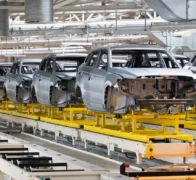
Manufacturing firms in developing countries face challenges in closing productivity gaps while adopting Industry 4.0 technologies. Learning factories are one helpful approach to countering these challenges. One such example is the learning factory Fábrica do Futuroin São Paulo, Brazil, which has engaged students, supported competence development, and collaborated with industry in applied research, functioning as a hub for advanced manufacturing initiatives.
Building the Future Workforce Today

Building the Future Workforce Today

Trendiation as a strategic framework for employee qualification and training
Jürgen Fritz, Sebastian Busse, Ingo Dieckmann, Torsten Laub
As Industry 4.0 and artificial intelligence reshape organizational capabilities, traditional training systems struggle to keep pace with evolving skill requirements. This paper introduces Trendiation—a structured methodology for translating emerging trends into actionable strategies—as a systematic approach to this challenge. Through a workshop-based application examining Edutainment, Human-Centered Design, and Workforce Transformation, we demonstrate how organizations can move from abstract trend identification to concrete qualification requirements and prioritized training initiatives. The method produces a traceable artifact chain spanning trend framing, capability-gap assessment, and implementation roadmaps. Participant evaluations indicate high perceived clarity and practical utility. By bridging foresight analysis with participatory design, Trendiation enables organizations to proactively cultivate adaptive capabilities and build learning cultures aligned with future work ...
Industry 4.0 Science | Volume 42 | 2026 | Edition 2 | Pages 22-29 | DOI 10.30844/I4SE.26.2.22
Operationalizing Ethical AI with tachAId

Operationalizing Ethical AI with tachAId

Validating an interactive advisory tool in two manufacturing use cases
Pavlos Rath-Manakidis, Henry Huick, Björn Krämer ORCID Icon, Laurenz Wiskott ORCID Icon
Integrating artificial intelligence (AI) into workplace processes promises significant efficiency gains, yet organizations face numerous ethical challenges that stakeholders are often initially unaware of—from opacity in decision-making to algorithmic bias and premature automation risks. This paper presents the design and validation of tachAId, an interactive advisory tool aimed at embedding human-centered ethical considerations into the development of AI solutions. It reports on a validation study conducted across two distinct industrial AI applications with varying AI maturity. tachAId successfully directs attention to critical ethical considerations across the AI solution lifecycle that might be overlooked in technically-focused development. However, the findings also reveal a central tension: while effective in raising awareness, the tool’s non-linear design creates significant usability challenges, indicating a user preference for more structured, linear guidance, especially ...
Industry 4.0 Science | Volume 42 | 2026 | Edition 1 | Pages 50-59 | DOI 10.30844/I4SE.26.1.48
Co-Determination Dialogues

Co-Determination Dialogues

A tool for human-centered AI implementation
Manfred Wannöffel ORCID Icon, Fabian Hoose ORCID Icon, Alexander Ranft, Claudia Niewerth ORCID Icon, Dirk Stüter
As part of the regional competence center humAIne, funded by the Federal Ministry of Research, Technology, and Space (BMFTR), a process was developed using co-determination dialogues to establish a common understanding of the challenges involved in the introduction of artificial intelligence (AI) between management, employees, and interest groups. Experiences from project partner companies such as Doncasters Precision Castings in Bochum GmbH (DPC) exemplify how co-determination dialogues not only help to develop legally binding regulations for manageable, operationally anchored, sustainable AI use but also initiate continuous qualification processes for all stakeholder groups in accordance with Articles 4 and 5 of the EU AI Act.
Industry 4.0 Science | Volume 42 | Edition 1 | Pages 92-98 | DOI 10.30844/I4SE.26.1.84
Human-Centered AI in Companies with Employee Representation

Human-Centered AI in Companies with Employee Representation

Using the HUMAINE model for a company-specific works agreement
Alexander Ranft, Fabian Hoose ORCID Icon, Claudia Niewerth ORCID Icon, Mathias Preuß, Manfred Wannöffel ORCID Icon
The introduction of artificial intelligence (AI) in companies poses new challenges for regulation and co-determination. Binding requirements have been in force since the 2025 EU AI Act, which must be linked nationally with the Works Constitution Act (BetrVG). The regional competence center humAine has developed a model works agreement on AI (MBV KI) in accordance with Section 77 BetrVG, which strengthens co-determination rights in companies and implements European regulations in a practical way. Flanked by co-determination dialogues, the MBV KI enables company-specific adaptation for responsible and human-centered AI use. Using selected parts of the MBV KI as examples, this article shows how a framework works agreement on AI can be designed and discusses its transferability to companies without a works council. The MBV KI presented here contributes to the sustainable, socially secure design of the digital transformation.
Industry 4.0 Science | Volume 42 | Edition 1 | Pages 14-21 | DOI 10.30844/I4SE.26.1.14
Pre-Stages of GenAI Governance via Managerial Communication

Pre-Stages of GenAI Governance via Managerial Communication

Exploratory findings from SMEs in the Ruhr area
Niklas Obermann ORCID Icon, Uta Wilkens ORCID Icon, Antonia Weirich ORCID Icon, Matthias E. Cichon ORCID Icon, Jürgen Mazarov, Bernd Kuhlenkötter ORCID Icon
The governance of generative artificial intelligence (GenAI) usage is often described as a formalized reporting system. This neglects the early-stage mechanisms of coping with ethical challenges during the GenAI implementation period. Exploratory empirical findings from the Ruhr area reveal that managerial communicative practices serve as a substitute for missing institutional structures, particularly at an early stage of GenAI implementation in SMEs.
Industry 4.0 Science | Volume 42 | Edition 1 | Pages 6-13 | DOI 10.30844/I4SE.26.1.6
Multi-Stakeholder AI Ethics in Radiology

Multi-Stakeholder AI Ethics in Radiology

Implications for integrated technology and workplace design
Valentin Langholf ORCID Icon, Alexander Ranft, Lena Will, Robin Denz ORCID Icon, Johannes Schwarz ORCID Icon, Majd Syoufi, Pavlos Rath-Manakidis, Marc Kämmerer, Marcus Kremers, Axel Mosig ORCID Icon, Uta Wilkens ORCID Icon, Jörg Wellmer ORCID Icon
AI assistance can be seen as a welcome aid in radiology, a highly complex environment characterized by round-the-clock time pressure and quality expectations. However, it must meet high ethical standards from the perspective of both users and patients. It is a challenge to incorporate this human-centered approach into the development and introduction of AI applications.
Industry 4.0 Science | Volume 42 | Edition 1 | Pages 136-143 | DOI 10.30844/I4SE.26.1.128
AI Skills for Responsible Use

AI Skills for Responsible Use

Realistic learning environments, critical thinking, and role design in teams
Valentin Langholf ORCID Icon, Niklas Obermann ORCID Icon, Uta Wilkens ORCID Icon, Marco Kuhnke, Michael Prüfer
Artificial intelligence (AI) is changing the world of work. But how can work teams learn to use AI support in a way that delivers speed advantages and ensures consistently high quality? One possible approach is to test it in a workplace-like simulation. Trying it out under realistic conditions shows the role that critical thinking plays.
Industry 4.0 Science | Volume 42 | Edition 1 | Pages 100-107 | DOI 10.30844/I4SE.26.1.92
Adapting AI Work Systems for Human-Centeredness

Adapting AI Work Systems for Human-Centeredness

A methodical approach for exploring the design space in transdisciplinary teams
Florian Bülow ORCID Icon, Michael Herzog ORCID Icon, Sophie Berretta ORCID Icon, Dominik Arnold ORCID Icon, Christian Els, Bernd Kuhlenkötter ORCID Icon
Designing adaptations in AI-based work systems poses a central challenge for achieving human-centered AI (HCAI). This paper presents a methodical approach that enables transdisciplinary teams to systematically explore and structure the design space of adaptable work systems. Building on an extended work system model and operationalized through a matrix-based framework, the method supports the identification of interdependencies, stakeholder perspectives, and context-specific goals. Its practical applicability is demonstrated through a real-world case study in radiographic non-destructive testing.
Industry 4.0 Science | Volume 42 | Edition 1 | Pages 44-53 | DOI 10.30844/I4SE.26.1.136
Work Design for Learning and Competence Development

Work Design for Learning and Competence Development

Emerging ways of organizing and supporting learning in digitally transformed workplaces
Peter Dehnbostel
Learning and skill-enhancing work designs are essential for new work and organizational concepts such as “learning organizations” and “Industry 4.0.” Developing and applying criteria for promoting learning and skills development in digitally transformed work environments enables more effective and efficient work processes, makes work more people-centered, and the AI-based future of work more manageable. Digitalization is also introducing work-integrated learning formats such as online communities, learning platforms, and digital cognitive assistance systems that already meet many of these criteria. In the future, designing work environments that promote learning and skills development will become a central task of corporate training and personnel and organizational development.
Industry 4.0 Science | Volume 41 | 2025 | Edition 6 | Pages 58-64
1 2 11