Manufacturing Systems

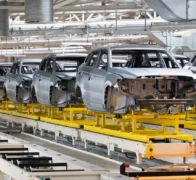
Interoperable Data Access in Automotive Body Manufacturing

Interoperable Data Access in Automotive Body Manufacturing

Deterministic integration of structured target parameters into tact-time production
Tim Richter ORCID Icon, Robert Weidner ORCID Icon
AI has long been capable of analyzing production processes, yet why is it still so difficult to bring its insights back into production without intermediate steps? In automotive body-in-white mass production, the challenge is less a lack of data than the absence of holistic integration concepts that extend all the way to the machines. This paper demonstrates why bidirectionally communicative information systems are critical to addressing this challenge and identifies the design principles required to effectively integrate AI-generated results into production processes in the future.
Industry 4.0 Science | Volume 42 | 2026 | Edition 5 | Pages 34-42 | DOI 10.30844/I4SE.26.5.4
Explaining AI in Industrial Production in an Accessible Way

Explaining AI in Industrial Production in an Accessible Way

Requirements for AI demonstrators to promote acceptance
Jennifer Link ORCID Icon, Markus Harlacher ORCID Icon, Colin Srebny, Sascha Stowasser ORCID Icon
Artificial intelligence (AI) offers a wide range of possibilities in industrial production, but it also presents challenges regarding employee acceptance. AI demonstrators are therefore of central importance, as they enable hands-on experience with AI. However, there has been a lack of systematically identified requirements for demonstrators that specifically promote acceptance and address negative emotions. Using a multi-stage research design, 69 requirements were identified, structured into functional requirements, quality requirements, and boundary conditions.
Industry 4.0 Science | Volume 42 | 2026 | Edition 5 | Pages 6-14 | DOI 10.30844/I4SE.26.5.1
AI-Based Building Inspection for Large Structures

AI-Based Building Inspection for Large Structures

A new approach to construction progress monitoring
Jan Sender, Konrad Jagusch, Michael Geist ORCID Icon, David Jericho ORCID Icon, Christian Scharr ORCID Icon
Monitoring construction progress, as required in the one-off production of large structures, is very time- and labor-intensive due to a high level of complexity and individuality. The goal of this article is to develop a sensor-based approach for capturing and evaluating multiple inspection characteristics. The use of machine learning models to detect objects and derive relevant information forms the basis for linking current condition to construction schedule. This enables a significant increase in efficiency during construction progress monitoring and a well-founded assessment of progress.
Industry 4.0 Science | Volume 42 | 2026 | Edition 5 | Pages 78-84 | DOI 10.30844/I4SE.26.5.9
Inclusive Work System Design

Inclusive Work System Design

Automation, standardization, and adaptability
Sebastian Schlund ORCID Icon
The design of inclusive work systems is gaining importance due to demographic change and the increasing digital penetration of value creation processes. While traditional ergonomic approaches are based primarily on percentile logic and thus address only a portion of the user population, the integration of digital technologies opens up new possibilities for the dynamic and individualized adaptation of work systems. This article presents a conceptual framework for inclusive work system design that integrates standardization, automation, and adaptability. Methodologically, the article is based on a conceptual analysis of existing approaches from ergonomics and human-centered design. The article makes a theoretical contribution to the systematization of inclusive work system design and identifies areas of focus for further research and industrial practice.
Industry 4.0 Science | Volume 42 | 2026 | Edition 5 | Pages 70-76 | DOI 10.30844/I4SE.26.5.8
Work Design in the Use of Autonomous Systems

Work Design in the Use of Autonomous Systems

Addressing the shortage of skilled workers
Tim Jeske ORCID Icon, Sascha Stowasser ORCID Icon, Nicole Ottersböck, Sebastian Terstegen, Rasmus Adler ORCID Icon
Companies are increasingly challenged to address shortages of skilled workers while meeting rising demands for productivity, flexibility, and innovation. Because labor supply can only be expanded to a limited extent, there is a growing focus on designing work systems with productivity in mind. Autonomous systems offer significant potential in this regard. Their implementation requires not only technical adjustments but, above all, changes in organization, skills, and work design. This article analyzes empirically grounded change requirements in existing work systems as well as associated economic potential.
Industry 4.0 Science | Volume 42 | 2026 | Edition 5 | Pages 44-50 | DOI 10.30844/I4SE.26.5.5
Cooperation Routines of Complementors in Digital Ecosystems

Cooperation Routines of Complementors in Digital Ecosystems

A microfoundation of integrative dynamic capability
Christian Zabel ORCID Icon, Tahir Schmidt ORCID Icon
Complementors are central to value creation in digital ecosystems yet have limited leverage and must adapt through dynamic capabilities. Building on the Profiting From Innovation Framework, this study examines how integrative capabilities manifest for complementors through cooperative routines. Based on a systematic literature review of Scopus-indexed studies from 2020 to mid-2025 focusing on the microfoundation “orchestrating ecosystem actors”, we identify two routine clusters. Complementors cooperate with other complementors via partner sensing, scouting, coalitions, resource sharing, and risk allocation while protecting critical assets. They cooperate with platform owners via multichannel boundary spanning, quality signaling, governance compliance, boundary resource integration, and co-development, while facing the risk of owner entry. Research gaps concern the formalization of cooperation routines, taxonomy, and B2B contexts.
Industry 4.0 Science | Volume 42 | 2026 | Edition 4 | Pages 22-28 | DOI 10.30844/I4SE.26.4.3
AI-Powered Lubrication Strategies for Thread Forming

AI-Powered Lubrication Strategies for Thread Forming

Adaptive spray jet control to increase process reliability and tool life
Reinhard Schmied, Marco Susic, Christian Donhauser ORCID Icon
Thread forming requires precise lubricant application because high contact pressures and process temperatures strongly influence tool loading, friction, and process stability. Although minimum quantity lubrication (MQL) systems are widely used, current spray-based approaches can still suffer from spray losses, insufficient wetting of the thread grooves, and unstable droplet transport. This article presents a concept for adaptive precision lubrication in thread forming based on computational fluid dynamics (CFD)-supported flow analysis, experimental validation, and artificial intelligence (AI)-assisted optimization. The focus is on droplet size, spray jet geometry, nozzle position, ambient flow conditions, and their influence on wetting intensity. Preliminary simulation-based investigations indicate that data-driven optimization can help identify wetting deficiencies and support the development of future control strategies for resource-efficient lubricant application.
Industry 4.0 Science | Volume 42 | 2027 | Edition 3 | Pages 76-83
Industrial Application of Immersive Technologies

Industrial Application of Immersive Technologies

Exploring XR solutions for training, instruction, design review, and assembly planning
Andreas Straube ORCID Icon, Faikar Zakky Haidar ORCID Icon, Matheus Lenzi dos Santos ORCID Icon, Kussai AI Jairoud ORCID Icon, Eduardo Koscianski ORCID Icon
In recent years, the decreasing cost and improved usability of immersive hardware and software have made extended reality (XR) increasingly attractive for industrial applications. Stand-alone systems with inside-out tracking and camera-based pass-through enable accessible mixed reality (MR) solutions. At the same time, emerging no-code software platforms allow engineers to create XR environments without programming expertise, broadening adoption across production settings. This paper explores key industrial application areas of immersive technologies through selected commercially available XR software solutions for product and process training, spatial instructions and guides, collaborative design review, and assembly and production planning.
Industry 4.0 Science | Volume 42 | 2026 | Edition 3 | Pages 38-47 | DOI 10.30844/I4SE.26.3.4
Learning Factories for the Future of Manufacturing in Brazil

Learning Factories for the Future of Manufacturing in Brazil

Advancing manufacturing through technology and skills development
Manufacturing firms in developing countries face challenges in closing productivity gaps while adopting Industry 4.0 technologies. Learning factories are one helpful approach to countering these challenges. One such example is the learning factory Fábrica do Futuroin São Paulo, Brazil, which has engaged students, supported competence development, and collaborated with industry in applied research, functioning as a hub for advanced manufacturing initiatives.
Serious Gaming and the Energy Transition

Serious Gaming and the Energy Transition

Collaborative knowledge generation and interactive understanding of complex interrelationships
Janine Gondolf ORCID Icon, Gert Mehlmann, Jörn Hartung, Bernd Schweinshaut, Anne Bauer
Conveying the complexity and multifaceted nature of the energy transition to a broad audience is a challenge. This article demonstrates how interactive serious games on a multitouch table can help make connections tangible and comprehensible. The games and the table were used in various conversational contexts. These are presented here in three case vignettes based on participant observation of the different applications, as well as situated and shared reflection. The vignettes demonstrate how interaction can trigger epistemic processes, enable shifts in perspective, and foster collective thinking, all of which are necessary for shaping the future of society as a whole.
Industry 4.0 Science | Volume 42 | 2026 | Edition 2 | Pages 62-69
1 2 … 23