Leveraging AI for Cost-Reduced Exhaust Gas Aftertreatment |
Use of AI-based dosing systems to reduce nitrogen oxides in large diesel engines
| Journal | Industry 4.0 Science |
| Issue | Volume 40, 2024, Edition 2, Pages 72-79 |
| Bibliography | Share | Cite | Download |
Abstract
Keywords
Article
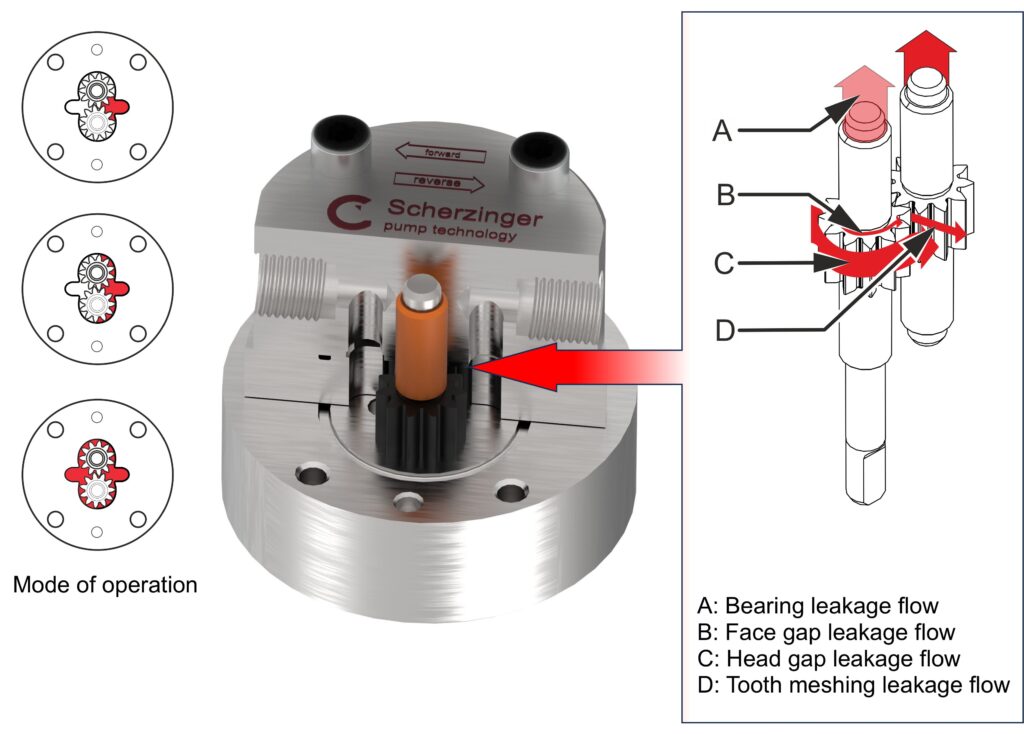
Dosing systems for liquids can be used in a variety of areas. In addition to classic chemical dosing and coating, they can also be utilized in exhaust gas aftertreatment. The core of such a system is always the pump, which must be selected and designed in accordance with its specific intended application. The focus here can be on achieving the most precise possible quantity of liquid in a specific period of time (per batch) or over a period of time (continuous). Gear pumps, which are characterized by low-pulsation pumping, are particularly suitable for the latter application. In this type of pump, two gear wheels, usually equal in size, run in opposite directions. They are tightly enclosed within a housing and are aligned so that the tooth of one wheel slots into the free space between two teeth, or cogs, of the other wheel, as shown in Figure 1.
The liquid being pumped through is fed into the spaces between the two teeth, along the housing, from the inlet side (suction side) to the outlet side (pressure side). The pumped liquid is ejected by the tooth mesh. It is clear that the full contents of the space between the teeth cannot be expelled at once.
Part of the liquid remains in the so-called contact point (tooth gap volume). Small gaps also exist between the gears and the housing due to the design. This applies to both the face and lateral surfaces of the gears.
If the adhesive strengths of the fluid is exceeded by the pressure difference applied, so-called face and head gap leakage flows occur in these gaps. As the name suggests, these leakages run counter to the actual direction of flow. The third relevant flow that occurs within a gear pump is the so-called bearing leakage flow. This is necessary for the formation of a sliding film on the bearings and has a significant influence on the service life of the pumps. The total leakage flow is therefore made up of the three gap flows shown and the tooth gap volume (tooth meshing leakage flow) [1, 2].
All flows depend on the pressure difference, the temperature, the geometric gap dimensions and the material properties of the liquid [3, 4]. In addition, there are manufacturing tolerances, which make individual consideration of each pump necessary. In order to ensure exact dosing, additional flow measurement technology is installed in current dosing systems.
However, this measurement technology is expensive, differs depending on the application scenario and the material properties and can significantly exceed the price of the pump itself. It is not only in the field of exhaust gas aftertreatment that dosing systems, as subsystems, are subject to strong price pressure. In the case of large diesel engines, they are directly opposed to the actual benefit – generating energy in the form of electricity and heat – even though their operation is indispensable from an environmental point of view.
Nitrogen oxides and their reduction
The combustion process produces nitrogen oxides. They contribute to particulate matter pollution and, particularly in the summer, to the formation of ozone. In accordance with applicable guidelines and laws, the presence of these in exhaust gas cannot exceed an upper limit and must therefore be reduced. The process used for this is selective catalytic reduction (SCR). The SCR process is a standard procedure that most drivers are probably at least indirectly familiar with. This reaction is also used in diesel engines in cars, as can be seen from the need to regularly top up AdBlue (urea).
Two technologies are available for injecting the urea solution into large diesel engines in order to achieve a droplet size distribution that is as consistent as possible over the entire area of use. This is crucial for the reactions that take place. In addition to direct injection, the urea can also be finely atomized using compressed air. As the droplet size distribution is dependent on the pressure, volume flow and pulsation strength of the liquid inflow, precise, continuous liquid dosing plays a decisive role regardless of the injection method selected.
The chemical reaction always takes place selectively, so as to prevent undesirable side reactions such as the oxidation of the reducing agent introduced via atmospheric oxygen or the oxidation of sulfur dioxide to form sulfur trioxide. The urea atomized in the exhaust tract must first be converted to ammonia by means of thermolysis and hydrolysis reactions. This urea decomposition takes place before the catalyst itself. The subsequent reduction of the nitrogen oxides takes place at temperatures above 250°C in accordance with the reaction below:

Development of a model-predictive controller for gear pumps
Within the scope of the research project entitled “Development of a model-predictive controller for gear pumps”, new, modern model-predictive control algorithms are being developed based on this dosing process and the ability to embed these in real-time capable pump control is being tested – along with simultaneous replacement of cost-intensive measurement technology. Model-predictive controllers offer a number of advantages, especially for problems with multiple variables, and are currently used in many industrial sectors. They can react automatically to changes, and are capable of self-learning. The necessary mathematical equation system for this is based on a combination of a white-box approach and artificial intelligence models.
In the white-box models, the pump is modeled on the basis of physical, thermodynamic, chemical and biological processes. Depending on the level of detail, a distinction is made between 0D through to 3D simulation. Mixed forms with differing levels of detail can also be combined when simulating the pumps. For example, for complex geometry conditions, a 0D model is used to simulate the main flow and a 2D model to map the gap flows. The models are based on the Navier-Stokes equations for motion. The advantages of this type of model are a detailed system description and a comprehensible system of equations. It is the opposite of the black-box artificial intelligence model [5].
Introduction to machine learning
Machine learning (ML) is an important branch of artificial intelligence. It denotes the ability of machines to generate knowledge from data or experience – whereby it is not absolutely necessary to directly recognize correlations between data. With the acquired knowledge, the machine can react directly to new events or data. An important subsegment of ML is supervised learning. This uses training data, consisting of input values and the known results, to reproduce correlations as accurately as possible.
However, the resulting algorithm, the black-box model, must be kept as general as possible in order to react as accurately as possible to new data that was not part of the training data set. The quantity and, in particular, quality of the data are fundamental to the successful training and implementation of an AI application. The quantity forms the basis for the training scope, as this enables the AI to learn many parameter constellations (scenarios). The quality, in turn, makes it possible to map these with the best possible accuracy.
An in-depth analysis and preparation of the raw data is essential before training the AI [6]. Attention must also be paid to robustness, which means that similar results are output for similar input values [7]. Supervised learning can be divided into two primary algorithm classes: Regression and Classification. In the context of AI, classification involves the task of dividing data into different categories or classes. This can be, for example, the creditworthiness of a bank customer or the traffic sign recognition of a vehicle camera. The aim of regression is to predict a continuous variable on the basis of other real-value parameters; in the current application, the volume flow of the gear pump [8].
Applications of machine learning in industry
Machine learning is therefore suitable for describing complex processes that can only be represented with considerable effort using analytical methods and in some cases do not exceed the accuracy of an approximation method. This feature is used in the joint project between Scherzinger Pumpen GmbH & Co. KG and Furtwangen University to describe the complex flow conditions that occur in a gear pump in real time and to realize exact dosing without flow measurement. A Deep Feed-Forward Neural Network is used to solve the problem. According to current knowledge, dosing systems where elementary sensor technology is substituted by an AI are not established on the market.
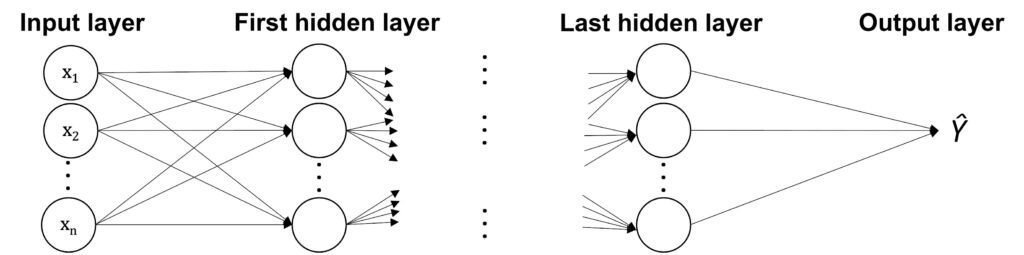
The Deep Neural Network (DNN) makes it possible to recognize complex patterns in the data in order to make appropriate predictions. At the same time, the algorithm is scalable and can adapt autonomously to changing process conditions. In its simplest structure, a DNN consists of an input layer, an output layer and at least one intermediate layer (input, output and hidden layer), as shown in Figure 2. The number of intermediate layers present is what determines the depth of the network. They are limited by the computing effort and the underlying data structure.
Each layer contains interconnected artificial neurons. These receive inputs from the previous layer and apply a rated sum of these inputs to a non-linear activation function. The outputs of the activation functions are then passed to the neurons in the next layer and the process repeats until the final layer is reached. Training is an iterative process in which the weights of the individual neurons are optimized by backpropagation. This is where the actual learning of the AI takes place. The feed-forward function characterizes an exclusively forward-based data flow [9, 10, 11].
Data collection and structuring for the AI model
The data structures required for training the AI model are recorded on a pump-specific basis for all possible applications and parameter combinations specified by the pump’s performance spectrum. The fluid temperature, rotational frequency and pressure difference, among other things, are used as variable parameters. As the AI must be provided with the same data structures in subsequent field operation as in training, it must be ensured that the identical physical measured variables are always recorded. Another challenge is the exclusive use of sensors, which can be found as standard components in classic dosing systems.
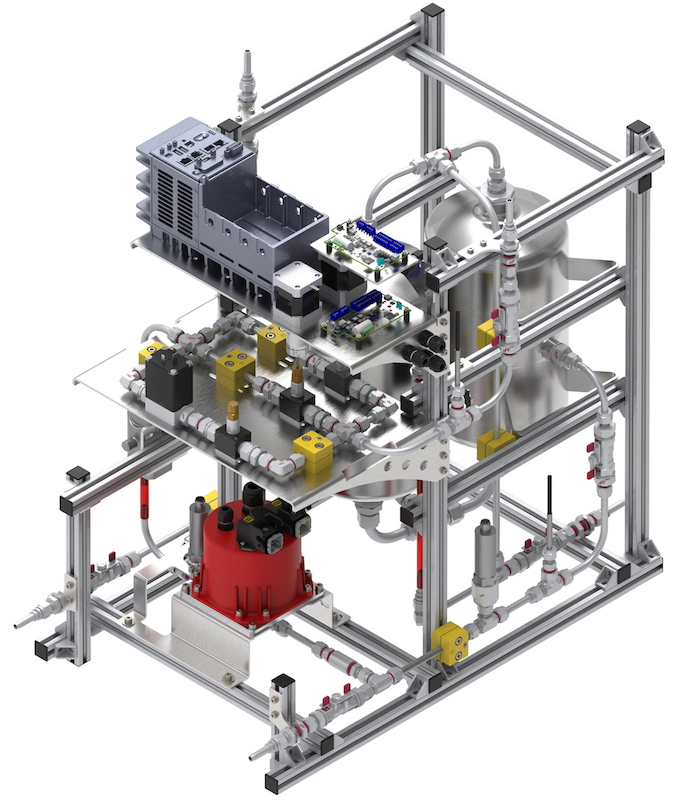
model-predictive pump control.
In a pilot system on a pilot plant scale, which was designed for use in the climate chamber as shown in Figure 3, both the data collection for training the AI and the downstream development of the pump control are carried out. The system is controlled through all phases of development using the LabVIEW graphical programming language.
By changing the degree of opening of the control and solenoid valves, adjusting the climatic conditions, the fluid temperature and varying the fluid, the application range of the pump can be simulated. In the fully automated data collection process, over 200,000 data sets are recorded and analyzed for each pump.
Design and validation of the AI model
The AI model is designed afterwards. The open source library Keras, which is based on the Tensorflow 2 framework, is used for this purpose. The underlying programming language is Python. With the available grid structures, optimization and activation functions as well as the learning rates, kernel initializations and loss functions, there are six ways to adjust, with various variants also available for hyperparameter optimization [8, 12, 13]. For the final validation, the source code of the AI model is called up directly by the plant control system.
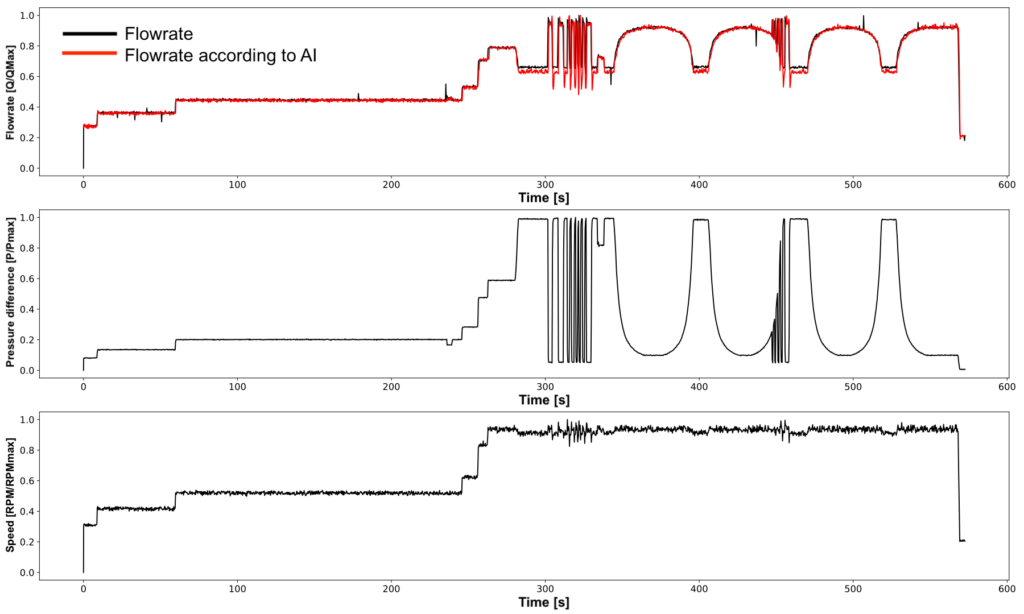
This intermediate step results in short dead times in the control system, which are demonstrably avoided in subsequent controller-oriented programming. The TensorFlow Lite machine learning library enables developers to run AI models optimized on edge devices required for this purpose [11]. In this way, highperformance execution of the AI models can be virtually guaranteed.The final evaluation of the various models is carried out by analyzing the step response behavior, as shown in Figure 4. The volume flow, pressure difference and rotational frequency are plotted over time.
As can be seen from the graphs of the volume flow, the values of the flow measurement and the values predicted using AI follow each other. Deviations occur in the areas where the measuring range of the pressure transmitter is exceeded. The AI proves to be very robust in the face of fluctuations in measured values, which can be caused by the entrapment of air in the pumped medium, among other things. There are no deflections, as can be seen in the curve of the measured volume flow values.
In the future, a white-box model will be included as a component of the dosing control system. The combination of AI and physical equation systems results in a grey-box model that combines the advantages of both types of models – the level of detail and explainability of the whitebox model and the non-invasive systemic adaptability of the black box model – in model-predictive control. Future research into the transferability of the AI models to other dosing systems with retention of consistent accuracy and low training effort is still required.
The development of this AI-based dosing system with automated wear correction results in considerable savings potential and benefits for the plant operator. These include, but are not limited to:
- Reduction of measurement technology used
- Resource, cost and material savings
- Reduction of errors in flow measurement
- Expansion of areas of application
The simple plug-and-play solution envisaged here also enables integration into existing systems, machines and processes.
This article was created as part of the project “Development of a model-predictive controller for gear pumps”, which is funded as part of the Invest BW program (VwV Invest BW – Innnovation II) under the reference BW1_1130/01.
Bibliography
[1] Wilhelmsmeyer, T.: Zahnradpumpen in der Elastomertechnik. In: Polymerforschung in Paderborn 12, Aachen (2006).[2] Will, D.; Gebhardt, N:: Hydraulik: Grundlagen, Komponenten, Schaltungen. Berlin, Heidelberg (2011).
[3] Speicher, T.: Methoden zur Auslegung und Effizienzbewertung von drehzahlvariablen Zahnradpumpenaggregaten unter Berücksichtigung von Systemwechselwirkungen; Dissertation im Fachbereich für Maschinenbau und Verfahrenstechnik der Technischen Universität Kaiserslautern. Kaiserslautern (2021).
[4] Bauer, G.: Ölhydraulik: Grundlagen, Bauelemente, Anwendungen. Wiesbaden (2016).
[5] KI-basierte Prozessführung: Wie lassen sich Zeit- und Kostenersparnis in der Modellerstellung mit KI realisieren? VDI-Gesellschaft Mess-und Automatisierungstechnik [Hrsg.]. Düsseldorf (2021).
[6] Döbel, I. u. a.: Maschinelles Lernen: Eine Analyse zu Kompetenzen, Forschung und Anwendung; Fraunhofer-Gesellschaft zur Förderung der angewandten Forschung e. V. [Hrsg.] (2018).
[7] Swamynathan, M.: Mastering Machine Learning with Python in Six Steps. A Practical Implementation Guide to Predictive Data Analytics Using Python; Apress Berkeley [Hrsg.]; Berkeley, CA (2017).
[8] Schuler, M.: Entwicklung einer KI-gestützten Steuerung von Dosiersystemen. Masterarbeit. Furtwangen (2023).
[9] Sonnet, D.: Neuronale Netze kompakt: Vom Perceptron zum Deep Learning. Wiesbaden (2022).
[10] Kruse, R. u. a.: Computational Intelligence: Eine methodische Einführung in Künstliche Neuronale Netze, Evolutionäre Algorithmen, Fuzzy-Systeme und Bayes-Netze. Wiesbaden (2015).
[11] Géron, A.: Hands-on Machine Learning with Scikit-Learn, Keras, and TensorFlow: Concepts, Tools, and Techniques to Build Intelligent Systems. Peking (2019).
[12] Moolayil, J.: Learn Keras for Deep Neural Networks. A Fast-Track Approach to Modern Deep Learning with Python. Berkeley, CA (2019).
[13] Ye, A.: Modern Deep Learning Design and Application Development: Versatile Tools to Solve Deep Learning Problems. Berkeley, CA (2021).
You might also be interested in