Thema: Logistics

Experiencing Digital Twins in Production and Logistics

Experiencing Digital Twins in Production and Logistics

The fischertechnik® Learning Factory 4.0 as a development platform for possible expansion stages
Deike Gliem ORCID Icon, Sigrid Wenzel ORCID Icon, Jan Schickram, Tareq Albeesh
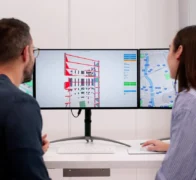
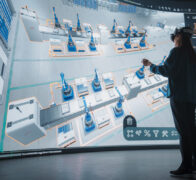
The fischertechnik® Learning Factory 4.0 has proven to be a suitable experimental environment for testing digital twins. Depending on the targeted maturity stage, the functions of a digital twin range from status monitoring and forecasting to the operational control of production and logistics systems. To systematically classify these functions, this article presents a maturity model that serves as a framework for the development of a digital twin. Building on this, selected use cases are implemented in a test and development environment based on a system architecture with multi-layered logic structure. These initial implementations serve to highlight application purposes, relevant methods, and typical challenges and potentials in the transfer to real factory environments.
Industry 4.0 Science | Volume 42 | Edition 2 | Pages 30-37 | DOI 10.30844/I4SE.26.2.30
Has the Time Come for an Energy Revolution in Intralogistics?

Has the Time Come for an Energy Revolution in Intralogistics?

The current status of hydrogen fuel cell-powered MHE
Gustav Bösehans, Joseph W. Dörmann
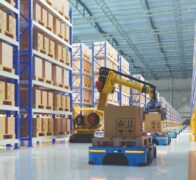
Hydrogen fuel cells promise to be a sustainable alternative to fossil fuel or battery-electric material handling equipment (MHE) in various production or warehouse contexts. Short refuelling times, an absence of carbon emissions, and constant power input put fuel cell-powered MHE at an advantage in high-intensity work environments. However, various barriers to the adoption of fuel cells remain, including considerations surrounding cost and efficiency.
Industry 4.0 Science | Volume 41 | 2025 | Edition 6 | Pages 74-80
Loam Construction and Wooden Shelving

Loam Construction and Wooden Shelving

A contribution to sustainability in warehouse logistics
Viviano De Giacomo ORCID Icon, Nathalie Fritsch ORCID Icon, Jakob Kennert ORCID Icon, Dieter Uckelmann ORCID Icon
This study examines the contribution of natural building materials, in particular loam and wood, to the sustainable development of logistics infrastructure, assessing ecological, economic, and technical dimensions across the entire life cycle. Potentials, restrictions, and supportive framework conditions are identified based on literature analyses and expert interviews. Wood proves to be technically mature and ecologically advantageous, especially in high rack construction, while loam offers high potential for energy- and resource-efficient construction. The study concludes with recommendations for research, policy, and practice to establish circular construction methods in logistics.
Industry 4.0 Science | Volume 41 | Edition 6 | Pages 82-89
I4S 6/2025: Manufacturing in Space

I4S 6/2025: Manufacturing in Space

Infinite possibilities for industrial production?
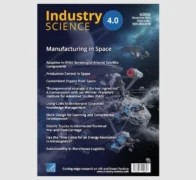
Manufacturing is leaving Earth: what was once science fiction is becoming a strategic field for the future. Falling launch costs and new space industry players are enabling production and services under conditions that are impossible on Earth—from in-orbit maintenance to novel manufacturing processes in microgravity. This issue highlights opportunities, business models, and technological hurdles on the path to value chains in space.
Electric Trucks in Intermodal Terminal Pre- and Post-Carriage

Electric Trucks in Intermodal Terminal Pre- and Post-Carriage

Impact on terminal processes in combined road-rail freight transport
Ralf Elbert, Samira Ghaneian Sebdani ORCID Icon
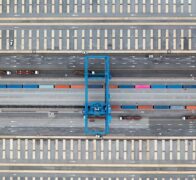
Electric trucks (e-trucks) play an important role in reducing CO₂ emissions especially on short distances in pre and post-carriage in combined road-rail freight transport (CT). Using the example of a CT terminal, this article highlights the logistical and energy challenges involved in using e-trucks to establish suitable charging infrastructures and ensuring a reliable power supply.
Industry 4.0 Science | Volume 41 | Edition 6 | Pages 70-77
Assistance for Simulation in Production and Logistics

Assistance for Simulation in Production and Logistics

A literature-based classification
Sigrid Wenzel ORCID Icon, Felix Özkul, Robin Sutherland ORCID Icon
Despite the commercial availability of simulation tools, using of discrete-event simulation for complex production and logistics systems is becoming increasingly challenging. It requires extensive expertise, high data quality, and considerable time and financial resources. For many years, therefore, there has been high demand for methodological and organizational support for the conduction of simulation studies. This article is based on an analysis of relevant publications and aims to classify previous research on improving the use of simulation. It also raises the question of the need for assistance in applying discrete event simulation and identifies areas for action.
Industry 4.0 Science | Volume 41 | 2025 | Edition 5 | Pages 66-76 | DOI 10.30844/I4SE.25.5.64
Bridging Automated and Traditional Approaches in Material Transport

Bridging Automated and Traditional Approaches in Material Transport

Why manual tugger train systems remain prevalent in intralogistics
Christoph S. Zoller, Wladimir Rempel, Justus Langer, Bonita Grzechca
The ongoing automation of production logistics through driverless transport systems (DTS) can significantly enhance the efficiency and quality of transport processes. Despite these advantages, many companies still choose manual tugger train systems for material supply. Semi-structured interviews with industry experts provide insight into the reasons behind these decisions, with particular emphasis factors that extend beyond purely economic assessment. The findings indicate that the lack of flexibility of driverless transport systems and the effort required for implementation effort are key reasons why manual transport solutions are often preferred in intralogistics.
Industry 4.0 Science | Volume 41 | 2025 | Edition 4 | Pages 60-66
I4S 4/2025: Smart Logistics

I4S 4/2025: Smart Logistics

Sustainable, resilient processes along the entire value chain
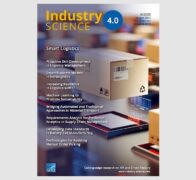
Logistics is entering a new era. Climate change and geopolitical uncertainties are shifting the focus to resilience and sustainability. The concept of smart logistics is gaining importance. But what exactly makes logistics smart, and how can it help us organize our societies and the economy? Approaches such as predictive analytics, demand analysis, and machine learning show why smart logistics is more than just a technological trend.
Smart Business Models in Intralogistics

Smart Business Models in Intralogistics

A service-oriented approach to customized logistics solutions
Anja Wiebusch, Niklas Wilkowski
Equipment-as-a-Service (EaaS) enables logistics companies to offer their customers tailored solutions, helping them to remain flexible and reduce costs as well as risks even in difficult times. Customers no longer pay for the object itself but only for the service provided, such as the usage time of a forklift truck. This allows them to focus on their core competencies and convert high investment costs into more flexible operating costs [1]. High capital commitment and the risk of underutilization of machines can thus be avoided and transferred to the logistics provider. This article examines the adjustments that logistics providers must make to accommodate this business model as well as some possible use cases.
Industry 4.0 Science | Volume 41 | Edition 4 | Pages 30-35
Increasing Resilience in Logistics with IT

Increasing Resilience in Logistics with IT

Investigating supply chain risk management information systems
Alexander Baur, Jasmin Hauser, Dieter Uckelmann ORCID Icon
The blockage of the Suez Canal in 2021, caused by the accident involving the container ship Ever Given, clearly illustrates the need to design global supply chains in such a way that they can respond quickly to disruptions. In a volatile, uncertain, complex, and ambiguous (VUCA) environment, conventional logistics processes that focus on efficiency, and supply chain management methods in particular, are increasingly reaching their limits. Resilience, achieved through a combination of robustness and agility, is essential to ensure responsiveness. This article analyzes how risk management information systems (RMIS) can increase resilience. The analysis covers data availability, data transparency, modeling and simulation of risk scenarios, and the development of appropriate emergency action plans. Despite existing challenges in designing IT infrastructure, the measures mentioned have the potential to increase resilience in logistics.
Industry 4.0 Science | Volume 41 | Edition 4 | Pages 36-42
1 2 4