Additive Manufacturing

Modeling Influences on the Wire Arc Additive Manufacturing Process

Modeling Influences on the Wire Arc Additive Manufacturing Process

Tim Sebastian Fischer, Lennart Grüger ORCID Icon, Ralf Woll
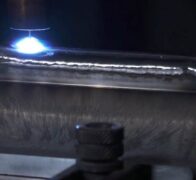
Wire Arc Additive Manufacturing (WAAM) is an additive manufacturing process which produces metallic components on the basis of arc welding. ISO/ASTM 52900 describes additive manufacturing as a process that creates components layer by layer from 3D model data. The basic equipment required includes a welding device, introducing the energy necessary for melting the metal wire, and a guiding machine, which traces the specified geometry of the component. Applications for WAAM include rapid prototyping and tooling, direct manufacturing and additive repair. The greatest advantages the process offers are low-cost system technology and a high deposition rate. The disadvantages of the process are the lack of process stability and exact repeatability. This article is intended to provide a clear overview of the WAAM manufacturing process, and to address its complex interactions.
Industrie 4.0 Management | Volume 39 | 2023 | Edition 5 | | DOI 10.30844/I4SE.23.1.80
Industrial Robots in Additive Manufacturing

Industrial Robots in Additive Manufacturing

Norbert Babel
The use of industrial robots in additive manufacturing has been increasing in recent years. Particularly due to the voluminous installation space and the great flexibility, they are predestined for the production of large-volume, individualised components. The multi-axis movement options of the print head attached to the end effector in conjunction with a swivel-tilt unit of the build platform mean that support structures can be dispensed with, which represents a major economic advantage.
Industrie 4.0 Management | Volume 39 | 2023 | Edition 2 | Pages 60-63
Sustainable and Intelligent Additive Manufacturing

Sustainable and Intelligent Additive Manufacturing

Early Recognition of Manufacturing Defects in 3D-Printing with Artificial Intelligence
Kai Scherer ORCID Icon, Sebastian Bast ORCID Icon, Julien Murach, Stephan Didas, Guido Dartmann, Michael Wahl
Additive manufacturing is an increasingly important manufacturing technology with huge economical potential. However, its popularity is accompanied by high material and time losses, as defects are often detected at a very late stage. One solution for a more sustainable production is the automated detection of manufacturing defects using artificial intelligence. This article describes the digitization of the defect detection process in additive manufacturing using a system based on a neural network. In addition to the steps for automated defect detection, system performance is also discussed.
Industrie 4.0 Management | Volume 39 | 2023 | Edition 2 | Pages 56-59
Development of a Camera for Abrasive Blasting

Development of a Camera for Abrasive Blasting

Stefan-Alexander Arlt, Norbert Babel, Raimund Kreis ORCID Icon, Thomas Andreas Schiffmann, Robin Schinko
Abrasive blasting is often used to clean work pieces. During the process an abrasive medium is propelled with compressed air toward a given surface. Common abrasives are sand, glass beads, steel or corundum. For safety reasons the blasting process is carried out in closed blast cabinets or rooms. Abrasives and cut off material are filling the air so that the visibility is limited. Quality assurance and safety monitoring of workers in blast rooms are therefore difficult which is essential e. g. in atomic power plant demolition. This article describes the development and test of a camera to improve this situation. Compressed air flows through the camera housing to keep particles away from the lens. The air flow was optimized by computational fluid dynamics. A prototype was made by 3D printing and tested in an blast cabinet.
Industrie 4.0 Management | Volume 39 | 2023 | Edition 1 | Pages 32-36
Predictive Manufacturing

Predictive Manufacturing

An intelligent monitoring system to detect anomalies in 3D printing
Benjamin Uhrich, Martin Schäfer, Miriam Louise Carnot, Shirin Lange
In selective laser melting, metal powder is melted layer by layer and fused with the already manufactured part. Within this process, defective layers are created, which can be avoided. Such defects can only be detected by various compression and tensile strength experiments after printing is complete. This procedure is costly and inefficient. Therefore, the authors would like to present a demonstrator which, with the help of machine learning methods which draw from sensor-based data acquisition, is able to detect faulty layers during the manufacturing process itself and to support the machine supervisor with decision recommendations.
Industrie 4.0 Management | Volume 39 | 2023 | Edition 1 | Pages 27-31 | DOI 10.30844/I4SE.23.1.88
Digital Product Optimisation for the Use of Additive Manufacturing

Digital Product Optimisation for the Use of Additive Manufacturing

Michael Wahl, Martin Bonenberger, Julian Morbach, Adrian Huwer ORCID Icon, Lauri Hoffmann
Additive manufacturing, i.e. the printing of three- dimensional workpieces from different materials, offers the possibility of quickly producing functional prototypes. Digital optimisation is an important building block for the rapid implementation of functional product ideas. Based on digital models, the product is virtually optimised and continuously improved. Once the product has been digitally optimised in terms of its properties, it is checked and, if necessary, adapted for additive manufacturing. The product is then manufactured, reworked and finally tested. The article shows the optimisation possibilities using the example of a dispenser from the food industry. An existing component is digitised, a flow optimisation is carried out on the digital model and the improved product is additively manufactured.
Industrie 4.0 Management | Volume 38 | 2022 | Edition 5 | Pages 25-29 | DOI 10.30844/IM_22-5_25-29
Custom-Fit Shoes Using 3D Printing

Custom-Fit Shoes Using 3D Printing

Deep Learning Supports Defect Detection in Mass Customization
Markus Trapp, Markus Kreutz, Alexander Böttjer, Michael Lütjen ORCID Icon, Michael Freitag ORCID Icon
3D printing has established itself as a production process and has also found its way into the fashion industry. Individualised shoes can be 3D printed, but this poses significant challenges for automated quality control, as defects are rare. Autoencoders enable to train a system with defect-free data so that detected deviations from this state can be evaluated as defects. Our research shows a ROC AUC score of 0.87, proving that this method is suitable for anomaly detection in 3D-printed shoes.
Industrie 4.0 Management | Volume 38 | 2022 | Edition 4 | Pages 15-18
MES for Manufacturing SMEs

MES for Manufacturing SMEs

Adapted procedure model and tool for an effcient selection
Rainer Eber, Steffen Schwarzer, Daniel Miller
Manufacturing SMEs are structurally di erent from other companies and therefore have special requirments for Manufacturing Execution Systems (MES) and the associated software selection. Process models must therefore be adapted. For the identication of requirements, a systematic categorization based on existing models was performed. With the help of an existing market research platform, further selection steps were developed in order to provide a useful and easy-to-use tool for SMEs, which enables them to select efficiently sufficient MES-software according to their needs.
Industrie 4.0 Management | Volume 38 | 2022 | Edition 3 | Pages 21-24
Additive Manufacturing Value Chain

Additive Manufacturing Value Chain

Development of an SME-specific value chain of additively manufactured final metal parts
Tim Niklas Mai, Martin Brylowski, Ayman Nagi, Wolfgang Kersten ORCID Icon
Additive manufacturing processes are becoming increasingly important in industry and enable the cost-e ective production of complex components in small quantities. Small and medium-sized enterprises (SMEs) in particular can bene t from the high customization potential enabling the development of new business models. However, the widespread use of additive processes faces high production costs and technological challenges. Meanwhile, scienti c research focuses on the optimization of individual process steps of additive manufacturing and does not o er su cient support for SMEs. Therefore, this paper deals with the development of a cross-process value chain of additive manufacturing for SMEs. Based on a systematic analysis of scienti c literature, relevant additive manufacturing processes were investigated, and a cross-process value chain was derived. The results were veri ed by expert interviews and central research and development requirements were extracted.
Industrie 4.0 Management | Volume 38 | 2022 | Edition 3 | Pages 25-30 | DOI 10.30844/I40M_22-3_25-30
Building Blocks for an Additive Manufacturing-Based Service Network

Building Blocks for an Additive Manufacturing-Based Service Network

Britta Wortmann, David Kiklhorn, Andreas Witte, Daniel Klima
The “IT’S DIGITIVE” research project developed the prerequisites for collaborative and platform-supported processing of additive manufacturing-based services and thus important building blocks for an additive manufacturing-based service network. The focus was on intellectual property protection and the development of secure and trustworthy order fulfillment processes. Based on the identified inherent risks and threats in this distributed order processing, appropriate security countermeasures were developed using two use cases as examples and implemented as demonstrators.
Industrie 4.0 Management | Volume 37 | 2021 | Edition 5 | Pages 57-60
1 2 3 5