Potenzial: Training

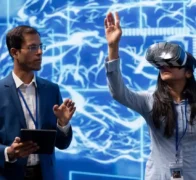
MAKI—A Digital Assistant for Practice-Based Learning

MAKI—A Digital Assistant for Practice-Based Learning

Why every factory is a learning factory
Olaf Resch ORCID Icon
With the help of digital assistants, academic teaching is possible in any factory. In order to achieve the best learning effects, however, the interests of all stakeholders must be taken into account. The factory wishes to deploy its employees quickly and productively, the learners desire a positive learning experience, and the educators want to illustrate abstract concepts in a meaningful and practical way. The only way to combine all of these perspectives is via a well-thought-out educational concept and highly functioning technology.
Industry 4.0 Science | Volume 42 | 2026 | Edition 2 | Pages 70-77
Conducting Experiments in Hybrid Learning Factories

Conducting Experiments in Hybrid Learning Factories

The example of the InTraLab Potsdam
Industrial production is undergoing rapid transformation through digitalization, automation and cyber-physical systems, creating new competence requirements for employees. Learning factories provide experiential environments for developing these competences. This article presents the Industrial Transformation Lab (InTraLab) as a hybrid learning factory combining physical demonstrators and digital simulations.
Learning Factories for the Future of Manufacturing in Brazil

Learning Factories for the Future of Manufacturing in Brazil

Advancing manufacturing through technology and skills development
Manufacturing firms in developing countries face challenges in closing productivity gaps while adopting Industry 4.0 technologies. Learning factories are one helpful approach to countering these challenges. One such example is the learning factory Fábrica do Futuroin São Paulo, Brazil, which has engaged students, supported competence development, and collaborated with industry in applied research, functioning as a hub for advanced manufacturing initiatives.
Serious Gaming and the Energy Transition

Serious Gaming and the Energy Transition

Collaborative knowledge generation and interactive understanding of complex interrelationships
Janine Gondolf ORCID Icon, Gert Mehlmann, Jörn Hartung, Bernd Schweinshaut, Anne Bauer
Conveying the complexity and multifaceted nature of the energy transition to a broad audience is a challenge. This article demonstrates how interactive serious games on a multitouch table can help make connections tangible and comprehensible. The games and the table were used in various conversational contexts. These are presented here in three case vignettes based on participant observation of the different applications, as well as situated and shared reflection. The vignettes demonstrate how interaction can trigger epistemic processes, enable shifts in perspective, and foster collective thinking, all of which are necessary for shaping the future of society as a whole.
Industry 4.0 Science | Volume 42 | 2026 | Edition 2 | Pages 62-69
Industrial Transformation via a Machining Learning Factory

Industrial Transformation via a Machining Learning Factory

A learning module to foster competencies for a sustainability-driven transformation
Oskay Ozen ORCID Icon, Victoria Breidling ORCID Icon, Stefan Seyfried ORCID Icon, Matthias Weigold
Sustainability-enhancing transformation processes are necessary in all sectors if we are to remain within planetary boundaries. This also applies to the industrial sector as a significant emitter of greenhouse gases. Employees need new competencies to master this complex task of industrial transformation. These range from CO2 equivalents accounting to the development and evaluation of transformation scenarios, including technical measures. The learning module developed here addresses these competency requirements and uses the example of the ETA factory to show how a competency-oriented learning module for industrial transformation can be structured. It essentially comprises four phases: data collection and CO2 equivalents accounting, cause analysis, development of measures and evaluation of measures.
Industry 4.0 Science | Volume 42 | Edition 2 | Pages 38-47 | DOI 10.30844/I4SE.26.2.38
Experiencing Digital Twins in Production and Logistics

Experiencing Digital Twins in Production and Logistics

The fischertechnik® Learning Factory 4.0 as a development platform for possible expansion stages
Deike Gliem ORCID Icon, Sigrid Wenzel ORCID Icon, Jan Schickram, Tareq Albeesh
The fischertechnik® Learning Factory 4.0 has proven to be a suitable experimental environment for testing digital twins. Depending on the targeted maturity stage, the functions of a digital twin range from status monitoring and forecasting to the operational control of production and logistics systems. To systematically classify these functions, this article presents a maturity model that serves as a framework for the development of a digital twin. Building on this, selected use cases are implemented in a test and development environment based on a system architecture with multi-layered logic structure. These initial implementations serve to highlight application purposes, relevant methods, and typical challenges and potentials in the transfer to real factory environments.
Industry 4.0 Science | Volume 42 | Edition 2 | Pages 30-37 | DOI 10.30844/I4SE.26.2.30
Building the Future Workforce Today

Building the Future Workforce Today

Trendiation as a strategic framework for employee qualification and training
Jürgen Fritz, Sebastian Busse, Ingo Dieckmann, Torsten Laub
As Industry 4.0 and artificial intelligence reshape organizational capabilities, traditional training systems struggle to keep pace with evolving skill requirements. This paper introduces Trendiation—a structured methodology for translating emerging trends into actionable strategies—as a systematic approach to this challenge. Through a workshop-based application examining Edutainment, Human-Centered Design, and Workforce Transformation, we demonstrate how organizations can move from abstract trend identification to concrete qualification requirements and prioritized training initiatives. The method produces a traceable artifact chain spanning trend framing, capability-gap assessment, and implementation roadmaps. Participant evaluations indicate high perceived clarity and practical utility. By bridging foresight analysis with participatory design, Trendiation enables organizations to proactively cultivate adaptive capabilities and build learning cultures aligned with future work ...
Industry 4.0 Science | Volume 42 | 2026 | Edition 2 | Pages 22-29 | DOI 10.30844/I4SE.26.2.22
Ethical AI in the Workplace Through Value-Based Labels?

Ethical AI in the Workplace Through Value-Based Labels?

Lessons learned from applying the VCIO framework to an AI-based assistant
Natalie Martin ORCID Icon, Tobias Kopp ORCID Icon, Natalie Beyer, Jochen Wendel ORCID Icon, Steffen Kinkel ORCID Icon
The AI Ethics Label represents a promising approach to promoting ethical AI and appropriate trust in AI systems. However, its practical application reveals some challenges due to its conservative assessment approach, limited context sensitivity, lack of benchmarks, and interpretation aids. Improvements are needed to unlock its full potential.
Industry 4.0 Science | Volume 42 | Edition 1 | Pages 30-38 | DOI 10.30844/I4SE.26.1.30
AI Skills for Responsible Use

AI Skills for Responsible Use

Realistic learning environments, critical thinking, and role design in teams
Valentin Langholf ORCID Icon, Niklas Obermann ORCID Icon, Uta Wilkens ORCID Icon, Marco Kuhnke, Michael Prüfer
Artificial intelligence (AI) is changing the world of work. But how can work teams learn to use AI support in a way that delivers speed advantages and ensures consistently high quality? One possible approach is to test it in a workplace-like simulation. Trying it out under realistic conditions shows the role that critical thinking plays.
Industry 4.0 Science | Volume 42 | Edition 1 | Pages 100-107 | DOI 10.30844/I4SE.26.1.92
Work Design for Learning and Competence Development

Work Design for Learning and Competence Development

Emerging ways of organizing and supporting learning in digitally transformed workplaces
Peter Dehnbostel
Learning and skill-enhancing work designs are essential for new work and organizational concepts such as “learning organizations” and “Industry 4.0.” Developing and applying criteria for promoting learning and skills development in digitally transformed work environments enables more effective and efficient work processes, makes work more people-centered, and the AI-based future of work more manageable. Digitalization is also introducing work-integrated learning formats such as online communities, learning platforms, and digital cognitive assistance systems that already meet many of these criteria. In the future, designing work environments that promote learning and skills development will become a central task of corporate training and personnel and organizational development.
Industry 4.0 Science | Volume 41 | 2025 | Edition 6 | Pages 58-64
1 2 6