Sustainability

Sustainable Materials as a Strategy for the Future

Sustainable Materials as a Strategy for the Future

Key elements for corporate materials management
Dirk Scheer ORCID Icon, Janine Gondolf ORCID Icon, Olaf Toedter ORCID Icon
The flow of materials along regional and global value chains has far-reaching environmental, economic and social effects. The sustainability profile of materials should therefore play a central role in management. Adapting material flows to adhere to sustainable principles requires an integrated approach that includes all areas of the company. The decisive factor is that sustainable materials management ultimately requires the entire life cycle of a product to be taken into account – from design and produc- tion through to sales and aftercare measures.
Industry 4.0 Science | Volume 40 | 2024 | Edition 1 | Pages 44-49
Sustainability in Industrial Manufacturing

Sustainability in Industrial Manufacturing

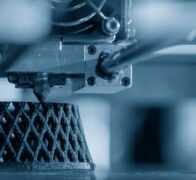
Resource-efficient circular economy through the use of a pellet 3D printer
Bruno Gallace, Michael Blug, Adrian Huwer ORCID Icon, Michael Mattern, Michael Wahl
In additive manufacturing – which is also known as 3D printing – plastic waste is produced, for example in the form of required support structures or faulty prints. One option for resource recirculation in additive manufacturing is direct use in a pellet 3D printer that incorporates fused granulate fabrication (FGF). The elimination of the filament production process step reduces the manufacturing time and the energy required for recirculation.
Industry 4.0 Science | Volume 40 | 2024 | Edition 1 | Pages 14-21
Sustainability Assessment for Small Batch Manufacturing

Sustainability Assessment for Small Batch Manufacturing

Analysis of textile manufacturing systems using material flow cost accounting (MFCA)
Dieter Stellmach, Guido Grau, Jürgen Seibold
Small batch sizes are a necessity in the textile industry due to the increasing diversification of products and end applications as well as short-term orders in networked value chains. At the same time, this involves a high level of configuration, planning, preparation and im-plementation. The costs increase disproportionately and are usually not directly quantifia-ble. In addition, sustainability considerations are now increasingly required. This article de-scribes an SME-suitable, simulation-based methodology for analyzing and configuring tex-tile manufacturing systems with regard to ecological and economic sustainability for small batch sizes in textile manufacturing and illustrates this using textile manufacturing in the weaving industry as an example.
Industry 4.0 Science | Volume 40 | 2024 | Edition 1 | Pages 83-89
Production of Circular Photovoltaic Systems

Production of Circular Photovoltaic Systems

The potential of digital technologies
Verena Luisa Aufderheide ORCID Icon
The circular economy (CE) promises a more sustainable use of resources by managing products in a cycle and striving for a transformation from a linear to a circular supply chain. In particular, digital technologies as enablers for the circular economy have been increasingly researched and applied in practice in recent years. This article describes which digital technologies offer potential for increasing circularity in the production of circular photovoltaic (PV) systems.
Industry 4.0 Science | Volume 40 | 2024 | Edition 1 | Pages 30-36
Resilience and Sustainability in the Supply Chain

Resilience and Sustainability in the Supply Chain

How SMEs can prepare for the changes to come
Jonas Fuchs, Lasse Bo Ladewig, Wolfgang Kersten ORCID Icon
More than 99% of German companies are small and medium-sized enterprises (SMEs), which therefore represent an important part of industrial supply chains. New regulations are increasing the pressure on companies to create transparency along the supply chain so that the role of SMEs is also coming into focus. However, they are often confronted with limited financial and human resources. Based on a quantitative survey and a literature review, this article deals with the question of what SME-friendly approaches could look like.
Industry 4.0 Science | Volume 40 | 2024 | Edition 1 | Pages 57-62
Sustainable HR Management

Sustainable HR Management

Its importance for realizing sustainability in industrial manufacturing
Uta Kirschten
Industrial manufacturing offers a wide range of opportunities for a more ecologically compatible and socially just organization. Sustainability-oriented HR management can competently support industrial manufacturing companies in the design and implementation of sustainable manufacturing. It is important to integrate ecological, social and economic requirements into the respective areas of responsibility. In addition, employees must be motivated and qualified to adopt environmentally friendly working practices in order to be able to implement sustainable manufacturing in practice. Sustainable incentive systems and employee-oriented personnel management must also be taken into account.
Industry 4.0 Science | Volume 40 | 2024 | Edition 1 | Pages 50-56
Circularity Navigator

Circularity Navigator

Digital decision support for anchoring design for circularity in product development
Anina Kusch ORCID Icon, Annika Pruhs ORCID Icon, Jörg Woidasky ORCID Icon, Jonas Brinker ORCID Icon
Products cannot be included early enough in the planning of a circular manufacturing process. However, because early incorporation brings additional complexity into play, product decisions are often set aside for later manufacturing stages. At this point, a decision-making tool that systematically reduces complexity and generally simplifies the process is therefore of great value – especially if it can also be used as a source of inspiration and orientation aid in the innovation phase.
Industry 4.0 Science | Volume 40 | 2024 | Edition 1 | Pages 6-13 | DOI 10.30844/I4SE.24.1.6
Corporate Purpose as Guideline for the UN Sustainable Development Goals

Corporate Purpose as Guideline for the UN Sustainable Development Goals

Aligning business strategy with the UN Sustainable Development Goals
Jürgen Hamann ORCID Icon, Jennifer Ettner ORCID Icon, Sandra Heymann ORCID Icon
This article describes how companies can accelerate the implementation of the United Nations Sustainable Development Goals (SDGs). As a guideline, we propose the concept of corporate purpose. By focusing on the added value generated for stakeholders, a corporate purpose has a meaningful effect and provides orientation. As part of our research, a self-assessment was developed, which makes the status quo of corporate purpose in companies measurable.
Industry 4.0 Science | Volume 40 | 2024 | Edition 1 | Pages 37-43
Cost-efficient Digitization of Refrigerating Appliances Recycling

Cost-efficient Digitization of Refrigerating Appliances Recycling

Digital twins and the path to a sustainable future
Christian Thiehoff, Georgii Emelianov ORCID Icon, Jochen Deuse ORCID Icon, Jochen Schiemann, Mikhail Polikarpov ORCID Icon
Correctly recycling obsolete refrigeration devices plays an important role in environmental and climate protection efforts. Recycling plants are subject to regular audits to ensure their compliance with strict environmental regulations. However, the collection of audit-related data is a challenging and time-consuming task, as it is usually done manually and is prone to errors. One solution for more sustainable and efficient monitoring is to automate digital data collection using sensors and artificial intelligence. This enables a direct estimate of the expected level of pollutants. This paves the way for continuous performance monitoring and efficient management of refrigeration appliance recycling plants.
Industry 4.0 Science | Volume 40 | 2024 | Edition 1 | Pages 76-82
Circular Economy

Circular Economy

A view from the perspective of entrepreneurship
Annette Henn ORCID Icon, Beate Langer
In order to exploit the full potential of the circular economy, companies need to develop holistic solutions and rethink their business models. With this in mind, a summer school entitled Circular Economy was organized by Merseburg University's start-up service in September 2023 with the aim of developing innovative ideas for new business models with a focus on circular models. Current trends in materials science were used as conceivable scenarios for circular forms of economic activity in the idea generation process. Entrepreneurship is an interface function here. Entrepreneurs not only want to run companies, they also want to bring about change with new products, services and business processes.
Industry 4.0 Science | Volume 40 | 2024 | Edition 1 | Pages 22-29
1 3 4 5 18