Branche: Small and Medium-Sized Enterprises

Transforming Under Pressure

Transforming Under Pressure

An analysis of coping strategies along the value chain in agriculture
Niklas Obermann ORCID Icon, Saskia Hohagen ORCID Icon, Uta Wilkens ORCID Icon
The transformation in production offers the chance to redesign existing value chains. Cooperation between various ecological, social and governmental stakeholders is seen as particularly key to sustainable development. However, little research has been conducted into how companies can best manage the resulting interdependencies. Agriculture is used as an example to examine how businesses can activate resources along the value chain.
Industry 4.0 Science | Volume 40 | 2024 | Edition 5 | Pages 99-106 | DOI 10.30844/I4SE.24.5.99
Digital Solutions for SMEs’ Circularity Transition

Digital Solutions for SMEs’ Circularity Transition

Examples from the textile industry
Markus Winkler, Dieter Stellmach, Guido Grau, Marcus Winkler, Meike Tilebein ORCID Icon
The EU Strategy for sustainable and circular textiles aims to reduce the industry’s environmental impact while at the same time increasing its competitiveness. In this transition towards circularity, firms in the highly fragmented textile value chains need solutions that help overcome barriers and provide support. This paper presents digital solutions that are particularly suited for SMEs and that have been developed with public funding. It aims at encouraging SMEs, not only from the textile industry, to specify their individual transition paths towards circularity and to use digitalization to foster implementation.
Industry 4.0 Science | Volume 40 | 2024 | Edition 5 | Pages 26-33 | DOI 10.30844/I4SE.24.5.26
Modular Learning Factories for Industry 4.0

Modular Learning Factories for Industry 4.0

Acquisition of a target-oriented acton competence to accelerate industrial implementation
Maximilian Dommermuth ORCID Icon
Industry 4.0 requires new teaching content due to its innovation potential. Skills profiles currently in demand often aren't reflected in vocational and tertiary education. Additionally, conventional further education and training often costs considerably money and time. Tailor-made learning opportunities and teaching targeted problem-solving skills in a modular learning factory are a more effective approach.
Industry 4.0 Science | Volume 40 | 2024 | Edition 4 | Pages 24-30 | DOI 10.30844/I4SE.24.4.24
Learning Factories as Innovative Training Locations for SMEs

Learning Factories as Innovative Training Locations for SMEs

Qualitative analysis of concepts and cooperations
Kathleen Warnhoff ORCID Icon, Simon Dabrowski ORCID Icon, Lea Müller-Greifenberg, Denise Gramß, Monika Stricker
In the context of Industry 4.0, learning factories are important places for company-based learning. Studies show that they have continued to develop since their emergence and are no longer limited to vocational and academic education. This leads to the question of how much the concept of the learning factory represents an innovative approach to further training in small and medium-sized enterprises (SMEs). This article focuses on three selected learning factories relevant to continuing education that were analyzed using qualitative methods with regard to their concepts and cooperation. The findings are embedded in a theoretical framework that links the scientific discussion on learning locations and educational cooperation. The empirical findings from three learning factories illustrate relevant learning locations for continuing education in SMEs.
Industry 4.0 Science | Volume 40 | 2024 | Edition 4 | Pages 32-41
Lean Empowerment in the Digital Ecosystem

Lean Empowerment in the Digital Ecosystem

Translating cultural values into technical requirements
Frank Bertagnolli ORCID Icon, Sabrina Karch ORCID Icon, Arndt Lüder ORCID Icon
With the advent of digitalization, prevailing paradigms – such as product centricity, face-to-face collaboration and hierarchical structures – are giving way to the vision of data-driven business models, digital, collaborative ecosystems and an agile, holacratic way of working in flat hierarchies and self-managing teams. Collaboration is made possible through the use of software solutions. In addition to adapted management concepts, the digital space also requires a digital cultural understanding on part of the companies involved. Lean empowerment is a pioneering approach to collaboration based on cultural values. In expert workshops, ideas were developed to explore how these values can be lived in a digital culture and thus in terms of global digital collaboration. This article presents concrete solutions from which requirements for digital collaboration and for implementation within IT structures and software solutions in particular can be derived.
Industry 4.0 Science | Volume 40 | 2024 | Edition 2 | Pages 32-39 | DOI 10.30844/I4SE.24.2.32
Robot-Based Assembly Automation in Mid-Sized Companies

Robot-Based Assembly Automation in Mid-Sized Companies

Obstacles, drivers and implications
Aaron Zinßer, Fabian Diefenbach ORCID Icon, Arik Lämmle ORCID Icon
Production automation is well established in large companies for high volume products. But robot-based assembly automation in mid-sized companies is still in its infancy. This study uses results from 19 expert interviews and a survey to identify obstacles to and drivers of automation in this field. Among the obstacles is the low flexibility of the robotic systems. One driver for automation is the increasing shortage of skilled workers. Based on the empirical findings, the study proposes options to increase the use of automation.
Industrie 4.0 Management | Volume 39 | 2023 | Edition 4 | Pages 21-24 | DOI 10.30844/IM_23-4_21-24
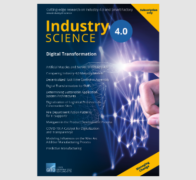
I4S 1/2023: Digital Transformation (Special Issue)

I4S 1/2023: Digital Transformation (Special Issue)

Paving the way to the 4th Industrial Revolution
Industry 4.0 and Smart Factory have become a real source of hope and are the technological answer to some of the biggest challenges of our time: sustainable production, global interconnections, intelligent exchange of knowledge. This special issue discusses research questions relating to process improvement, artificial intelligence and factory software.
Sustainability in SME through Digitalization

Sustainability in SME through Digitalization

SME Use Cases for Improving Sustainability with Digital Technologies
Henry Ekwaro-Osire, Stefan Wiesner, Dennis Bode, Alexandra Pehlken
The impact of rapid technological change in a competitive global market is reaching small and medium-sized enterprises (SME) at an increasing rate; digitalization increases the interconnectedness among manufacturers, products and customers. Within this context, SME need to improve both their business processes and their technological capabilities in order to achieve internal and external sustainability goals, to be successful in the marketplace and to meet customer needs. This article discusses the opportunities of digitalization to improve sustainability by presenting two use cases from SME.
Industrie 4.0 Management | Volume 39 | 2023 | Edition 2 | Pages 36-40
Ready for Artificial Intelligence?

Ready for Artificial Intelligence?

Recommendations for the AI transformation for small and mid-sized enterprises
Ralf Klinkenberg, Philipp Schlunder
Artificial intelligence (AI) is the next stage in the digitalization of the economy. The technology also offers great potential for small and mediusized enterprises (SMEs). However, many SMEs are still reluctant to introduce AI and are only at the beginning of digitization: only around one fifth of all SMEs in Germany have thoroughly digitized their own processes and departments. What does this mean for the use of AI in companies? What steps should businesses take now to take advantage of the opportunities AI offers? And what stumbling blocks should be avoided? This article presents practical implementation concepts for companies with different levels of digital maturity and AI deployment capabilities and shows the range of potential benefits of AI applications in different industries and with different value creation architectures in medium-sized companies.
Industrie 4.0 Management | Volume 37 | 2021 | Edition 6 | Pages 62-66
Agility as Consequence or Prerequisite of Digitization?

Agility as Consequence or Prerequisite of Digitization?

Dominic Lindner, Michael Amberg
Companies have always been in a constant state of change. This change is today closely linked to the buzzword’s “digitization” and “agility”. Agile methods, especially in complex projects, can pave the way for targeted digitization and, on the other hand, provide a more agile way of working for digital technologies. Through group discussions with managers from small and medium-sized IT companies, this article focuses on the question of whether agility is the precondition or consequence of targeted digitization. This article is aimed at decision-makers from SMEs who want to increase the degree of agility in the company in the context of increasing digitization.
Industrie 4.0 Management | Volume 35 | 2019 | Edition 4 | Pages 30-34 | DOI 10.30844/I40M_19-4_S30-34
1 2 3