Branche: SME

I4S 2/2026: Learning Factories

I4S 2/2026: Learning Factories

Drivers of research and learning environments for Industry 4.0
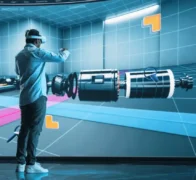
In recent years, learning factories have evolved into key experimental environments in the context of the Fourth Industrial Revolution. In addition to their role as training centers for skilled workers, they also serve as real-world research laboratories. This issue of Industry 4.0 Science examines learning factories as venues for exploring new approaches and technologies—whether digital assistants, cobots, serious games, or digital twins.
Conducting Experiments in Hybrid Learning Factories

Conducting Experiments in Hybrid Learning Factories

The example of the InTraLab Potsdam
Industrial production is undergoing rapid transformation through digitalization, automation and cyber-physical systems, creating new competence requirements for employees. Learning factories provide experiential environments for developing these competences. This article presents the Industrial Transformation Lab (InTraLab) as a hybrid learning factory combining physical demonstrators and digital simulations.
I4S 1/2026: Applied AI Ethics in the Workplace

I4S 1/2026: Applied AI Ethics in the Workplace

A shared responsibility — from radiology and speech therapy to assembly
AI ethics in the workplace is everyone’s responsibility. It requires accountability from companies as a whole and conscious action from individuals—whether developers or users, managers or employees. Key issues revolve around ethical AI skills and questions of governance and employee representation. How will the world of work change, from radiology and speech therapy to assembly and quality control?
Explainable AI – XAI

Explainable AI – XAI

Making AI work in business and not just clever sounding
sponsored
European companies are investing heavily in AI. But many AI projects remain stuck in the pilot phase. The fault does not lie with the systems, but no one can explain their results. “The algorithm said so” is not a basis for costly decisions. Backwell Tech’s AI is both smart and transparent. This is how AI can give you a competitive advantage.
Frameworks for the Structural Integration of Artificial Intelligence

Frameworks for the Structural Integration of Artificial Intelligence

Comparing organizational approaches
Sascha Stowasser
Artificial intelligence is increasingly implemented in companies, but often without clear organizational anchoring. This article evaluates centralized, decentralized, hybrid, and project-based frameworks for the structural integration of artificial intelligence in corporate organizations. A decision table provides guidance for selecting suitable models. In the conclusion, further open research questions are posed.
Industry 4.0 Science | Volume 41 | 2025 | Edition 5 | Pages 144-151 | DOI 10.30844/I4SE.25.5.138
Enabler for the Digital Twin

Enabler for the Digital Twin

Requirements for Technical Documentation 4.0
Christian Koch, Lukas Schulte, René Wöstmann, Jochen Deuse ORCID Icon
The increasing heterogeneity and complexity of industrial plant components from different manufacturers make it difficult to handle technical documentation consistently. In addition, the flexibility required for system changes challenges the long-term usability and legally compliant design of this documentation throughout the entire life cycle of cyber-physical production systems. This article contributes to the discussion on Technical Documentation 4.0 by systematically analyzing existing specifications and approaches and by proposing a concept for a holistic documentation framework.
Industry 4.0 Science | Volume 41 | 2025 | Edition 4 | Pages 76-85
Real-Time Monitoring of the Carbon Footprint for SMEs

Real-Time Monitoring of the Carbon Footprint for SMEs

Sustainability in real time — from operation to finished products
Henning Strauß ORCID Icon, Julian Sasse ORCID Icon
Although SMEs are not directly affected by the statutory reporting obligations for carbon accounting, as suppliers they are obliged to meet the requirements of sustainability reporting. In addition to a holistic life cycle analysis, this requires a high-quality database within production in order to determine the specific CO₂ footprint. A central element is the implementation of a Machine Carbon Footprint (MCF). This article aims to develop and implement an MCF focusing on its applicability for SMEs. For this purpose, data is recorded and visualized in real time on a machine tool. The measurement data is then processed, stored and visualized using open-source low-code platforms. Real-time data flows enable the precise determination of the production-specific carbon footprint and, in conjunction with order data, the Product Carbon Footprint.
Industry 4.0 Science | Volume 41 | Edition 3 | Pages 102-109
Circular Economy Enabled by Digitization

Circular Economy Enabled by Digitization

Digital networking in the procurement of manufacturing companies
Pius Finkel ORCID Icon, Peter Wurster ORCID Icon, David Pfister
Current developments in digitalization and data economy, especially multilateral data sharing platforms, offer the potential to accelerate the implementation of circular economy practices in the manufacturing industry. This article systematically examines the extent to which digitalization could serve as a catalyst for circular economy in the procurement of such companies. As a basis for the following research, eight experts from five leading global manufacturers and suppliers in the automotive and aviation industries were interviewed. This article demonstrates practical hypotheses for the sustainable design of supply chains and proposes two specific use cases for circular economy practices that can proactively counteract the use of resources.
Industry 4.0 Science | Volume 41 | 2025 | Edition 1 | Pages 26-33 | DOI 10.30844/I4SE.25.1.26
I4S 1/2025: 40 Years of Digital Transformation in Manufacturing

I4S 1/2025: 40 Years of Digital Transformation in Manufacturing

Key research questions for tomorrow's production and logistics
Digital transformation has been a central focus of scientific discussions for years. Questions relating to data-driven decisions, artificial intelligence and resilient supply chains are at the heart of current research. The articles in this issue explain key trends and present scientific findings and practical solutions - from automation and the circular economy to cloud computing.
Introduction of Machine Learning in Production

Introduction of Machine Learning in Production

An SME-specific, holistic guide
Manuel Savadogo, Malte Stonis ORCID Icon, Peter Nyhuis ORCID Icon
Machine learning offers a wide range of potential, especially in production, and is therefore becoming increasingly important. However, small and medium-sized businesses are lacking guidelines that are specifically tailored to their individual challenges to guide them step-by-step through the process. In conjunction with a potential analysis, the determination of relevant prerequisites and a maturity assessment, this article can serve as a guide for SMEs.
Industry 4.0 Science | Volume 40 | 2024 | Edition 6 | Pages 88-95
1 2 7