Electric Trucks in Intermodal Terminal Pre- and Post-Carriage

Impact on terminal processes in combined road-rail freight transport

JournalIndustry 4.0 Science
Issue Volume 41, Edition 6, Pages 70-77
Bibliography Share Cite Download

Abstract

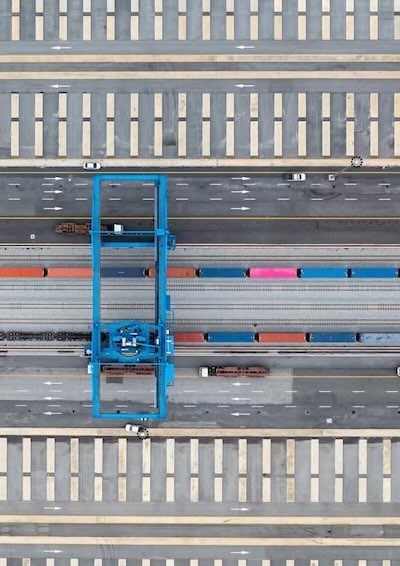
Electric trucks (e-trucks) play an important role in reducing CO₂ emissions especially on short distances in pre and post-carriage in combined road-rail freight transport (CT). Using the example of a CT terminal, this article highlights the logistical and energy challenges involved in using e-trucks to establish suitable charging infrastructures and ensuring a reliable power supply.

Keywords

Article

Freight transport in Germany has experienced steady and strong growth in recent decades [1]. Despite the use of various modes of transport, road freight transport remains the dominant form of transport to this day [2]. Within rail freight transport, however, combined transport (CT) is showing above-average, dynamic growth. Forecasts up to 2026 assume continued double-digit growth rates, which underlines the increasing importance of CT as an environment-friendly alternative in the freight transport sector [3]. In 2022, pre and post-carriage in CT [4] accounted for 15% of road transport (303.9 million kilometres …

Access limited

You are currently not logged in / not yet registered.

To read the content in full, you must have an appropriate subscription. Alternatively, you can also obtain access by paying a one-off fee.

Subscription included Purchase
without 29,00 €
Digital 27,55 €
Expert 0,00 €
Professional 0,00 €

Read for once 29,00 €

All prices include 7% VAT

After purchasing access rights, you will automatically be redirected back to this page.


Potentials: Energy Efficiency Resource Efficiency
Solutions: Logistics Technology

You might also be interested in
Experiencing Digital Twins in Production and Logistics

Experiencing Digital Twins in Production and Logistics

The fischertechnik® Learning Factory 4.0 as a development platform for possible expansion stages
Deike Gliem ORCID Icon, Sigrid Wenzel ORCID Icon, Jan Schickram, Tareq Albeesh
The fischertechnik® Learning Factory 4.0 has proven to be a suitable experimental environment for testing digital twins. Depending on the targeted maturity stage, the functions of a digital twin range from status monitoring and forecasting to the operational control of production and logistics systems. To systematically classify these functions, this article presents a maturity model that serves as a framework for the development of a digital twin. Building on this, selected use cases are implemented in a test and development environment based on a system architecture with multi-layered logic structure. These initial implementations serve to highlight application purposes, relevant methods, and typical challenges and potentials in the transfer to real factory environments.
Industry 4.0 Science | Volume 42 | Edition 2 | Pages 30-37 | DOI 10.30844/I4SE.26.2.30
Has the Time Come for an Energy Revolution in Intralogistics?

Has the Time Come for an Energy Revolution in Intralogistics?

The current status of hydrogen fuel cell-powered MHE
Gustav Bösehans, Joseph W. Dörmann
Hydrogen fuel cells promise to be a sustainable alternative to fossil fuel or battery-electric material handling equipment (MHE) in various production or warehouse contexts. Short refuelling times, an absence of carbon emissions, and constant power input put fuel cell-powered MHE at an advantage in high-intensity work environments. However, various barriers to the adoption of fuel cells remain, including considerations surrounding cost and efficiency.
Industry 4.0 Science | Volume 41 | 2025 | Edition 6 | Pages 74-80
Loam Construction and Wooden Shelving

Loam Construction and Wooden Shelving

A contribution to sustainability in warehouse logistics
Viviano De Giacomo ORCID Icon, Nathalie Fritsch ORCID Icon, Jakob Kennert ORCID Icon, Dieter Uckelmann ORCID Icon
This study examines the contribution of natural building materials, in particular loam and wood, to the sustainable development of logistics infrastructure, assessing ecological, economic, and technical dimensions across the entire life cycle. Potentials, restrictions, and supportive framework conditions are identified based on literature analyses and expert interviews. Wood proves to be technically mature and ecologically advantageous, especially in high rack construction, while loam offers high potential for energy- and resource-efficient construction. The study concludes with recommendations for research, policy, and practice to establish circular construction methods in logistics.
Industry 4.0 Science | Volume 41 | Edition 6 | Pages 82-89
Assistance for Simulation in Production and Logistics

Assistance for Simulation in Production and Logistics

A literature-based classification
Sigrid Wenzel ORCID Icon, Felix Özkul, Robin Sutherland ORCID Icon
Despite the commercial availability of simulation tools, using of discrete-event simulation for complex production and logistics systems is becoming increasingly challenging. It requires extensive expertise, high data quality, and considerable time and financial resources. For many years, therefore, there has been high demand for methodological and organizational support for the conduction of simulation studies. This article is based on an analysis of relevant publications and aims to classify previous research on improving the use of simulation. It also raises the question of the need for assistance in applying discrete event simulation and identifies areas for action.
Industry 4.0 Science | Volume 41 | 2025 | Edition 5 | Pages 66-76 | DOI 10.30844/I4SE.25.5.64
Bridging Automated and Traditional Approaches in Material Transport

Bridging Automated and Traditional Approaches in Material Transport

Why manual tugger train systems remain prevalent in intralogistics
Christoph S. Zoller, Wladimir Rempel, Justus Langer, Bonita Grzechca
The ongoing automation of production logistics through driverless transport systems (DTS) can significantly enhance the efficiency and quality of transport processes. Despite these advantages, many companies still choose manual tugger train systems for material supply. Semi-structured interviews with industry experts provide insight into the reasons behind these decisions, with particular emphasis factors that extend beyond purely economic assessment. The findings indicate that the lack of flexibility of driverless transport systems and the effort required for implementation effort are key reasons why manual transport solutions are often preferred in intralogistics.
Industry 4.0 Science | Volume 41 | 2025 | Edition 4 | Pages 60-66