Additive Manufacturing

Enabling the Future of Manufacturing with Digital Twins

Enabling the Future of Manufacturing with Digital Twins

Opportunities and obstacles
Javad Ghofrani, Darian Lemke, Tassilo Söldner
Digital twins connect physical and digital systems, furthering efficiency, enabling predictive maintenance, and allowing the production of more customized products. Despite these advantages, challenges such as high costs, data synchronization, and security risks hinder widespread adoption. This article explores the potential of digital twins and examines key barriers to integration and implementation, also considering some industrial applications including additive manufacturing as a relevant use case.
Industry 4.0 Science | Volume 41 | Edition 3 | Pages 72-81
Simulated Production Environment Today

Simulated Production Environment Today

Evaluation of the numerical process simulation of selective laser melting
Emre Sahin ORCID Icon, Lennart Grüger ORCID Icon, Sebastian Härtel ORCID Icon
Numerical simulation for the optimization of conventional manufacturing processes is common practice in industry, but isn’t yet fully developed for generative manufacturing processes. The simulation of powder bed fusion (PBF) especially, with their more than 130 influencing factors, poses major challenges. Nevertheless, the methods developed can substantially accelerate product development, as an examination of common procedures and innovative approaches shows.
Industry 4.0 Science | Volume 40 | 2024 | Edition 4 | Pages 70-77 | DOI 10.30844/I4SE.24.4.70
Additive Manufacturing 4.0 Learning Factory

Additive Manufacturing 4.0 Learning Factory

Digitalization for batch size 1
Fabian Riß, Nicolas Rolinck, Stefan Böhm ORCID Icon, Alessandro Morath
In the course of digitalization, collaboration between humans and machines is inevitable. This should be considered as early as possible in further training. There’s a major obstacle to this in mechanical engineering: the lack of access to the knowledge needed for success. This can have a negative impact on the acceptance of digitalized processes. A teaching and learning platform teaching digitalization on real machines does important work here.
Industry 4.0 Science | Volume 40 | 2024 | Edition 4 | Pages 57-62
Spare Part Production of Vehicle Gearbox Bearings

Spare Part Production of Vehicle Gearbox Bearings

A method using additive manufacturing
Norbert Babel, Tobias Empl, Raimund Kreis ORCID Icon, Peter Roider
Spare parts for older products are often difficult to obtain or cannot be produced in an economically viable way using conventional manufacturing techniques. This article examines whether damping elements for gearbox bearings (in/for the automotive sector) can be manufactured from thermoplastic polyurethanes (TPU) with the same or compatible properties as the original part alternatively using additive manufacturing.
Industry 4.0 Science | Volume 40 | 2024 | Edition 2 | Pages 16-22
Safeguarding Against Risks in the Wire Arc Additive Manufacturing Process

Safeguarding Against Risks in the Wire Arc Additive Manufacturing Process

Lennart Grüger ORCID Icon, Tim Sebastian Fischer, Ralf Woll, Johannes Buhl ORCID Icon
In this article, the potential risks in wire arc additive manufacturing are analyzed using failure mode and effects analysis. To achieve this, 186 possible causes of risk were analyzed and the five most critical risks were discussed in detail. Four significant risk factors were identified in the construction process. The fifth risk relates to the shielding gas flow. This is only one influencing factor among the welding parameters, which have strong interactions with each other. Therefore, their relationships should be analyzed on the basis of numerous tests.
Industry 4.0 Science | Volume 40 | 2024 | Edition 1 | Pages 63-69 | DOI 10.30844/I4SE.24.1.63
Sustainability in Industrial Manufacturing

Sustainability in Industrial Manufacturing

Resource-efficient circular economy through the use of a pellet 3D printer
Bruno Gallace, Michael Blug, Adrian Huwer ORCID Icon, Michael Mattern, Michael Wahl
In additive manufacturing – which is also known as 3D printing – plastic waste is produced, for example in the form of required support structures or faulty prints. One option for resource recirculation in additive manufacturing is direct use in a pellet 3D printer that incorporates fused granulate fabrication (FGF). The elimination of the filament production process step reduces the manufacturing time and the energy required for recirculation.
Industry 4.0 Science | Volume 40 | 2024 | Edition 1 | Pages 14-21
Improving Individual Patient Care and Hand Orthosis

Improving Individual Patient Care and Hand Orthosis

Implementing modern production processes using CAE Methods
Raimund Kreis ORCID Icon, Norbert Babel, Helmut Ersch
Finger fractures are usually still casted with plaster bandages. However, to avoid acampsia of the finger joints, flexibility exercises are necessary. Further disadvantages of the rigid plaster bandages are insufficient breathability and water resistance, weightiness and the necessity to apply wet and pliable plaster bandages to the injured patient. This article describes how individually designed hand orthoses without these disadvantages are attainable. With scans, modern software like STL editors (STL: Standard Tessellation Language) or CAD systems (CAD: Computer Aided Design) and additive manufacturing, complex, light weight and breathable structures are possible. Contrary to the solely mechanical art of casting with plaster, the new approach requires expertise in data processing and additive manufacturing seldom found in medical facilities. But this opens opportunities for service providers.
Industrie 4.0 Management | Volume 39 | 2023 | Edition 6 | Pages 37-41
Modeling Influences on the Wire Arc Additive Manufacturing Process

Modeling Influences on the Wire Arc Additive Manufacturing Process

Tim Sebastian Fischer, Lennart Grüger ORCID Icon, Ralf Woll
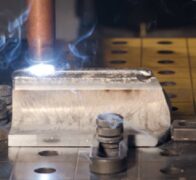
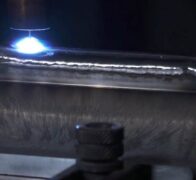
Wire Arc Additive Manufacturing (WAAM) is an additive manufacturing process which produces metallic components on the basis of arc welding. ISO/ASTM 52900 describes additive manufacturing as a process that creates components layer by layer from 3D model data. The basic equipment required includes a welding device, introducing the energy necessary for melting the metal wire, and a guiding machine, which traces the specified geometry of the component. Applications for WAAM include rapid prototyping and tooling, direct manufacturing and additive repair. The greatest advantages the process offers are low-cost system technology and a high deposition rate. The disadvantages of the process are the lack of process stability and exact repeatability. This article is intended to provide a clear overview of the WAAM manufacturing process, and to address its complex interactions.
Industrie 4.0 Management | Volume 39 | 2023 | Edition 5 | | DOI 10.30844/I4SE.23.1.80
Industrial Robots in Additive Manufacturing

Industrial Robots in Additive Manufacturing

Norbert Babel
The use of industrial robots in additive manufacturing has been increasing in recent years. Particularly due to the voluminous installation space and the great flexibility, they are predestined for the production of large-volume, individualised components. The multi-axis movement options of the print head attached to the end effector in conjunction with a swivel-tilt unit of the build platform mean that support structures can be dispensed with, which represents a major economic advantage.
Industrie 4.0 Management | Volume 39 | 2023 | Edition 2 | Pages 60-63
Sustainable and Intelligent Additive Manufacturing

Sustainable and Intelligent Additive Manufacturing

Early Recognition of Manufacturing Defects in 3D-Printing with Artificial Intelligence
Kai Scherer ORCID Icon, Sebastian Bast ORCID Icon, Julien Murach, Stephan Didas, Guido Dartmann, Michael Wahl
Additive manufacturing is an increasingly important manufacturing technology with huge economical potential. However, its popularity is accompanied by high material and time losses, as defects are often detected at a very late stage. One solution for a more sustainable production is the automated detection of manufacturing defects using artificial intelligence. This article describes the digitization of the defect detection process in additive manufacturing using a system based on a neural network. In addition to the steps for automated defect detection, system performance is also discussed.
Industrie 4.0 Management | Volume 39 | 2023 | Edition 2 | Pages 56-59
1 2 4