Manufacturing Systems

Sustainable and Intelligent Additive Manufacturing

Sustainable and Intelligent Additive Manufacturing

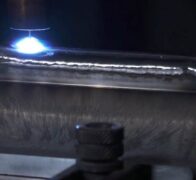
Early Recognition of Manufacturing Defects in 3D-Printing with Artificial Intelligence
Kai Scherer ORCID Icon, Sebastian Bast ORCID Icon, Julien Murach, Stephan Didas, Guido Dartmann, Michael Wahl
Additive manufacturing is an increasingly important manufacturing technology with huge economical potential. However, its popularity is accompanied by high material and time losses, as defects are often detected at a very late stage. One solution for a more sustainable production is the automated detection of manufacturing defects using artificial intelligence. This article describes the digitization of the defect detection process in additive manufacturing using a system based on a neural network. In addition to the steps for automated defect detection, system performance is also discussed.
Industrie 4.0 Management | Volume 39 | 2023 | Edition 2 | Pages 56-59
Disruption Management with Digital Assistance Systems

Disruption Management with Digital Assistance Systems

A generic approach for the product lifecycle
Niklas Jahn, Tim Jansen ORCID Icon, Robert Rost, Hermann Lödding ORCID Icon
In the production and operation of complex, one- of-a-kind products, disruptions inevitably occur. In practice, there are often deficits in terms of transparency and information flow when it comes to disruption management. Digital assistance systems facilitate disruption documentation: they increase the quality of information by locating it in the CAD model and in the overall product plan, thus accelerating targeted fault elimination. A generic data model makes it possible to use digital assistance systems for different products, trades and processes and in different product life phases. (Only in German)
Industrie 4.0 Management | Volume 39 | 2023 | Edition 2 | Pages 15-19
Predictive Manufacturing

Predictive Manufacturing

An intelligent monitoring system to detect anomalies in 3D printing
Benjamin Uhrich, Martin Schäfer, Miriam Louise Carnot, Shirin Lange
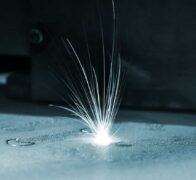
In selective laser melting, metal powder is melted layer by layer and fused with the already manufactured part. Within this process, defective layers are created, which can be avoided. Such defects can only be detected by various compression and tensile strength experiments after printing is complete. This procedure is costly and inefficient. Therefore, the authors would like to present a demonstrator which, with the help of machine learning methods which draw from sensor-based data acquisition, is able to detect faulty layers during the manufacturing process itself and to support the machine supervisor with decision recommendations.
Industrie 4.0 Management | Volume 39 | 2023 | Edition 1 | Pages 27-31 | DOI 10.30844/I4SE.23.1.88
From Random Sampling to Real-time Data

From Random Sampling to Real-time Data

Integrated plant engineering to increase process capability
Alexander Seelig
The digitization of processes is complex and error-prone. That is why manufacturing processes are monitored using statistical process control methods. The aim of the presented project was to answer the questions how the data basis for the use of the quality control chart (QRC) can be extended from random samples to near real-time data and how the implementation of the solution should be done. The software solution was developed and tested in the Fischertechnik learning factory. It could be shown that the data from the learning factory is suitable to be displayed in a closely timed manner and to be evaluated by means of process indicators of the QRK. In this way, errors can be avoided and capacities saved. (Only in German)
Industrie 4.0 Management | Volume 39 | 2023 | Edition 1 | Pages 48-52
Decentralized Tact Time Control in Assembly

Decentralized Tact Time Control in Assembly

Simplifying robust control of assembly lines via the I4.0 box
Sander Lass, Tim Körppen
In theory, decentralized control approaches in the manufacturing context offer several advantages over monolithic centralized systems where all functions are combined into one or into several authorities. However, practical implementation requires adaptation of the general concept of decentralization to fit individual and specific use cases, especially with regard to their sensible scope. One such use case is the assembly of high-variation products. This article shows the appropriate combination of centralized and decentralized approaches can be leveraged to achieve better planning and increased throughput in manufacturing. With flexible cycle control for work stations and suitable assistance at the assembly workstation, the previous shop-floor oriented organization style can be transformed into a series-like manufacturing process. This is done using a multi-layered infrastructure that follows the Industry 4.0 paradigm of decentralized information processing through autonomous ...
Industry 4.0 Science | Volume 39 | 2023 | Edition 1 | Pages 34-40 | DOI 10.30844/I4SE.23.1.34
Assessment of Technical Cleanliness in the Production Process of Lithium-Ion Battery Cells for Automotive Applications

Assessment of Technical Cleanliness in the Production Process of Lithium-Ion Battery Cells for Automotive Applications

Laura Meusel, Bernd Rosemann, Michael Morawiec
Technical cleanliness as a quality feature in the automotive industry is continuously growing in importance. In this context, particularly high cleanliness requirements are placed on battery cells for electric vehicles, which must be adhered to along the value chain. This paper will introduce an assessment method for the analysis of technical cleanliness in the production process of lithium-ion- cells as well as revealing potential failure causes.
Industrie 4.0 Management | Volume 38 | 2022 | Edition 6 | Pages 19-23
Digital Representations as Basis for Digital Twins in Plant Industry

Digital Representations as Basis for Digital Twins in Plant Industry

Fundamentals, Particularities, Challenges and Possible Solutions
Bernhard Saske, Sebastian Schwoch, Kristin Paetzold, Max Layer, Sebastian Neubert, Jonathan Leidich, Peter Robl
The use of Digital Twins offers a wide range of applications and opportunities for optimized processes along the entire life cycle of technical systems. However, this concept encounters specific characteristics in plant industry within the development, the construction and operation phase of plants. This article describes these special characteristics and the resulting challenges for the creation and operation of Digital Twins in plant industry. The concept of “Digital Representation” as a basis for Digital Twins is presented together with its prerequisites and potentials.
Industrie 4.0 Management | Volume 38 | 2022 | Edition 5 | Pages 21-24 | DOI 10.30844/IM_22-5_21-24
Artificial Intelligence and Future of Work

Artificial Intelligence and Future of Work

Changes and Possible Approaches
Andreas Heindl, Alexander Mihatsch
Artificial intelligence (AI) is already an important part of business models and processes of many companies. In the future, AI systems will pro- foundly change our working environment. AI systems can develop completely new potential for companies in a wide variety of sectors and domains - especially in industry. Existing busi- ness models can be optimized along the value chain by optimizing production flows and processes or avoiding production downtimes with predictive maintenance. At the same time, AI systems can enable completely new business models and thus radically change existing mar- ket structures through new players. The AI economy of tomorrow will be more individual, more precise and more sustainable: Competitive value creation without AI will not be possible in many areas of industry.
Industrie 4.0 Management | Volume 38 | 2022 | Edition 4 | Pages 10-14
Concept for a Modular, Reconfigurable Assembly System

Concept for a Modular, Reconfigurable Assembly System

Increased flexibility through reconfiguration at various production levels
Jasper Wilhelm, Nils Hoppe, Michael Freitag ORCID Icon
Companies must increase their flexibility and enable high product customization and variety to meet market demands. In assembly, this requires a large number of special machines, which leads to high investments and space requirements. This paper presents a concept for a modular, reconfigurable assembly system that allows unrestricted connection of individual modules. It is shown how such a system can be located in the RAMI4.0 framework and fulfills changeability requirements on different production levels. (Only in German)
Industrie 4.0 Management | Volume 38 | 2022 | Edition 4 | Pages 33-37
Technology Acceptance of Robotic Process Automation (RPA)

Technology Acceptance of Robotic Process Automation (RPA)

Jonas Geist, Jörg von Garrel
This article aims to develop a model for the acceptance of RPA technologies based on the presentation of the state-of-the-art. The model is the basis of an empirical study on the acceptance of robot-assisted process automation (RPA) at a global technology company. The results of this study are presented in a corresponding publication "An Empirical Analysis of Technology Acceptance of Robotic Process Automation (RPA) (Part 2)".
Industrie 4.0 Management | Volume 38 | 2022 | Edition 4 | Pages 43-47
1 4 5 6 23