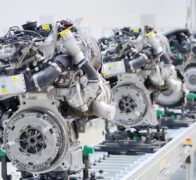
In theory, decentralized control approaches in the manufacturing context offer several advantages over monolithic centralized systems where all functions are combined into one or into several authorities. However, practical implementation requires adaptation of the general concept of decentralization to fit individual and specific use cases, especially with regard to their sensible scope. One such use case is the assembly of high-variation products. This article shows the appropriate combination of centralized and decentralized approaches can be leveraged to achieve better planning and increased throughput in manufacturing. With flexible cycle control for work stations and suitable assistance at the assembly workstation, the previous shop-floor oriented organization style can be transformed into a series-like manufacturing process. This is done using a multi-layered infrastructure that follows the Industry 4.0 paradigm of decentralized information processing through autonomous ...
Industry 4.0 Science | Volume 39 | 2023 | Edition 1 | Pages 34-40 | DOI
10.30844/I4SE.23.1.34