Autor: Angelika C. Bullinger-Hoffmann

AI Smart Workstation for Industrial Quality Control

AI Smart Workstation for Industrial Quality Control

Enhancing productivity through vision systems, real-time assistance, and Axiomatic Design
Leonardo Venturoso ORCID Icon, Simone Garbin ORCID Icon, Dieter Steiner, Dominik T. Matt
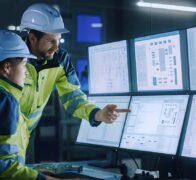
Traditional quality control often falls short in high-mix, low-volume production environments due to variability and complexity. This project introduces an advanced workstation to boost industrial productivity and quality, developed with Axiomatic Design to ensure a clear link between customer needs, functional requirements, and design solutions. Combining polarization cameras, high-resolution imaging, adaptive lighting, and deep learning-based computer vision, the system performs high-accuracy inspection on quantity, quality, and compliance. A digital assistance system offers real-time feedback via an intuitive interface. Validation in a controlled environment confirmed both the system’s practical benefits and its scalability.
Industry 4.0 Science | Volume 41 | 2025 | Edition 5 | Pages 128-134 | DOI 10.30844/I4SE.25.5.124
AI-Supported Personnel Planning in Industrial Maintenance

AI-Supported Personnel Planning in Industrial Maintenance

User-centered development and implementation in a pilot project
Philipp Hein ORCID Icon, Katharina Simon ORCID Icon, Alexander Kögel, Angelika C. Bullinger-Hoffmann, Thomas Löffler
Personnel deployment planning in industrial maintenance is a complex challenge, as dispatchers often have to match incomplete customer requests with the appropriate employee skills. An AI-based assistance system can help by automatically analyzing relevant data and providing well-founded suggestions for employee selection. This article describes the user-centered development and introduction of such a system as part of a pilot project at a medium-sized service provider. The user-centered design ensures that dispatchers retain their autonomy. Involving employees from the outset creates acceptance and promotes a deeper understanding of the system’s advantages.
Industry 4.0 Science | Volume 41 | 2025 | Edition 5 | Pages 14-20 | DOI 10.30844/I4SE.25.5.14
Supporting Maintenance with Socio-Cyber-Physical Systems

Supporting Maintenance with Socio-Cyber-Physical Systems

„Ressourcen-Cockpit für Sozio-Cyber-Physische Systeme“ vernetzt den mobilen Mitarbeiter in der Instandhaltung
Ullrich Trommler, Sebastian Horbach, Angelika C. Bullinger-Hoffmann, Thomas Löffler, Egon Müller, Hendrik Hopf
Maintenance is an important factor for the effectiveness of production processes. As the degree of automation and interoperation of production equipment is increasing, the significance of equipment availability and thus of maintenance is increasing. At the moment, maintenance and service engineers spend a lot of time in retrieving and preparing information. In many cases the data of business information systems is not or only partly available to maintenance engineers. In the future, resource-cockpits on mobile devices will provide maintenance and service engineers with all necessary information in situ. This will be realised interactively, with little effort and in the right context.
Industrie Management | Volume 30 | 2014 | Edition 6 | Pages 51-54
Innovative Working Environments

Innovative Working Environments

Age-Mixed Communication and Demographic Work Systems
Jens Mühlstedt, Christian Scherf, Claudia Roscher, Birgit Spanner-Ulmer, Angelika C. Bullinger-Hoffmann
Due to demographic change, fundamental transformations in economy and society can be identified in Germany and other European countries. The requirements on companies regarding increasing flexibility and innovation skills proceed parallel to demographic change. Hence, research on demographics in innovative working environments can deal with these changes in positive ways. The article describes two design tools: first the modular age explorer MAX which makes demographic change perceptible for young people and second flexible, generation-heterogeneous organizations which provide both innovation and value potential. These tools enable generation-heterogeneous communication and work systems for the researchers and all departments.
Industrie Management | Volume 29 | 2013 | Edition 3 | Pages 34-38