Nachhaltigkeit

Circular Economy

Circular Economy

A view from the perspective of entrepreneurship
Annette Henn ORCID Icon, Beate Langer
In order to exploit the full potential of the circular economy, companies need to develop holistic solutions and rethink their business models. With this in mind, a summer school entitled Circular Economy was organized by Merseburg University's start-up service in September 2023 with the aim of developing innovative ideas for new business models with a focus on circular models. Current trends in materials science were used as conceivable scenarios for circular forms of economic activity in the idea generation process. Entrepreneurship is an interface function here. Entrepreneurs not only want to run companies, they also want to bring about change with new products, services and business processes.
Industry 4.0 Science | Volume 40 | 2024 | Edition 1 | Pages 22-29
Sustainable Materials as a Strategy for the Future

Sustainable Materials as a Strategy for the Future

Key elements for corporate materials management
Dirk Scheer ORCID Icon, Janine Gondolf ORCID Icon, Olaf Toedter ORCID Icon
The flow of materials along regional and global value chains has far-reaching environmental, economic and social effects. The sustainability profile of materials should therefore play a central role in management. Adapting material flows to adhere to sustainable principles requires an integrated approach that includes all areas of the company. The decisive factor is that sustainable materials management ultimately requires the entire life cycle of a product to be taken into account – from design and produc- tion through to sales and aftercare measures.
Industry 4.0 Science | Volume 40 | 2024 | Edition 1 | Pages 44-49
Sustainability Assessment for Small Batch Manufacturing

Sustainability Assessment for Small Batch Manufacturing

Analysis of textile manufacturing systems using material flow cost accounting (MFCA)
Dieter Stellmach, Guido Grau, Jürgen Seibold
Small batch sizes are a necessity in the textile industry due to the increasing diversification of products and end applications as well as short-term orders in networked value chains. At the same time, this involves a high level of configuration, planning, preparation and im-plementation. The costs increase disproportionately and are usually not directly quantifia-ble. In addition, sustainability considerations are now increasingly required. This article de-scribes an SME-suitable, simulation-based methodology for analyzing and configuring tex-tile manufacturing systems with regard to ecological and economic sustainability for small batch sizes in textile manufacturing and illustrates this using textile manufacturing in the weaving industry as an example.
Industry 4.0 Science | Volume 40 | 2024 | Edition 1 | Pages 83-89
Resilience and Sustainability in the Supply Chain

Resilience and Sustainability in the Supply Chain

How SMEs can prepare for the changes to come
Jonas Fuchs, Lasse Bo Ladewig, Wolfgang Kersten ORCID Icon
More than 99% of German companies are small and medium-sized enterprises (SMEs), which therefore represent an important part of industrial supply chains. New regulations are increasing the pressure on companies to create transparency along the supply chain so that the role of SMEs is also coming into focus. However, they are often confronted with limited financial and human resources. Based on a quantitative survey and a literature review, this article deals with the question of what SME-friendly approaches could look like.
Industry 4.0 Science | Volume 40 | 2024 | Edition 1 | Pages 57-62
Sustainability in Industrial Manufacturing

Sustainability in Industrial Manufacturing

Resource-efficient circular economy through the use of a pellet 3D printer
Bruno Gallace, Michael Blug, Adrian Huwer ORCID Icon, Michael Mattern, Michael Wahl
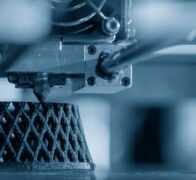
In additive manufacturing – which is also known as 3D printing – plastic waste is produced, for example in the form of required support structures or faulty prints. One option for resource recirculation in additive manufacturing is direct use in a pellet 3D printer that incorporates fused granulate fabrication (FGF). The elimination of the filament production process step reduces the manufacturing time and the energy required for recirculation.
Industry 4.0 Science | Volume 40 | 2024 | Edition 1 | Pages 14-21
Life Cycle Assessments at Aircraft Manufacturers

Life Cycle Assessments at Aircraft Manufacturers

An analytical decision model for assessing the potentials
Dennis Keiser, Birte Pupkes, Jonas Wagner, Michael Freitag ORCID Icon, Rafael Mortensen Ernits, Matthias Reiß, Axel Becker
The aviation industry faces significant challenges in reducing the environmental impact of global air traffic. This results in the goal of net zero emissions by 2050. Innovations and new technologies must be implemented along the entire value chain to achieve this goal. In this context, investments and decisions have to be evaluated based on their potential to reduce environmental impacts. One method for operationalizing these issues is the life cycle assessment framework. This paper presents an analytical decision model for the potential assessment of LCA at aircraft manufacturers. The basis of the model is the derivation of criteria for the assessment and the identification of use cases along the value creation process. Based on the decision model, first concrete application scenarios are identified. (Only in German)
Industrie 4.0 Management | Volume 39 | 2023 | Edition 3 | Pages 62-66
Sustainability in SME through Digitalization

Sustainability in SME through Digitalization

SME Use Cases for Improving Sustainability with Digital Technologies
Henry Ekwaro-Osire, Stefan Wiesner, Dennis Bode, Alexandra Pehlken
The impact of rapid technological change in a competitive global market is reaching small and medium-sized enterprises (SME) at an increasing rate; digitalization increases the interconnectedness among manufacturers, products and customers. Within this context, SME need to improve both their business processes and their technological capabilities in order to achieve internal and external sustainability goals, to be successful in the marketplace and to meet customer needs. This article discusses the opportunities of digitalization to improve sustainability by presenting two use cases from SME.
Industrie 4.0 Management | Volume 39 | 2023 | Edition 2 | Pages 36-40
Design of Circular Business Models

Design of Circular Business Models

Insight from Science and Practice
Jonas Brinker ORCID Icon, Jan Heinrich Beinke, Oliver Thomas, Ingo Westphal, Klaus-Dieter Thoben ORCID Icon, Barbara Gleede
Resource-efficient businesses have become increasingly important for companies in recent years. Although this brings new potentials, the practical implementation in the form of suitable business models is accompanied by challenges. In this paper, we will examine which concepts and methods already exist for the development of circular and resource- efficient business models and show approaches and solutions from science and practice using the example of interdisciplinary research projects.
Industrie 4.0 Management | Volume 38 | 2022 | Edition 6 | Pages 9-13 | DOI 10.30844/IM_22-6_9-13
Key Factors for Successful Supply Chain Management

Key Factors for Successful Supply Chain Management

Sebastian Trojahn, Vanessa Klementzki
Today's business world is characterized by ever-increasing complexity in nearly every dimension. Supply chains can no longer be understood in a linear fashion, but form networks across numerous supply chain participants. Globalization and crises are straining existing structures, calling into question previously set priorities and measures, and demanding new solutions. How must supply chains be structured in this constantly changing environment in order to be successful? This article highlights fields of action for successful supply chain management.
Industrie 4.0 Management | Volume 38 | 2022 | Edition 3 | Pages 48-52 | DOI 10.30844/I40M_22-3_48-52
Circular Economy – Chance for Innovation

Circular Economy - Chance for Innovation

Tobias Berndt, Claus Lang-Koetz, Silvia Rummel
Circular Economy is considered one of the most promising concepts on the way to a more sustainable economy. Expectations of a responsible corporate orientation are rising: This is shown by a recent ruling of the Federal Constitutional Court, which demands that Germany must be more ambitious in its climate goals [1]. The EU Green Deal envisages climate neutrality by 2050 and the “Circular Economy Action Plan” calls for more effective use of resources and reserves [2]. This article describes a method that companies can use to develop ideas for circular business models.
Industrie 4.0 Management | Volume 38 | 2022 | Edition 1 | Pages 33-36 | DOI 10.30844/I40M_22-1_33-36
1 2 3 4 7