Large Language Models

Technologies for Assisting Manual Order Picking

Technologies for Assisting Manual Order Picking

From conventional pick-by systems to AI-driven manual picking assistance
Md Khalid Siddiqui ORCID Icon, Jonathan Kressel ORCID Icon, Jürgen Grinninger
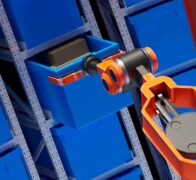
Manual picking remains common due to the high initial cost of support systems. This paper reviews existing technologies, presents an exploratory vision-based prototype, and examines existing literature that explores how combining object detection with language systems could enhance manual workflows. The findings suggest a promising, low-cost direction for worker support in logistics.
Industry 4.0 Science | Volume 41 | Edition 4 | Pages 6-19 | DOI 10.30844/I4SE.25.4.6
Digital Twins Using Semantic Modeling and AI

Digital Twins Using Semantic Modeling and AI

Self-learning development and simulation of industrial production facilities
Wolfram Höpken ORCID Icon, Ralf Stetter ORCID Icon, Markus Pfeil ORCID Icon, Thomas Bayer ORCID Icon, Bernd Michelberger, Markus Till, Timo Schuchter, Alexander Lohr
The AI-driven, self-learning digital twin continuously adapts to real system behavior, ensuring an optimal representation of the production process. A comprehensive semantic model serves as the foundation for advanced artificial intelligence (AI) approaches. Insights derived from AI methods are integrated into this model, enhancing the interpretability and explainability of AI systems. Techniques from the field of eXplainable AI (XAI) facilitate the automated description of AI models and their findings, as well as the development of self-explanatory models.
Industry 4.0 Science | Volume 41 | Edition 2 | Pages 30-36
AI-Assisted Work Planning

AI-Assisted Work Planning

Extracting expert knowledge from historical data for streamlined efficiency and error mitigation
Jochen Deuse ORCID Icon, Mathias Keil, Nils Killich, Ralph Hensel-Unger
Global competitive pressure is forcing companies to use resources efficiently, especially in high-wage countries. This is further intensified by market and legislative pressure for sustainable products and processes. In the face of digital and ecological change, holistic approaches to optimizing manual work processes are essential. An AI-supported assistance system for work plan creation is intended to remedy this and thus enable more efficient process design.
Industry 4.0 Science | Volume 40 | 2024 | Edition 5 | Pages 74-80 | DOI 10.30844/I4SE.24.5.74
Generative Artificial Intelligence – New Horizons for Technology Management?

Generative Artificial Intelligence – New Horizons for Technology Management?

A case study from the manufacturing industry
Günther Schuh ORCID Icon, Leonard Cassel, Bastian Thanhäuser, Thomas Scheuer
While generative artificial intelligence has gained more visibility and achieved initial successes, it is largely unused in the industry context. In contrast, its development and versatility point to a promising application for industrial manufacturing – especially in cases where complex challenges such as decisionmaking or process optimization are present. Showcasing the various development horizons and several example case studies provides a particularly illuminating illustration of its potential for the field of technology management.
Industry 4.0 Science | Volume 40 | 2024 | Edition 3 | Pages 6-13