CE

I4S 3/2025: Digital Twin

I4S 3/2025: Digital Twin

Innovative concepts for manufacturing, logistics, and learning environments
In the connected world, digital twins open up completely new possibilities: they virtually replicate physical systems, processes, or products. However, key challenges remain, including the collection of current product data. This issue of Industry 4.0 Science covers a wide range of topics, from the basic concept of the digital twin to its benefits in procurement and its use in supply chain management.
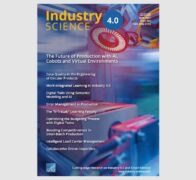
I4S 2/2025: The Future of Production with AI, Cobots and Virtual Worlds

I4S 2/2025: The Future of Production with AI, Cobots and Virtual Worlds

Technology needs innovative, value-adding business models
Artificial intelligence, collaborative robotics, and virtual worlds, such as the metaverse, are fueling visions for new forms of industrial value creation. However, innovation alone is not enough—given that these technologies only develop their full potential through intelligent business models. How can companies efficiently integrate AI-supported automation, cobots and digital twins into their processes?
Circular Economy Enabled by Digitization

Circular Economy Enabled by Digitization

Digital networking in the procurement of manufacturing companies
Pius Finkel ORCID Icon, Peter Wurster ORCID Icon, David Pfister
Current developments in digitalization and data economy, especially multilateral data sharing platforms, offer the potential to accelerate the implementation of circular economy practices in the manufacturing industry. This article systematically examines the extent to which digitalization could serve as a catalyst for circular economy in the procurement of such companies. As a basis for the following research, eight experts from five leading global manufacturers and suppliers in the automotive and aviation industries were interviewed. This article demonstrates practical hypotheses for the sustainable design of supply chains and proposes two specific use cases for circular economy practices that can proactively counteract the use of resources.
Industry 4.0 Science | Volume 41 | 2025 | Edition 1 | Pages 26-33 | DOI 10.30844/I4SE.25.1.26
Circular Economy as a Holistic Strategy

Circular Economy as a Holistic Strategy

Complexity management and sustainability
Joseph W. Dörmann
Over the past decades, circular economy has established itself as an important strategy for tackling sustainability challenges. Its holistic approach aims to use resources efficiently and minimize waste. This article aims to identify and evaluate the numerous challenges connected to the successful implementation and expansion of the circular economy approach. Economic, technological, social and political aspects are examined to provide a comprehensive insight into the complexity of the strategy and its implementation. The article concludes that a successful circular economy can only be achieved through the coordinated cooperation of different stakeholders and the development of innovative solutions to the identified challenges.
Industry 4.0 Science | Volume 41 | Edition 1 | Pages 60-67
I4S 5/2024: Double Transformation

I4S 5/2024: Double Transformation

Integrating digital and ecological change in the world of work
Change is necessary for companies to maintain their competitive edge—both digital and ecological change. But while external support is at hand, the drive for change must come from companies themselves. In this issue of Industry 4.0 Science, experts of the Academic Society for Work and Industrial Organization discuss how the real-world application of innovative technologies lead to resource-efficient manufacturing.
Sustainability in Industrial Manufacturing

Sustainability in Industrial Manufacturing

Resource-efficient circular economy through the use of a pellet 3D printer
Bruno Gallace, Michael Blug, Adrian Huwer ORCID Icon, Michael Mattern, Michael Wahl
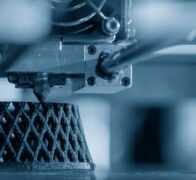
In additive manufacturing – which is also known as 3D printing – plastic waste is produced, for example in the form of required support structures or faulty prints. One option for resource recirculation in additive manufacturing is direct use in a pellet 3D printer that incorporates fused granulate fabrication (FGF). The elimination of the filament production process step reduces the manufacturing time and the energy required for recirculation.
Industry 4.0 Science | Volume 40 | 2024 | Edition 1 | Pages 14-21
Production of Circular Photovoltaic Systems

Production of Circular Photovoltaic Systems

The potential of digital technologies
Verena Luisa Aufderheide ORCID Icon
The circular economy (CE) promises a more sustainable use of resources by managing products in a cycle and striving for a transformation from a linear to a circular supply chain. In particular, digital technologies as enablers for the circular economy have been increasingly researched and applied in practice in recent years. This article describes which digital technologies offer potential for increasing circularity in the production of circular photovoltaic (PV) systems.
Industry 4.0 Science | Volume 40 | 2024 | Edition 1 | Pages 30-36