Typeset

“Every Company is Vulnerable and Needs to Protect Itself Appropriately”

"Every Company is Vulnerable and Needs to Protect Itself Appropriately"

Interview with Hans-Peter Bauer, BlackBerry
Manufacturing companies of all sizes have been a popular target for hackers and cyber criminals for years - and the trend is rising. In addition to security gaps in the IT systems, OT systems, i.e. operational technology, are increasingly being targeted by attackers in the course of digitalisation and networking. The consequence: companies should secure themselves as quickly as possible. Hans-Peter Bauer, Senior Vice President Cyber EMEA at BlackBerry, explains how this is possible. (Only in German)
Industrie 4.0 Management | Volume 39 | 2023 | Edition 3 | Pages 52-54
Bakery 4.0

Bakery 4.0

Development of an IoT framework for the automatic collection of machine, process data in medium-sized bakery operations
Abderrahim Ait Alla ORCID Icon, Frida Köning, Heiner Alsen, Joshua Coordes, Michael Freitag ORCID Icon
While the digital world has already made its way into many other production areas, the bakery industry has so far benefited little from these technological developments. This is because many baking processes are manually controlled and rely on expert knowledge. In addition, the process data from the machines is still not automatically captured via sensors. This paper describes a procedure for digitizing baking processes by developing an IoT framework consisting of an IoT device including measurement methods, an edge gateway, and a simulation-based solution for process optimization.
Industrie 4.0 Management | Volume 39 | 2023 | Edition 3 | Pages 36-40
I4S 1/2023: Digital Transformation (Special Issue)

I4S 1/2023: Digital Transformation (Special Issue)

Paving the way to the 4th Industrial Revolution
Industry 4.0 and Smart Factory have become a real source of hope and are the technological answer to some of the biggest challenges of our time: sustainable production, global interconnections, intelligent exchange of knowledge. This special issue discusses research questions relating to process improvement, artificial intelligence and factory software.
The Dilemma of Compressed Air and Leaks

The Dilemma of Compressed Air and Leaks

Lisa Dawel, Alexandra Pehlken
Due to the sharp rise in energy prices, compressed air, or compressor performance and its power consumption, are once again in the foreground as part of energy management. Due to the fact, that compressed air often escapes via leaks and these are difficult to localize or measure, a niche topic is becoming very noteworthy again. Automated leak detection can determine the need for repairs and help increase energy efficiency. It is important that not only leaks are detected, but that the extent of the leaks can also be quantified. A cost-effective method of detecting leaks is energy monitoring of the air compressor. Continuous monitoring and evaluation of the energy data means that you can react quickly.
Industrie 4.0 Management | Volume 39 | 2023 | Edition 2 | Pages 33-35 | DOI 10.30844/IM_23-2_33-35
The Role of Product Quality in Energy-Efficient Production Processes

The Role of Product Quality in Energy-Efficient Production Processes

An approach to increase energy efficiency using machine learning methods based on the example of the process industry
Maria Teresa Alvela Nieto, Hoang Viet Hai Luong, Hannes Gelbhardt, Klaus-Dieter Thoben ORCID Icon
Energy efficiency is becoming increasingly important in all sectors of the manufacturing industry. Companies are currently feeling the pressure of exorbitant energy prices very clearly, as well as the additional challenge of becoming CO2-neutral by 2045. With technologies from the field of machine learning (ML), innovative solutions can be developed that enable energy-efficient product manufacturing. In this way, ML-supported process control can make a decisive contribution to increasing the sustainability and competitiveness of a company. Decisive for ML-supported process control are the process- and raw material- dependent parameters, which are significantly responsible for the quality of the final product. The subject of this paper is a procedure for analyzing the complex relationships between the relevant influencing parameters for increasing energy efficiency in the manufacturing industry. (Only in German)
Industrie 4.0 Management | Volume 39 | 2023 | Edition 2 | Pages 20-24
Green Productivity for the Circular Economy

Green Productivity for the Circular Economy

Potentials through digitalization
Verena Luisa Aufderheide ORCID Icon
The Circular Economy (CE) is a form of economy that extends the use of products and resources by developing the linear supply chain (SC) to a circular SC. However, additional input factors are required for remanufacturing and recycling. Furthermore, these processes generate additional environmental impacts. It is questionable whether the circulation of products is only worthwhile from an economic point of view or whether it also brings environmental advantages. An approach that relates the economic impact of a product to its environmental impact is the Green Productivity Index (GPI). In the following, this index is developed for CE. Furthermore, this article examines how digitalization can positively affect the Green Productivity (GP) of CE. (Only in German)
Industrie 4.0 Management | Volume 39 | 2023 | Edition 2 | Pages 41-45
Industrial Robots in Additive Manufacturing

Industrial Robots in Additive Manufacturing

Norbert Babel
The use of industrial robots in additive manufacturing has been increasing in recent years. Particularly due to the voluminous installation space and the great flexibility, they are predestined for the production of large-volume, individualised components. The multi-axis movement options of the print head attached to the end effector in conjunction with a swivel-tilt unit of the build platform mean that support structures can be dispensed with, which represents a major economic advantage.
Industrie 4.0 Management | Volume 39 | 2023 | Edition 2 | Pages 60-63
Integration of Agile Product Development and Ecodesign at SME

Integration of Agile Product Development and Ecodesign at SME

Lösungsstrategien für umweltverträgliche Produkte und Produktionsprozesse im Kontext von Kleinunternehmen
Manuel Löwer, Tim Katzwinkel, Dominik Limbach
The political and social request for environmentally compatible products is putting companies under increasing pressure. Small and medium-sized companies (SME) in particular have to quickly find or develop solutions to these demands. This paper presents a methodological approach that combines the proven strategies of agile development with the specific activities of so-called ecodesign. The methodology is first discussed theoretically and then experimentally evaluated and discussed by means of a case study in a real company context.
Industrie 4.0 Management | Volume 39 | 2023 | Edition 2 | Pages 46-50 | DOI 10.30844/IM_23-2_46-50
Climate Neutrality and Digitization

Climate Neutrality and Digitization

A maturity-based approach to identifying measures in production
Stefan Seyfried ORCID Icon, Lukas Martin, Matthias Weigold
Climate neutrality and digitisation are two future-relevant and interlinked topics that are gaining in importance for manufacturing companies. However, especially for small and medium-sized enterprises (SMEs), it is often difficult to get an overview of the concepts and practical measures in these fields. This article presents a maturity model that offers companies practical assistance in combining the goals of climate neutrality and digitisation and in identifying suitable (digitisation) measures for the company to support the transformation towards climate-neutral production. (Only in German)
Industrie 4.0 Management | Volume 39 | 2023 | Edition 2 | Pages 51-55
Sustainable and Intelligent Additive Manufacturing

Sustainable and Intelligent Additive Manufacturing

Early Recognition of Manufacturing Defects in 3D-Printing with Artificial Intelligence
Kai Scherer ORCID Icon, Sebastian Bast ORCID Icon, Julien Murach, Stephan Didas, Guido Dartmann, Michael Wahl
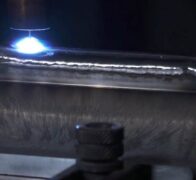
Additive manufacturing is an increasingly important manufacturing technology with huge economical potential. However, its popularity is accompanied by high material and time losses, as defects are often detected at a very late stage. One solution for a more sustainable production is the automated detection of manufacturing defects using artificial intelligence. This article describes the digitization of the defect detection process in additive manufacturing using a system based on a neural network. In addition to the steps for automated defect detection, system performance is also discussed.
Industrie 4.0 Management | Volume 39 | 2023 | Edition 2 | Pages 56-59
1 23 24 25 44