Autor: Christian van Husen

Virtual Exhibition as a Digital Twin

Virtual Exhibition as a Digital Twin

A framework for decision-making for virtual representations
Isger Glauninger ORCID Icon, Markus Schürmann, Matthias Mühl, Christian van Husen ORCID Icon
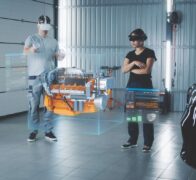
Transforming formats such as showrooms, laboratories or exhibitions into a virtual presence offers both opportunities and challenges. Particularly with cyber-physical systems (CPS), which rely heavily on user interaction, extensive adaptations must be made in order to maintain their purpose and function virtually. As part of this research project, digital solutions from different technologies and fields of application were transferred to a virtual exhibition. On this basis, the influence of the digital transformation on the interactivity and emulation of the solutions was analyzed. This article presents a framework that supports practitioners in the implementation of virtual representations.
Industry 4.0 Science | Volume 41 | Edition 3 | Pages 110-116
Maturity Levels of Smart Knowledge Services

Maturity Levels of Smart Knowledge Services

Self-assessment and GAP analysis
Isger Glauninger ORCID Icon, Nick Tugarin ORCID Icon, Christian van Husen ORCID Icon
Digitalization opens up new forms of operational training. A growing focus is on smart services, which allow for proactive engagement with customer demands and empower businesses in times of digitalization. While traditional learning environments are rarely tailored toward individual needs, smart services offer new opportunities. Decentralization, previously only a utopic vision, is becoming the reality now.
Industry 4.0 Science | Volume 40 | 2024 | Edition 4 | Pages 50-56
WIN Model – Persisting in Competition with Services

WIN Model - Persisting in Competition with Services

Differenzierung und Imitationsschutz für produzierende Unternehmen durch Service und Solutions
Harald Kopp, Christian van Husen ORCID Icon
Facing increasing competition through globalization and short innovation cycles industry leaders need to include services in their innovation strategy. The WIN-model shows that combined strategies for product and service innovation are creating sustainable competitive advantages. Enhancing product offers with complex services and service solutions are long-term investments to sustain USPs. Integrated product and service innovation to create service solutions require deep understanding of customer needs. Delivering such services lead to close interaction with the customers which are not visible for competitors. To provide service solutions, services need to be included in the corporate innovation strategy. Services need to be driven by the C-suite. Great services will push the image and branding of your company and interaction with customers will push product innovation. A WIN-WIN situation!
Industrie Management | Volume 28 | 2012 | Edition 6 | Pages 45-50
Requirements Analysis as the Key for Success in Industrial Services

Requirements Analysis as the Key for Success in Industrial Services

Erfolgreich durch systematisches Service Engineering
Thomas Burger, Christian van Husen ORCID Icon
Despite the increasing importance of industrial services, they are frequently developed unsystematically and often do not meet needs and expectations to guarantee a successful market launch. The increasing competition in many service markets emphasize the need for systematic analysis of all requirements, meaning to continuously develop innovative services that meet exactly with requirements of customers, employees, management and other stakeholders. This paper introduces a systematic process to analyse requirements within the process of new service development.
Industrie Management | Volume 24 | 2008 | Edition 5 | Pages 41-44