Pay-per-Use

Smart Business Models in Intralogistics

Smart Business Models in Intralogistics

A service-oriented approach to customized logistics solutions
Anja Wiebusch, Niklas Wilkowski
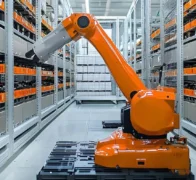
Equipment-as-a-Service (EaaS) enables logistics companies to offer their customers tailored solutions, helping them to remain flexible and reduce costs as well as risks even in difficult times. Customers no longer pay for the object itself but only for the service provided, such as the usage time of a forklift truck. This allows them to focus on their core competencies and convert high investment costs into more flexible operating costs [1]. High capital commitment and the risk of underutilization of machines can thus be avoided and transferred to the logistics provider. This article examines the adjustments that logistics providers must make to accommodate this business model as well as some possible use cases.
Industry 4.0 Science | Volume 41 | Edition 4 | Pages 30-35
Resilient Production through Pay-Per-Use Models

Resilient Production through Pay-Per-Use Models

More flexibility in an uncertain business environment with Pay-Per-Use and Asset-as-a-Service
Anja Wiebusch
Corona crisis, supply chain problems and global crises lead to growing uncertainties in the business environment of machine manufacturers and their customers. Usage-based business models offer flexible solutions to make business models more resilient and able to cope with future challenges. (Only in German)
Industrie 4.0 Management | Volume 39 | 2023 | Edition 4 | Pages 55-58
New Business Models by Licensing

New Business Models by Licensing

In der Lizenzierung steckt das Monetarisierungspotenzial
Ansgar Dodt, Michael Gaudlitz
The flexible licensing of machine features is a major enabler of new business models. New finance and leasing models can be generated by disruptive machine-as-a-service models with pay-per-use functionality. The more flexible the licensing becomes, the more essential is the business process automation of the licensing management system. To choose build or buy in such environments is not a question anymore. Vendors of professional license management platform are the right eco system partners for machine builders.
Industrie 4.0 Management | Volume 33 | 2017 | Edition 5 | Pages 39-39
Industry 4.0 Business Models

Industry 4.0 Business Models

An analytical framework of Industry 4.0 potentials and necessary adaptations
Patricia Deflorin, Maike Scherrer, Janick Amgarten
Technological changes related to Industry 4.0 generate new potentials. Hence, it is important to understand which dimensions of a business model to adapt. Industry 4.0 technologies enable a company to offer new products, new services or to achieve efficiency improvements. The Industry 4.0 business model decomposition allows visualising which goal the initiative has, what the value offering is and which processes, technologies and capabilities are needed. As connectivity is a key dimension of Industry 4.0, technologies and systems are needed to connect internal and external processes.
Industrie 4.0 Management | Volume 33 | 2017 | Edition 5 | Pages 21-24