order picking

Technologies for Assisting Manual Order Picking

Technologies for Assisting Manual Order Picking

From conventional pick-by systems to AI-driven manual picking assistance
Md Khalid Siddiqui ORCID Icon, Jonathan Kressel ORCID Icon, Jürgen Grinninger
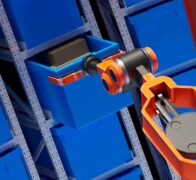
Manual picking remains common due to the high initial cost of support systems. This paper reviews existing technologies, presents an exploratory vision-based prototype, and examines existing literature that explores how combining object detection with language systems could enhance manual workflows. The findings suggest a promising, low-cost direction for worker support in logistics.
Industry 4.0 Science | Volume 41 | Edition 4 | Pages 6-19 | DOI 10.30844/I4SE.25.4.6
Modeling Picking Processes

Modeling Picking Processes

A basis for executable processes in small and medium-sized companies
Daniel Hilpoltsteiner, Stephanie Bäuml, Christian Seel, Sebastian Meißner
Process modeling represents a challenge for small and medium-sized enterprises. In most cases, the added value is not recognized and is therefore rarely used. This article shows the potential of process modeling in order picking processes. The focus is on the documentation of the processes as well as their execution. Deficits in companies are pointed out and clarified, how the process modeling can solve these. Above all in the management of different process variants adaptive process modeling can show advantages. The resulting adaptive process models form the basis for making processes executable.
Industrie 4.0 Management | Volume 35 | 2019 | Edition 3 | Pages 39-42
Combined Analysis of Physical Workload and Time for Order Picking Areas

Combined Analysis of Physical Workload and Time for Order Picking Areas

Erweiterung eines Systems vorbestimmter Zeiten zur Bewertung der Mitarbeiterbelastung in Kommissioniersupermärkten
Michael Kelterborn, Claudia Burghart, Ralf Kraul, Carsten Intra, Willibald A. Günthner
In the automotive industry, picking areas - so called supermarkets - are used to supply the production with material. By supplying the material in small quantities and with high frequency supermarkets are an important enabler of just in time production. A new method is presented, which allows a quantitative evaluation of order processing time and physical workload. Using the method, design alternatives as well as existing supermarkets can be assessed quantitatively at a favorable cost-benefit ratio.
Industrie Management | Volume 30 | 2014 | Edition 5 | Pages 41-44
Automatic Assessment of Physical Workload in Order Picking Systems

Automatic Assessment of Physical Workload in Order Picking Systems

Bewertung der physischen Belastung von Arbeitsplätzen in der Kommissionierung durch das WMS
Myriam Koch, Willibald A. Günthner
In order picking, the workers lift, lower, push and pull variable loads. This manual handling is a common cause of musculoskeletal disorders. In order to assess the risk of musculoskeletal disorders, risk assessments in order picking are nowadays performed manually. This article presents an approach how to integrate two methods of risk assessment in warehouse management systems so the physical workload in order picking systems can be determined automatically.
Industrie Management | Volume 30 | 2014 | Edition 1 | Pages 47-50
Activity-Based Costing in Logistic Areas

Activity-Based Costing in Logistic Areas

Prozessorientierung erhöht Kostentransparenz
Jochen Deuse ORCID Icon, Christian Goldscheid, Yvonne Finke
A crucial criterion for the competitiveness of logistic areas (besides the efficency of logistic processes) is cost transparency, i. e. the cost allocation to performed logistic services. Since logistic processes unlike production processes do not generate material goods but services, it is very common to find cost structures where traditional cost accounting systems lead to distortion of costs. Activity-based costing facilitates process-oriented cost calculation and cost allocation to service processes.
Industrie Management | Volume 23 | 2007 | Edition 5 | Pages 35-38