life cycle analysis

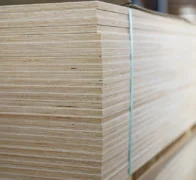
Loam Construction and Wooden Shelving

Loam Construction and Wooden Shelving

A contribution to sustainability in warehouse logistics
Viviano De Giacomo ORCID Icon, Nathalie Fritsch ORCID Icon, Jakob Kennert ORCID Icon, Dieter Uckelmann ORCID Icon
This study examines the contribution of natural building materials, in particular loam and wood, to the sustainable development of logistics infrastructure, assessing ecological, economic, and technical dimensions across the entire life cycle. Potentials, restrictions, and supportive framework conditions are identified based on literature analyses and expert interviews. Wood proves to be technically mature and ecologically advantageous, especially in high rack construction, while loam offers high potential for energy- and resource-efficient construction. The study concludes with recommendations for research, policy, and practice to establish circular construction methods in logistics.
Industry 4.0 Science | Volume 41 | Edition 6 | Pages 82-89
Real-Time Monitoring of the Carbon Footprint for SMEs

Real-Time Monitoring of the Carbon Footprint for SMEs

Sustainability in real time — from operation to finished products
Henning Strauß ORCID Icon, Julian Sasse ORCID Icon
Although SMEs are not directly affected by the statutory reporting obligations for carbon accounting, as suppliers they are obliged to meet the requirements of sustainability reporting. In addition to a holistic life cycle analysis, this requires a high-quality database within production in order to determine the specific CO₂ footprint. A central element is the implementation of a Machine Carbon Footprint (MCF). This article aims to develop and implement an MCF focusing on its applicability for SMEs. For this purpose, data is recorded and visualized in real time on a machine tool. The measurement data is then processed, stored and visualized using open-source low-code platforms. Real-time data flows enable the precise determination of the production-specific carbon footprint and, in conjunction with order data, the Product Carbon Footprint.
Industry 4.0 Science | Volume 41 | Edition 3 | Pages 102-109
Chances and Risks of Life Cycle Analysis

Chances and Risks of Life Cycle Analysis

Marina Dervisopoulos, Anne Schatka, Meike Torney, Marc Warwela
The operation of a capital good generates costs, which are mostly a multiple of the first investment. The value of this Life Cycle Costs is affected by the interplay between the product specific features and the customer specific operating conditions. This article aims to figure out chances and risks of Life Cycle Analysis.
Industrie Management | Volume 22 | 2006 | Edition 6 | Pages 55-58