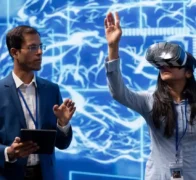
While virtual reality can facilitate hands-on learning, its development faces barriers, including high costs and time demands and scalability challenges. This article presents two case studies that illustrate strategies for overcoming such barriers when training the next generation of skilled workers in environmental technologies. By examining approaches for streamlining development and increasing content relevance and scalability, we highlight lessons learned for future practice. We conclude by envisioning a future in which educational institutions can flexibly and cost-effectively prototype virtual reality in learning contexts, ensuring alignment with curricular goals and learners’ needs.
Industry 4.0 Science | Volume 42 | Edition 3 | Pages 26-34 | DOI
10.30844/I4SE.26.3.3