data quality

Data Quality and Domain Expertise for Resilient AI Deployment

Data Quality and Domain Expertise for Resilient AI Deployment

Integrating anomaly and label error detection in industry
Pavlos Rath-Manakidis, Henry Huick, Erdi Ünal, Björn Krämer ORCID Icon, Laurenz Wiskott ORCID Icon
AI implementation transforms work and worker-technology relationships in industrial quality control. This paper explores how approaches to data quality and model transparency support ethical AI deployment, fostering worker agency, trust, and sustainable work design in automatic surface inspection systems (ASIS). Recurring problems like data inefficiency, variable model confidence, and limited AI expertise point to key challenges of human-centered AI: user trust, agency and responsible data management. A solution co-developed with an ASIS supplier demonstrates that the challenges extend beyond the purely technical, underscoring the value of AI design that augments human capabilities. Technical solutions such as anomaly, label error, and domain drift detection are proposed to enhance data quality and model reliability. The insights emphasize the following generalizable strategies for resilient AI integration: understanding user-reported problems through a human-AI interaction lens, ...
Industry 4.0 Science | Volume 42 | Edition 1 | Pages 128-135 | DOI 10.30844/I4SE.26.1.120
Digital Twins in Logistics

Digital Twins in Logistics

Opportunities and barriers during implementation
Benjamin Gorgas ORCID Icon, Jan Kliewer ORCID Icon, Tobias Marc Wringe, Maximilian Bähring ORCID Icon, Frank Straube, Rüdiger Zarnekow
Digital Twins offer great potential for increasing efficiency in logistics. Digital supply chain twins (DSCT) enable data-driven decisions and optimize processes at location and network level. A study conducted during an expert workshop shows that companies are interested in DSCT, but challenges such as data quality, cross-actor data exchange and interoperability are hindering their widespread implementation. While pilot projects exist, market penetration remains low. Successful implementation requires standardized interfaces and contractual frameworks for data exchange. As a result, DSCT can make logistics networks more resilient and sustainable in the long term.
Industry 4.0 Science | Volume 41 | Edition 3 | Pages 34-40 | DOI 10.30844/I4SE.25.3.34
Data Quality in the Engineering of Circular Products

Data Quality in the Engineering of Circular Products

Decision support for circular value creation through data ecosystems
Iris Gräßler ORCID Icon, Sven Rarbach, Jens Pottebaum ORCID Icon
Decisions affecting the sustainability of products are made during the engineering process. As product engineering progresses, statements on sustainability can also be substantiated. Initially, only estimates based on related products and processes are possible, but later, operational and machine data can be used. When metrics are used for key figures, the traceability of the data should be ensured. For this purpose, relevant data quality criteria and indicators are selected and analyzed for correlations. Data availability can be increased by relying on partners within data ecosystems for product engineering. Data spaces such as Gaia-X, Catena-X and Manufacturing-X form a basis for this ambition.
Industry 4.0 Science | Volume 41 | 2025 | Edition 2 | Pages 12-19 | DOI 10.30844/I4SE.25.2.12
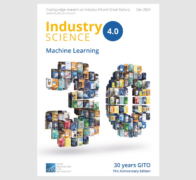
I4S 6/2024: Machine Learning

I4S 6/2024: Machine Learning

A technology with optimization potential in terms of efficiency, transparency and sustainability
Machine learning takes automation to a new level. But what does this imply for the role of humans, who seem to remain essential for the effective control of AI systems. The development of energy-efficient and fair algorithms and the optimization of data quality are crucial for the future viability of machine learning and artificial intelligence. The articles in this issue examine the technology's key potential and areas of application.
Industrial Data Processes for AI Technologies

Industrial Data Processes for AI Technologies

Recommendations for Action Using the Example of Robotics Applications
Christian Brecher, Manuel Belke, Minh Trinh, Lukas Gründel, Oliver Petrovic
Data plays an important role in our world - including production technology. Businesses are faced with rising customer demands and competitive pressure. Furthermore, the trend towards smaller batch sizes and increasing variant diversity requires quick reactivity and agility. In order to make the right decisions under these circumstances, data must be generated and analyzed to derive insights. AI technologies are suitable to address the growing uncertainty and complexity. In the following, methods are described that are vital to master data processes for high-quality AI technologies.
Industrie 4.0 Management | Volume 37 | 2021 | Edition 6 | Pages 37-41
Data-quality Improvement as Enabler of the Physical Internet

Data-quality Improvement as Enabler of the Physical Internet

Improvement of Data-quality by Methods of Data-fusion and Decision-fusion
Jokim Janßen, Tobias Schröer
The Physical Internet is based on physical, digital, and operational interconnectivity, without which a globally fragmented and standardized freight transport system could not operate efficiently. Valid input data are necessary for the self-control of global flows of goods. In addition, a high level of trust in control decisions is essential for a far-reaching acceptance of all actors and customers in the logistics industry. These two goals can only be achieved by high data-quality. In addition to increasing data-quality through automation or the use of advanced sensor technology, methods of data-fusion and decision-fusion offer great potential. This article describes a methodical approach to analyze these potentials. Furthermore, this procedure is exemplarily carried out using a transit center.
Industrie 4.0 Management | Volume 36 | 2020 | Edition 5 | Pages 11-14
The Future of Manufacturing Data Analy-tics

The Future of Manufacturing Data Analy-tics

Implications for a Successful Data Exploitation in the Manufacturing Industry
Marian Wenking, Christoph Benninghaus, Sebastian Groggert
In accordance to the study “Manufacturing Data Analytics” published by the University of St. Gallen in cooperation with RWTH Aachen in 2017, various aspects of industrial data usage are examined. Different topics such as technical systems, implementation status and organizational approaches are analysed. While some companies are still in a launching stage, other companies are already able to make predictions through comprehensive data collection and exploitation. Thereby, they can significantly improve their efficiency in production.
Industrie 4.0 Management | Volume 33 | 2017 | Edition 4 | Pages 33-37