Books

Knowledge Transfer Speed Optimizations in Product Development Contexts

Knowledge Transfer Speed Optimizations in Product Development Contexts

Learn how you can measure the speed of knowledge transfer from this famous research experiment.
Gronau, N., Grum, M Learn how you can measure the speed of knowledge transfer from this famous research experiment. Order now
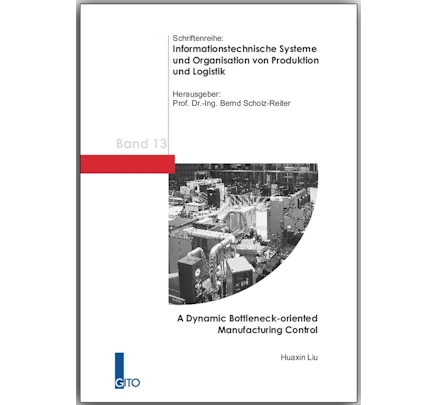
A Dynamic Bottleneck-oriented Manufacturing Control System

A Dynamic Bottleneck-oriented Manufacturing Control System

Dynamic Bottleneck-oriented Manufacturing Control (DBNO) is a hybrid manufacturing control system focusing on discrete manufacturing systems with routing flexibility in a Make-To-Order environment.
Data Synthesis for Fairness Audits of Learning Analytics Algorithms

Data Synthesis for Fairness Audits of Learning Analytics Algorithms

Linda Fernsel, Katharina Simbeck
AKWI-Tagungsband zur 35. AKWI-Jahrestagung. Jahrgang, 2022, Seite S. 316–320 The purpose of methods of fairness auditing is to uncover to what extent Learning Analytics algorithms are fair. Fairness auditing methods often rely on pre-existing test data. In the context of Learning Analytics auditing, learning data is needed for testing. However, learning data might not be available (in large quantities) due to privacy concerns. Our poster shares our findings on how relational data for fairness audits of Learning Analytics systems can be synthesized from little pre-existing data, using the most promising available data synthesizers.
Industry 4.0 Science | 2022 | | DOI 10.30844/AKWI_2022_21
OpenPredict – An Open Research Dataset and Evaluation Protocol for Fine-grained Predictive Testing

OpenPredict - An Open Research Dataset and Evaluation Protocol for Fine-grained Predictive Testing

David Brodmann, Erik Rodner
AKWI-Tagungsband zur 35. AKWI-Jahrestagung. Jahrgang, 2022, Seite S. 287–303 Systematic testing of every single component and interface is undoubtedly an important measure to handle the complex nature of current software systems. However, this comes with often neglected computational costs. The aim of this paper is therefore to cut time and resource needs by predictive testing, i.e., predicting test failures with machine learning using a surprisingly simple statistical feature representation. Furthermore, we present the first open research benchmark for pre- dictive testing to enable and foster future research in this area
Industry 4.0 Science | 2022 | | DOI 10.30844/AKWI_2022_19
Process Mining Model Quality in Software Development Case Studies: An Analysis

Process Mining Model Quality in Software Development Case Studies: An Analysis

Marianne Schmolke
With increasing digitalization speed, the need for knowledge about how Software Development can be improved, increases as well. Frequently encountered challenges are skill deficits, problematic behavior or activity sequences, and deviations from common and expected paths. Process Mining provides promising opportunities to remedy these issues. Process Mining applied to Software Development activities for example is an analytics method that can provide insights before a process has been executed as there is a huge amount of log files to be potentially analyzed. As promising case studies in this field have been conducted, there is a need to find quality measures to effectively learn from the results found. Therefore, a systematic analysis has been applied to the relevant sources using the relevant criteria of the Comprehensive Process Model Quality Framework (CPMQF).
Industry 4.0 Science | 2022 | | DOI 10.30844/AKWI_2022_09
Digital Transformation in Educational Institutions: Scrutinizing the Debate and Highlighting Success Factors: A qualitative study on the current use of learning management systems and learning analytics in Germany

Digital Transformation in Educational Institutions: Scrutinizing the Debate and Highlighting Success Factors: A qualitative study on the current use of learning management systems and learning analytics in Germany

Linda Mai, Lynn Schmodde, Marius C. Wehner
In German education, digitalization is evolving, and the COVID-19 pandemic has accelerated this process due to closed schools and universities. While these external conditions were almost the same for all institutions, they have dealt with remote teaching in different ways and developed various new learning concepts. We conducted 27 interviews with headmasters, e-learning managers, and teachers from Germany to gain insights into varying attitudes towards learning management systems, as well as the motivations and concerns about future teaching with digital support. Using an inductive method, we identify different obstacles, including lack of digital competencies, necessity of technical equipment, concerns about replacing traditional lessons, but also enthusiasm for new opportunities. We argue that a meaningful use of learning management systems and learning analytics depends on an open and impartial debate on data protection and equal opportunities. Overall, this paper contributes to ...
Industry 4.0 Science | 2022 | | DOI 10.30844/AKWI_2022_08
Requirements for Competence Developing Games in the Environment of SE Competence Development

Requirements for Competence Developing Games in the Environment of SE Competence Development

Marcel Biewendt, Mathias Eggert, Martin R. Wolf, Philipp M. Zähl
Many of today’s factors make software development more and more complex, such as time pressure, new technologies, IT security risks, et cetera. Thus, a good preparation of current as well as future software developers in terms of a good software engineering education becomes progressively important. As current research shows, Competence Developing Games (CDGs) and Serious Games can offer a potential solution. This paper identifies the necessary requirements for CDGs to be conducive in principle, but espe- cially in software engineering (SE) education. For this purpose, the current state of research was summarized in the context of a literature review. Afterwards, some of the identified requirements as well as some additional requirements were evaluated by a survey in terms of subjective relevance.
Industry 4.0 Science | 2022 | | DOI 10.30844/AKWI_2022_05
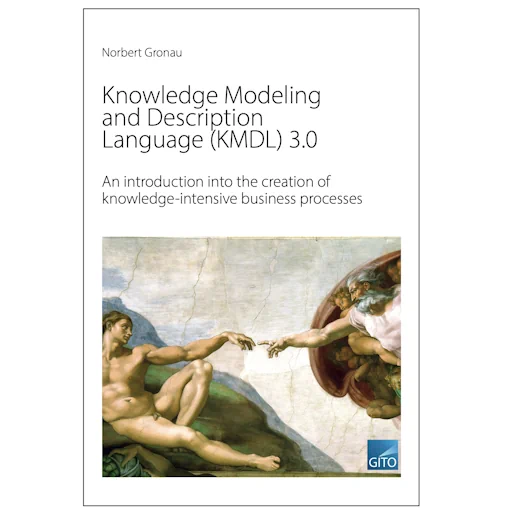
Knowledge Modeling and Description Language 3.0

Knowledge Modeling and Description Language 3.0

An introduction into the creation of knowledge-intensive business processes
[2024] Discover knowledge in processes! The knowledge of people drives many business processes today - but it does not appear in classic process models! Only if it is known which knowledge is needed or generated at which point in the process can the organization become better - and benefit from the existing knowledge. The KMDL 3.0 book explains how to make your tacit knowledge visible.
How can industrial management contribute to a brighter future?

How can industrial management contribute to a brighter future?

Jochen Deuse ORCID Icon
Industrial management has many opportunities to contribute to the future with one of the most important being promoting sustainability. By adopting sustainable practices, industrial management can help reduce waste and pollution, conserve natural resources and protect the environment. Industrial management can help workers acquire new skills and knowledge by providing employees with training and development opportunities that will enable them to succeed in the future. This not only benefits workers but also helps companies attract and retain top talent, which in turn can assist to better address current and future challenges. This year, the WGAB follows the motto "How can Industrial Management contribute to a brighter future?" in order to address the global requirements for climate protection and the associated three pillars of sustainability - economy, ecology and social issues - through technical approaches. Thanks to the creativity and proficiency of this year's authors, this book ...
Industry 4.0 Science | 2023 | Pages 202 | DOI 10.30844/wgab_2023
MTM in Motion – Perspectives to Digital Work Design

MTM in Motion – Perspectives to Digital Work Design

The cost of production is a key factor for industrial companies. Labour costs are one relevant portion of these costs, especially for production sites with a high percentage of manual processes. Therefore, describing, analysing, and designing manual work processes in a systematic way is an important task in most Industrial Engineering departments. There are multiple methods to describe and analyse work processes. Widely known methods include REFA, MTM and Work Factor. While there are multiple MTM methods to address the different types of production, one of the most established methods is MTM-UAS®. The most recent process building block system is MTM-HWD®. It describes work processes not only from a productive standpoint, but also includes ergonomic factors to assure productive and ergonomic work in one step. While the MTM systems can be used to systematically design work processes, they still require manual effort for data collection and interpretation. Due to this fact, not every ...
Industry 4.0 Science | 2023 | | DOI 10.30844/wgab_2023_3
1 2 … 5